


Walk through any plant making plastic parts at volume and you will find a molding press somewhere in the building. The process has reshaped how plastic components get produced, largely because it handles complex geometry without sacrificing precision. Automotive suppliers rely on it. So do the people who make consumer goods, appliances, and a long list of parts most shoppers never think about.
At its core the technique is straightforward. Material, usually plastic in pellet form, is melted and forced into a mold cavity under high pressure. The plastic takes the shape of the cavity, cools, solidifies, and gets pushed out as a finished part that mirrors the tool it came from.
The sequence behind a single cycle
A full cycle runs through a fixed order of operations. The mold closes and clamps shut under tonnage sufficient to resist the pressure that follows. Melted polymer is then injected into the cavity, packing the space completely before the material begins to cool. Cooling holds the part against the tool surface until it is rigid enough to survive ejection. Once the mold opens, the part drops or is picked free, and the cycle restarts. Every step in that chain carries its own variables, and each one can make or break the part sitting in the bin.
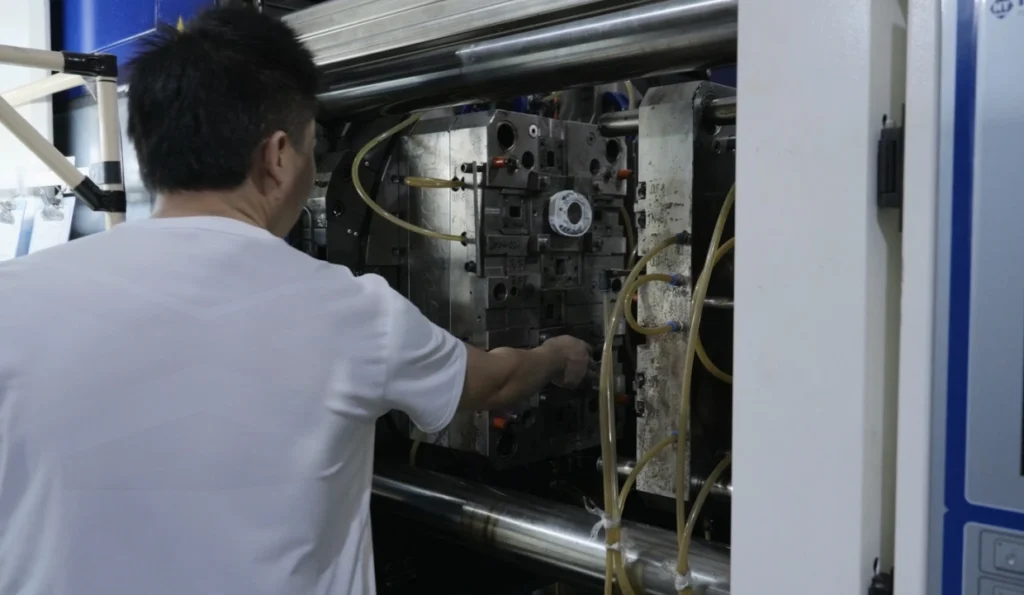
Consistency is where the process pays off. Once a tool is dialed in, it produces identical parts cycle after cycle at rates that hand work cannot approach. High output volumes pull the cost per piece down, which is why the economics favor molding over machining or fabrication once quantities climb. Designers get considerable freedom in geometry, surface texture, and material selection, and many parts leave the press needing little or no secondary finishing.
Where the parts end up
Automotive interiors, underhood components, and trim pieces account for a large share of output. Consumer goods follow close behind, along with packaging, medical devices, electronics housings, and industrial equipment. Household items round out the list. The common thread is volume plus repeatability: a part that has to be identical a million times over is a strong candidate for a mold.
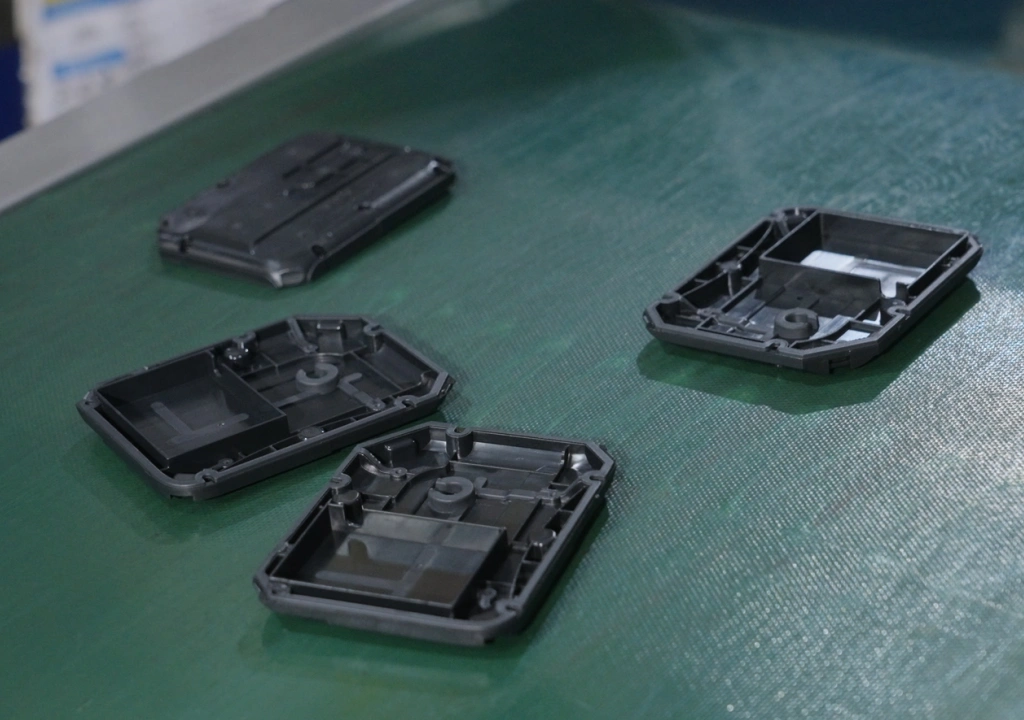
Trouble shows up in the details. Tooling carries a substantial upfront cost and a lead time measured in weeks, sometimes months, before the first good part appears. Setting up a mold for a production run eats machine time. Certain geometries fight the process, with undercuts and uneven wall thickness forcing design compromises or added tooling complexity. Defects happen too. Warping, short shots, sink marks, and weld lines all trace back to fill patterns, cooling rates, or gate placement, and chasing them down can consume more engineering hours than anyone planned. Low-volume runs rarely justify the investment at all.
What is changing on the shop floor
Mold making keeps absorbing new technology. Simulation software now predicts fill, packing, and cooling behavior before steel gets cut, which trims the trial-and-error loop that once defined tool debugging. Sensors built into the tool feed real-time data back to the press, letting operators catch drift before rejects pile up. Automation handles part removal and downstream handling, cutting labor per cycle. Energy efficiency draws attention as presses get larger and electricity bills grow. Recycled and bio-based resins are moving into production tooling, though they bring their own processing quirks. Additive manufacturing serves a narrower role, producing conformal cooling channels and prototype inserts that conventional machining struggles to create.
None of this changes the fundamental appeal. A single tool can turn pellets into a finished part in under a minute, and the industry keeps tightening tolerances and shrinking wall sections as the equipment catches up.