

Injection molding projects rarely fail at the molding machine. They stall in the review room, when a drawing meets the realities of tooling, material behavior, and assembly. A structured design review exists to prevent that. It forces engineers and sourcing teams to examine design, material, process, quality, and production factors together before steel gets cut. TCHD’s mold design and tooling work covers exactly this ground, and sending over a drawing with production requirements gets you that review directly.
One practical way to run the review is online. We hold video meetings on design schemes to accelerate finalization. Since 2019 we have steadily deepened online video conference exchanges with international clients, pushing real-time project updates across every stage of mold manufacturing and production status. As cost reviews grow tighter and delivery windows shrink, the payoff from that real-time communication has become hard to ignore. It shortens decision cycles and catches problems while they are still cheap to fix.
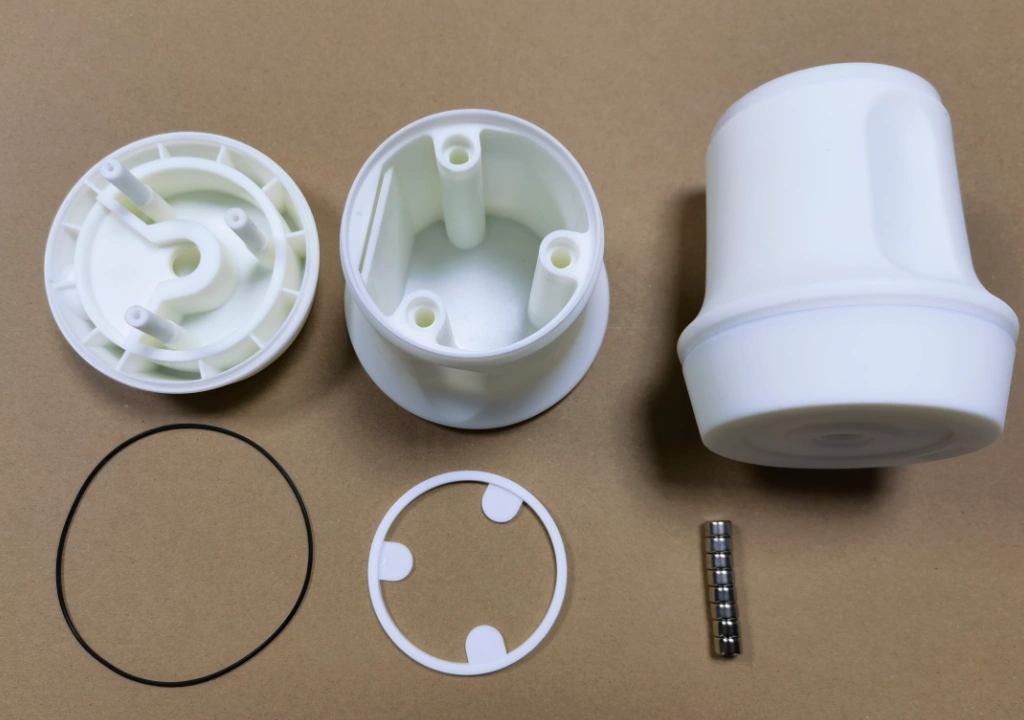
A hookah project from late 2020 shows the pattern. A vendor came to us wanting plastic parts with a soft surface feel. We reached that effect through silicone oil spraying, then dispatched several treated samples for the client’s approval. The engagement then ran the way our reviews are meant to run: from the client’s initial design concept, through detailed discussion of the functions the product had to achieve, to the completed design sketch, verification of the 3D printed prototype, and only then into mold manufacturing and mass production.
When the client’s design arrived, the review found plenty that did not suit plastic injection molding. Walls were excessively thick. Metal components were too bulky to over-mold reliably. The client hesitated at first. Modifying someone else’s design is never welcome, but the project could not move forward without changes, so we offered to refine the drawing ourselves. Every adjustment traced back to their design philosophy, the product’s assembly needs, and the conditions it would face in use. From 2020 onward we fed the design through repeated CNC prototype rounds, testing form and function until, after one month, the client gave the green light. Only then did we commence mold production for the entire set.
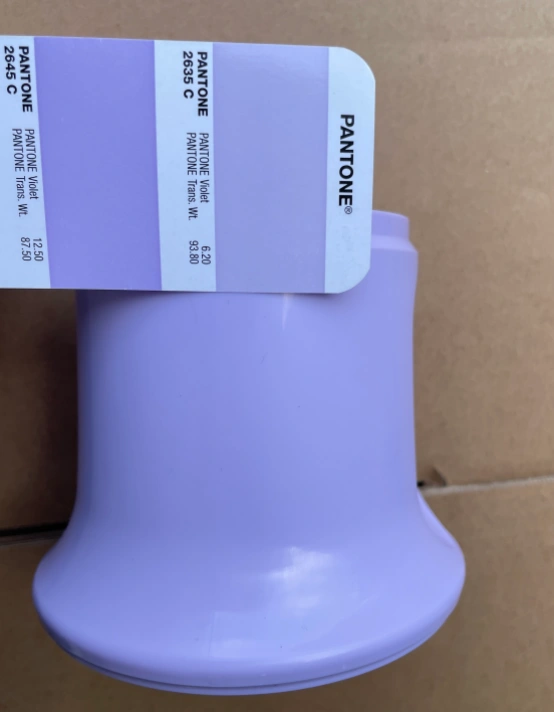
The finished product rests on a simple architecture: a plastic piece over-molded with a stainless steel element, with the red component serving as the body. Our first plan for a waterproof seal was ultrasonic welding between the two parts. Transit told us otherwise. The base was heavy enough that the main body and the base component took damage during shipping. We pulled the customer into a Teams conference, walked through all the details, and reworked the design around a screw locking mechanism. A silicone gasket seated in the base restored the waterproofing the welded joint was supposed to deliver.
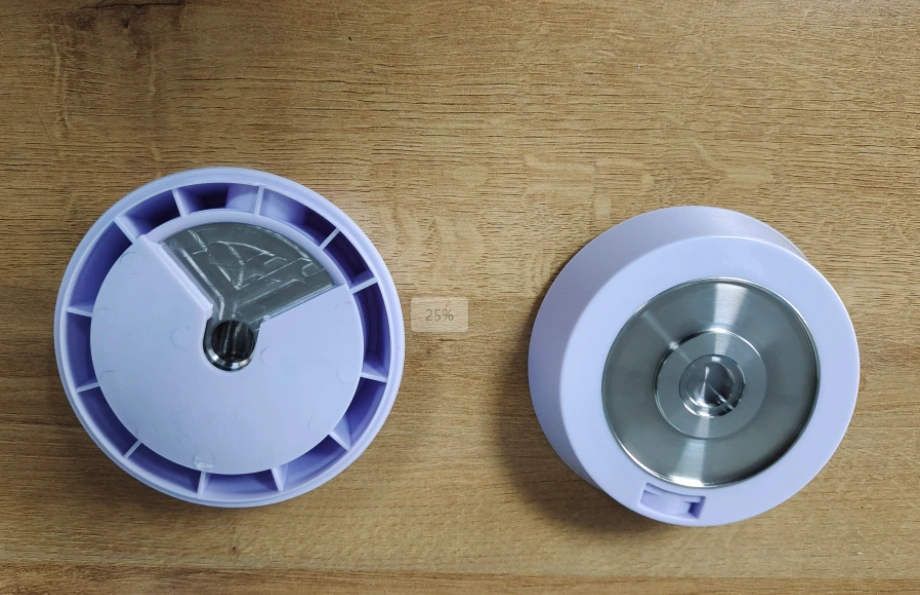
That single change ripples through the whole process sheet. The project runs plastic over-molding of metal parts, then over-molding soft plastic onto hard plastic, followed by screw assembly, hardware and accessory assembly, surface treatment with primer and silicone oil, and LOGO silk screening. Each step depends on the one before it, which is precisely what the earlier review was for.
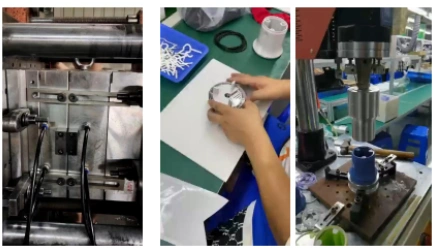
The customer was satisfied enough to move assembly and packaging production to our facility for further processing. The result came from web conferencing that kept decisions fast, a design and engineering team willing to redraw a client’s part, a marketing team that held the relationship together, customers who accepted changes, and a manufacturing team that executed without excuses.