


Most injection molding defects are cheaper to prevent than to correct. Once a tool is cut and a process is running, every fix costs steel, downtime, or scrap. The practical route is to close the known failure modes during design review, before the first trial.
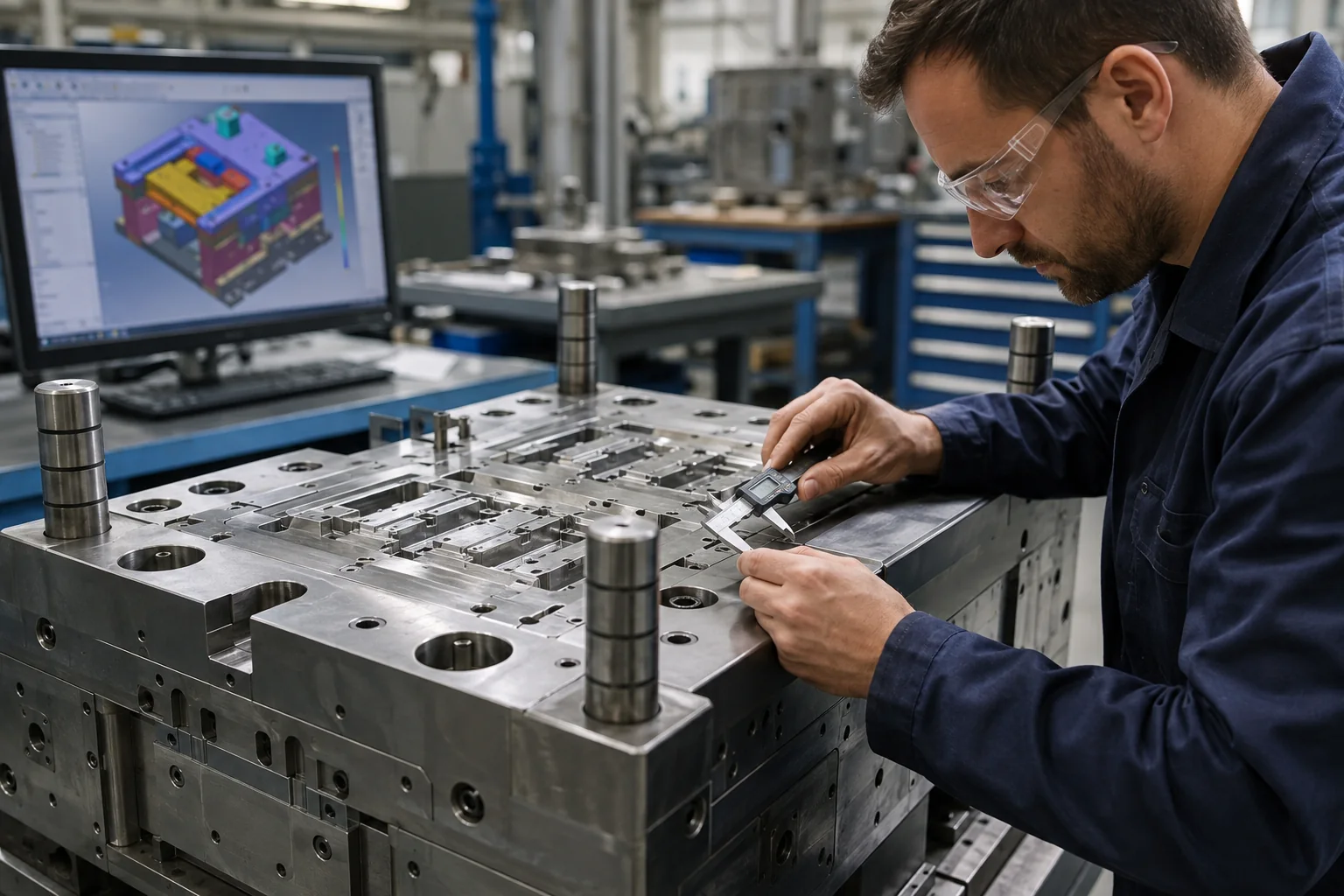
Start With a Real DFM Review
A design for manufacturability review should name the specific risks: thin walls, sharp corners, undercuts, uneven sections, and gate locations that would place a weld line on a cosmetic face. Each risk should come with a proposed change and the cost of not making it. A review that only says “looks fine” has not happened.
Wall Thickness and Sink Marks
Sink appears where thick sections cool after the gate freezes. Ribs should be 50 to 60 percent of the nominal wall, bosses should be cored, and transitions should be gradual. Where a thick section is unavoidable, gate near it so packing can continue.
Warpage and Cooling Balance
Warpage comes from differential shrinkage. Cooling circuits on both halves should be designed together, and thick areas need dedicated cooling rather than an even grid. Mold temperature difference across the part is the variable to control, not just the average.
Weld Lines and Structural Weakness
Weld lines form where flow fronts meet. They are always weaker than bulk material, so they should not sit on a latch, a sealing face, or a high-stress area. Flow analysis before cutting steel identifies where they will land and whether a gate change moves them.
Flash and Venting
Flash appears when clamp force cannot hold the parting line closed or when venting is inadequate. Vent depth must suit the resin: too shallow traps gas, too deep allows flash. Venting belongs in the tool drawing with a specified depth and a cleaning interval.
Material and Drying Discipline
Moisture causes splay, silver streaks, and reduced strength in PA, PC, PET, and PBT. Drying temperature, dew point, and residence time should be documented per resin and verified at the machine. This is the cheapest defect prevention available.
Process Validation Before Volume
Establish the window scientifically: fill speed from a pressure drop study, hold time from a gate freeze study, cooling from a part weight curve. Record the settings and the resulting part weight. A validated window lets a new shift reproduce good parts instead of guessing.
Frequently Asked Questions
Which defect is most preventable?
Splay and silver streaks, because they usually come from insufficient drying, which is fully controllable.
Can all defects be designed out?
No, but the majority of recurring ones can be moved from the press floor to the design review.
How early should the molder be involved?
Before the part design is frozen, so tooling constraints shape geometry rather than fighting it.
Conclusion
To prevent injection molding defects, close design and process risks before steel is cut. For related reading, see injection moulding reference, our 28 defect troubleshooting guide, and mold quality factors. Contact TCHD for a DFM review.