

Steel selection is one of the earliest decisions in a tooling project, and one of the hardest to reverse. The grade affects machinability, polishability, wear life, corrosion resistance, and price. Choosing by habit rather than by requirement is how projects end up with a tool that either wears out early or costs more than the program can absorb.
What the Steel Must Do
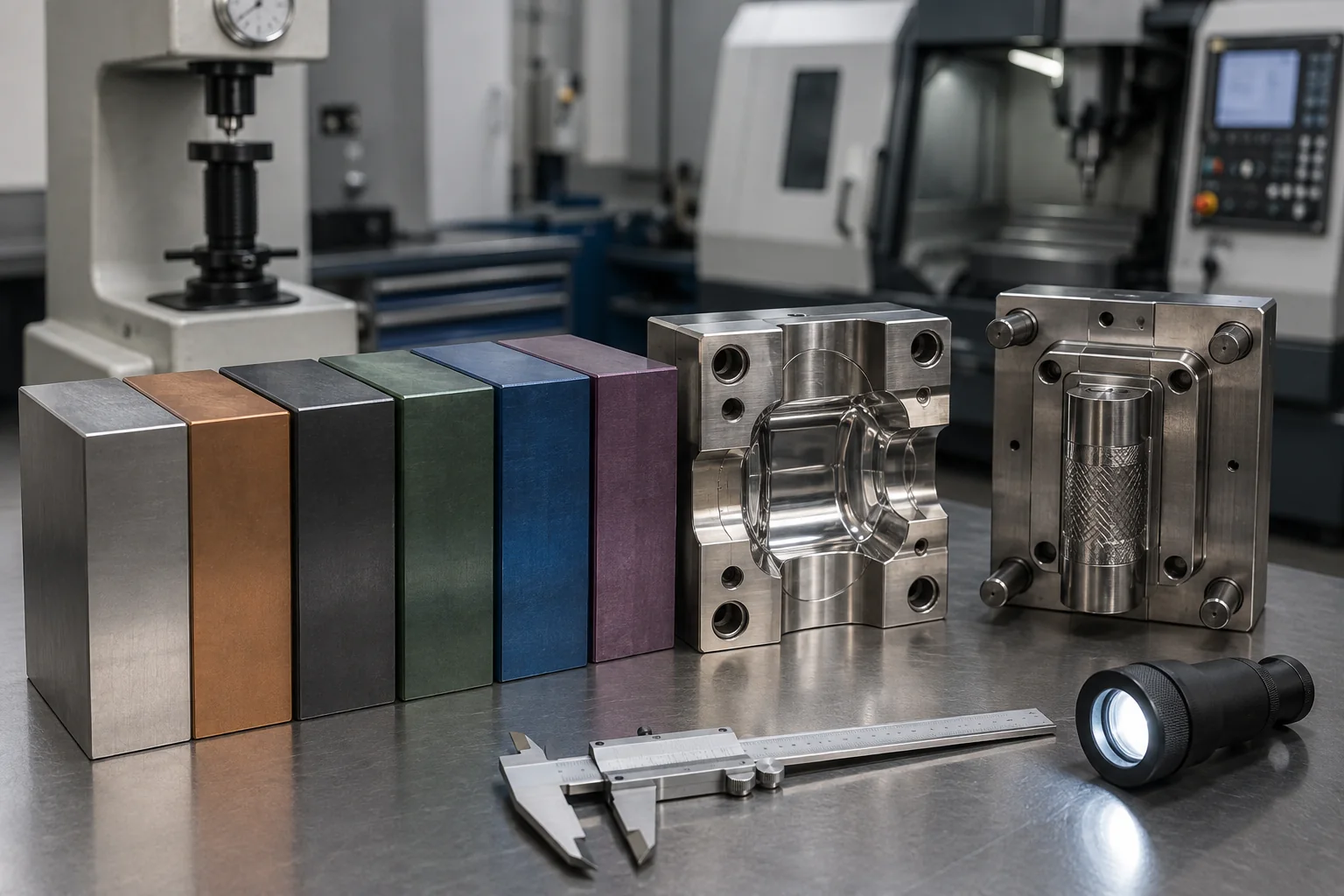
The cavity and core must hold dimensions across the expected shot count, resist the resin’s chemistry and fillers, and accept the required surface finish. Those three demands set the shortlist. Volume sets hardness, resin sets corrosion and abrasion resistance, and cosmetics set polishability.
Pre-Hardened Grades: P20, 718, 738
P20 and its relatives arrive pre-hardened around 30 HRC, machine easily, and suit moderate volumes with commodity resins. They polish acceptably for many textures but are not ideal for optical surfaces. 718 and 738 offer better cleanliness and polishability at higher cost, which matters on visible parts.
NAK80 and Mirror Polishing
NAK80 is a pre-hardened grade known for excellent polishability and uniform hardness. It suits cosmetic parts, transparent components, and textured surfaces where a fine grain is required. It is softer than hardened H13, so abrasive fillers shorten its life.
H13 and Hardened Tools
H13 is typically hardened to 48 to 52 HRC after machining. It resists abrasion and heat, which makes it a common choice for glass-filled resins, high-volume runs, and hot runner manifolds. Hardened tools cost more to machine and repair, so the volume must justify them.
S136 and Corrosion Resistance
S136 is a stainless mold steel with good corrosion resistance and polishability. It suits PVC, flame-retardant resins that release corrosive byproducts, and medical or optical parts. Its machinability is lower than P20, which affects lead time.
Matching Steel to Volume
- Under 50,000 shots: P20 or 718 is usually sufficient
- 50,000 to 500,000: consider NAK80 or hardened H13
- Above 500,000 or abrasive resin: hardened H13, S136, or inserts
- Corrosive resin: stainless grades regardless of volume
Inserts and Hybrid Tools
Using hardened inserts in a softer base balances cost and life. A pre-hardened base with H13 cavity inserts gives wear resistance where it matters and easier machining elsewhere. Inserts also simplify repair, since one cavity can be replaced without rebuilding the tool.
Frequently Asked Questions
Is harder steel always better?
No. Harder steel resists wear but is more brittle and harder to repair. It should follow the actual duty.
Does steel grade affect part appearance?
Yes, through polishability and grain uniformity. Cosmetic parts benefit from cleaner, finer steels.
Can a P20 tool run glass-filled resin?
It can, but expect gate and cavity wear. Hardened inserts at the gate area extend life considerably.
Conclusion
Injection mold steel should follow volume, resin, and finish requirements. For related reading, see tool steel reference, our injection mold cost drivers, and mold manufacturing guide. Contact TCHD to specify your tool.