


Getting a molded part from concept to volume production depends on decisions made long before the mold is cut. Part geometry, material choice, process settings, quality checks and production planning all interact, and a weakness in any one of them shows up on the floor as defects, delays or cost overruns. The tips below cover what engineers and sourcing teams should evaluate at each stage.
Design starts with the part itself. Wall thickness should be kept as uniform as possible, since thick sections cool more slowly than thin ones and invite sink marks, voids and warpage. Where a thicker section cannot be avoided, gradual transitions work better than abrupt steps. Corners deserve the same attention: sharp internal corners concentrate stress and can cause cracking, so adding radii improves both strength and material flow. Draft angles on vertical faces make ejection reliable, and rib placement should avoid creating thick junctions that cool unevenly. Bosses, snap fits and other features need enough clearance and support to fill properly and demold without damage.
Material selection shapes everything downstream. Amorphous and semi-crystalline resins behave differently in shrinkage, flow and cooling, so the choice affects tool design, gate placement and cycle time. Fillers and reinforcements change viscosity and wear on the mold, which matters for tool steel selection and maintenance planning. Engineers should confirm the grade’s processing window with the supplier rather than assuming a generic data sheet applies, and sourcing teams should factor availability and cost stability into the decision, not just the per-kilo price.
Process parameters tie design and material together. Injection speed, melt temperature, packing pressure and cooling time all influence whether a part fills completely and holds its dimensions. Gates and runners should be positioned so melt reaches the cavity evenly, avoiding weld lines in high-stress areas and air traps that cause short shots or burns. Cooling channel layout has a direct effect on cycle time, which is often the largest lever on piece price. 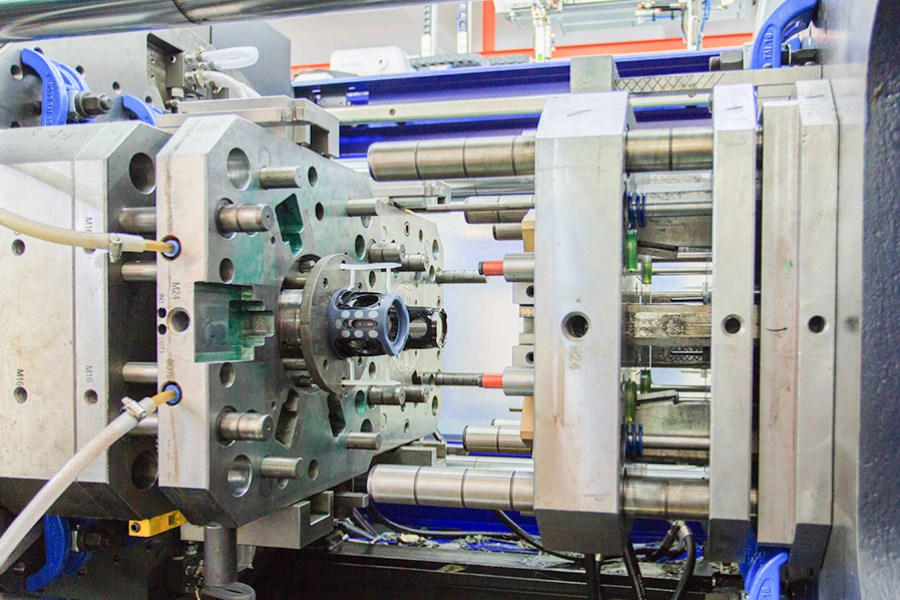
Quality considerations belong in the design review, not at the end of the line. Dimensional tolerances should reflect what the process can actually hold; over-tight tolerances add cost without adding function. Teams should agree on critical-to-function features, define inspection methods, and plan for first-article approval and pilot runs before committing to full production. Prototyping and testing remain the most reliable way to catch problems while changes are still inexpensive.
On the production side, mold design and tooling decisions determine how well a part can be made at rate. Tool steel grade, cavity count, ejection strategy and maintenance intervals all affect uptime and long-term cost. Early collaboration between designers, engineers, mold makers and the molder shortens the path from drawing to stable production and reduces the risk of costly rework later. 
TCHD’s mold design and tooling capabilities cover this full sequence. Teams can send a drawing and production requirements for a technical review before tooling begins.