


ABS ranks among the most widely used thermoplastics for injection molding. Its mechanical properties and versatility make it a practical choice for durable, impact-resistant products. Molded ABS appears in automotive parts, electronic housings, and consumer goods. Successful production depends on controlled drying, melt temperature, mold cooling, and ejection.
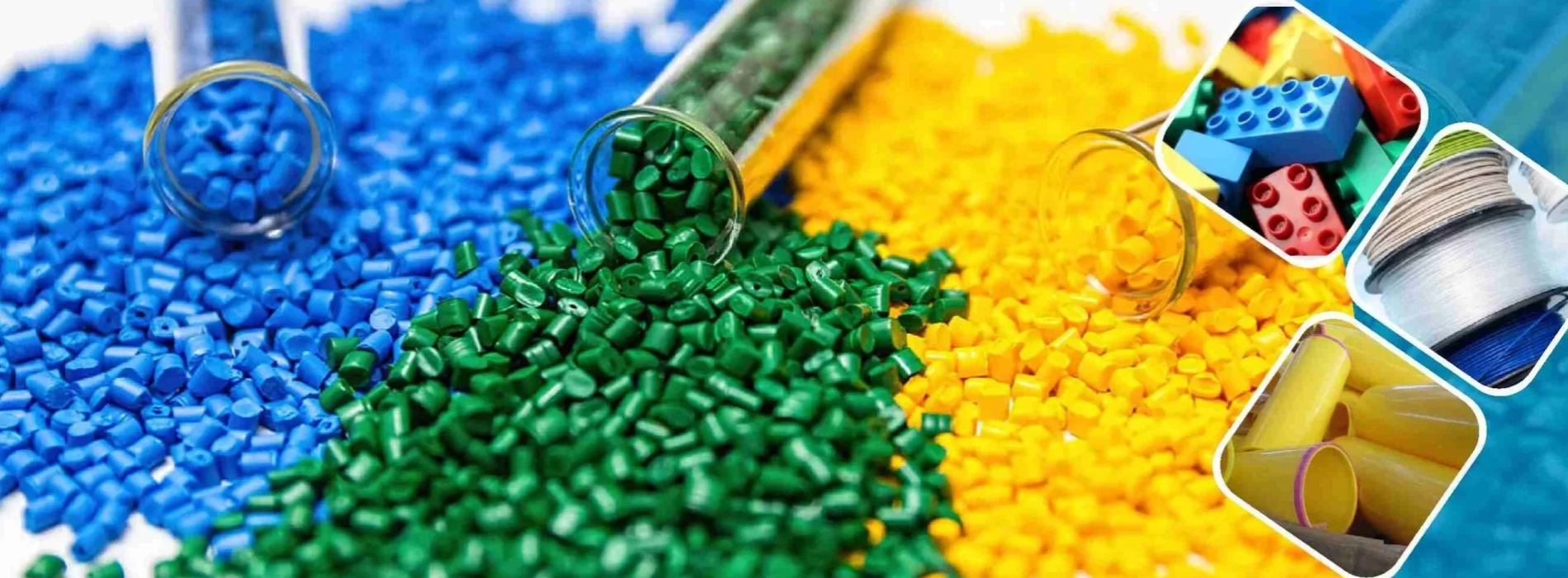
ABS is a thermoplastic polymer built from three main components: acrylonitrile, styrene, and polybutadiene rubber. Acrylonitrile and styrene polymers supply strength and rigidity. Polybutadiene rubber adds toughness. The combination produces a material that is lightweight, durable, and easy to process, which makes it suitable for injection molding.
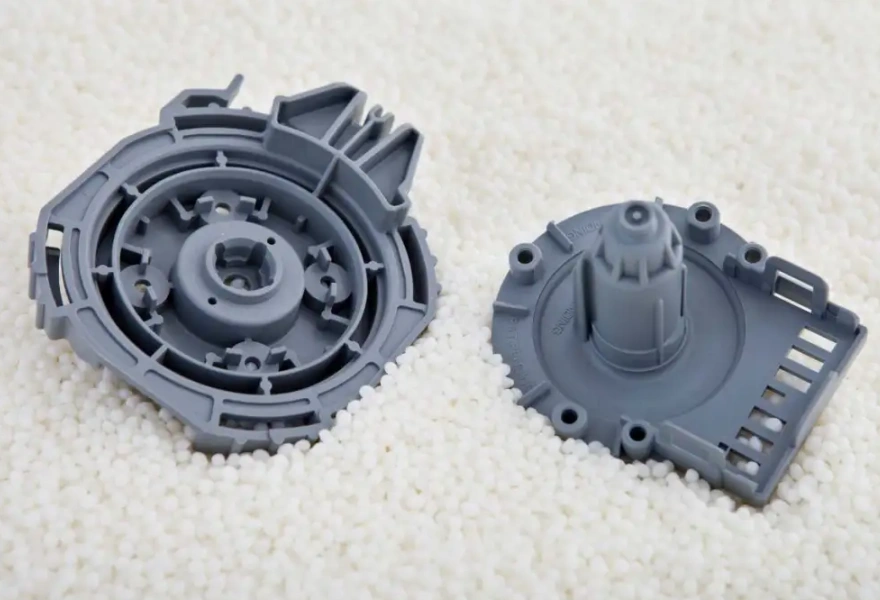
From Pellets to Molded Part
Material preparation comes first. ABS pellets are dried to remove moisture that can affect final part quality. A typical drying schedule is 80°C to 90°C for 2 to 4 hours. Correct drying helps prevent splay marks, bubbles, and weak mechanical properties.
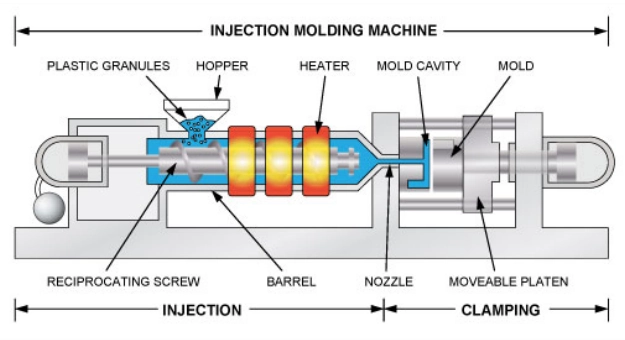
Next, dried pellets enter the hopper of the injection molding machine. The machine heats the material until it reaches a molten state, usually between 200°C and 250°C depending on the ABS grade. High pressure then pushes the molten plastic into the mold cavity.
Cooling and solidification follow. As ABS fills the cavity, it begins to cool and harden. Cooling time varies with part complexity, thickness, and mold design, and typically takes a few seconds to minutes. Mold temperature control must be stable so the part cools evenly and avoids warping or other defects.
Once the part has cooled and solidified, it is ejected from the mold. The cycle then repeats for continuous production.
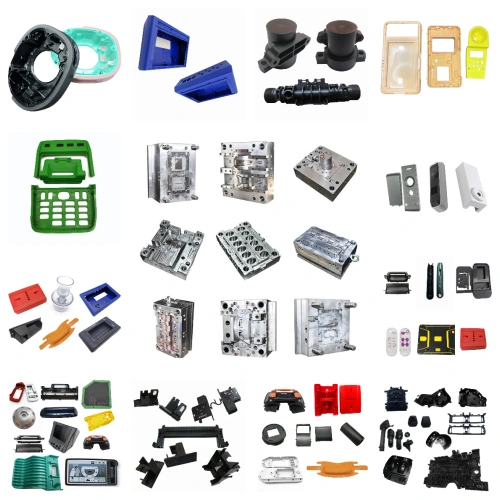
Applications span several industries because ABS offers strong performance in molded parts. Common uses include automotive parts and components, electronic housings, consumer electronics, consumer goods, and everyday household items.
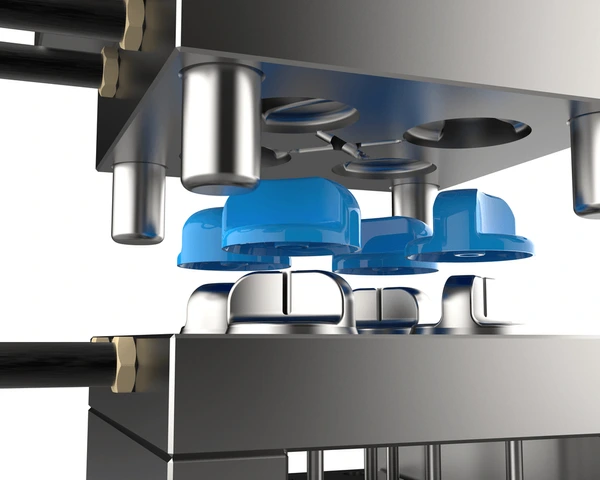
ABS injection molding holds an indispensable place in modern manufacturing. It supports durability, flexibility, and cost-effectiveness. With proper material handling, mold design, and process control, ABS can be molded into high-quality, precision-engineered parts for a wide variety of applications and demanding production goals.
The benefits are clear, and ABS injection molding still has challenges that production teams must consider. The field continues to evolve, with several trends on the horizon.