


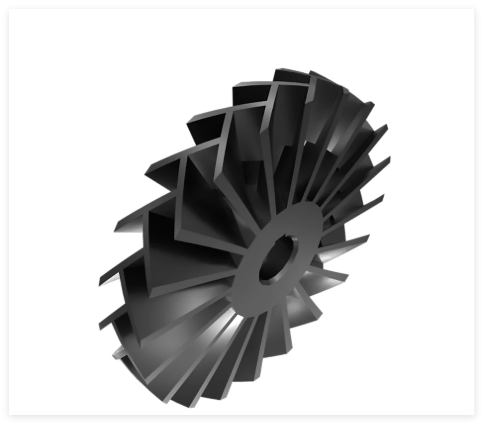
In fan blade injection molding, cooling is one of the most influential factors controlling part quality. A typical fan blade combines a thick central hub with thin, extended blades, creating a challenging wall thickness distribution. When heat is removed unevenly, the part may develop internal stress, dimensional variation, warpage, or reduced dynamic balance performance. For this reason, cooling should be treated as a precise thermal management system rather than a standard mold feature.
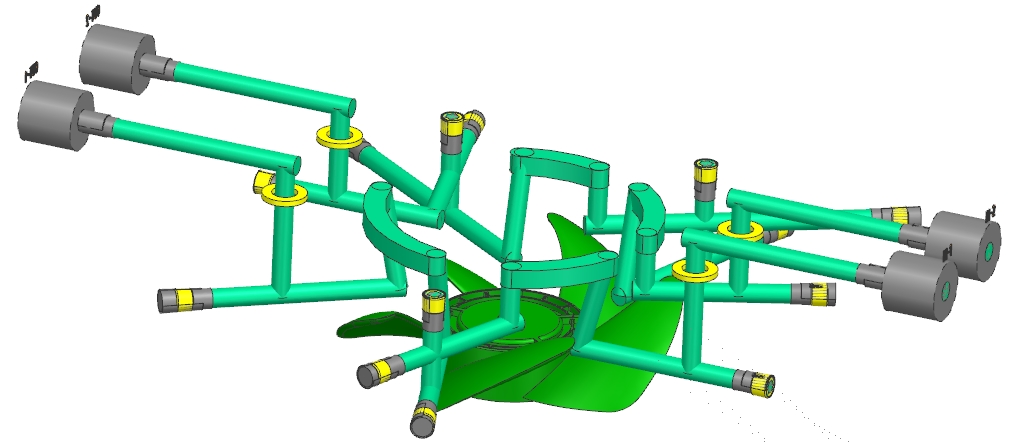
A practical solution is to apply zone-specific cooling. Instead of using the same cooling approach across the entire mold, engineers divide the part into functional regions such as the hub, blade root, blade body, and outer edge. Thicker sections usually require more intensive heat removal, while thin blade areas need balanced and controlled cooling to avoid deformation. Parallel cooling circuits can help maintain stable flow, reduce pressure differences, and improve temperature consistency across the mold.
For complex fan blade shapes, conformal cooling offers a major advantage. By using custom inserts, including 3D-printed or precision-machined inserts, cooling channels can follow the actual contour of the blade and hub. This allows heat to be extracted more uniformly from difficult-to-reach areas. Before tooling is finalized, engineers should assess the feasibility of conformal cooling by considering channel placement, insert durability, maintenance requirements, and overall cost-effectiveness.
Mold flow simulation is essential for validating the cooling strategy before manufacturing begins. Using tools such as Moldflow or similar analysis software, engineers can predict filling behavior, temperature distribution, cooling time, shrinkage, and potential warpage. Simulation also supports closed-loop optimization: cooling channel size, circuit layout, insert design, and processing conditions can be adjusted digitally before the mold is built. This reduces trial-and-error risk and improves the chance of achieving stable mass production.
Process temperature control is equally important. Even a well-designed cooling system can underperform if water temperature, flow rate, or circuit connections are unstable during production. Monitoring inlet and outlet temperatures, checking circuit balance, and documenting process parameters help ensure consistent blade dimensions and repeatable quality. Proper process control also supports better surface appearance, lower scrap rates, and improved dynamic balance after molding.
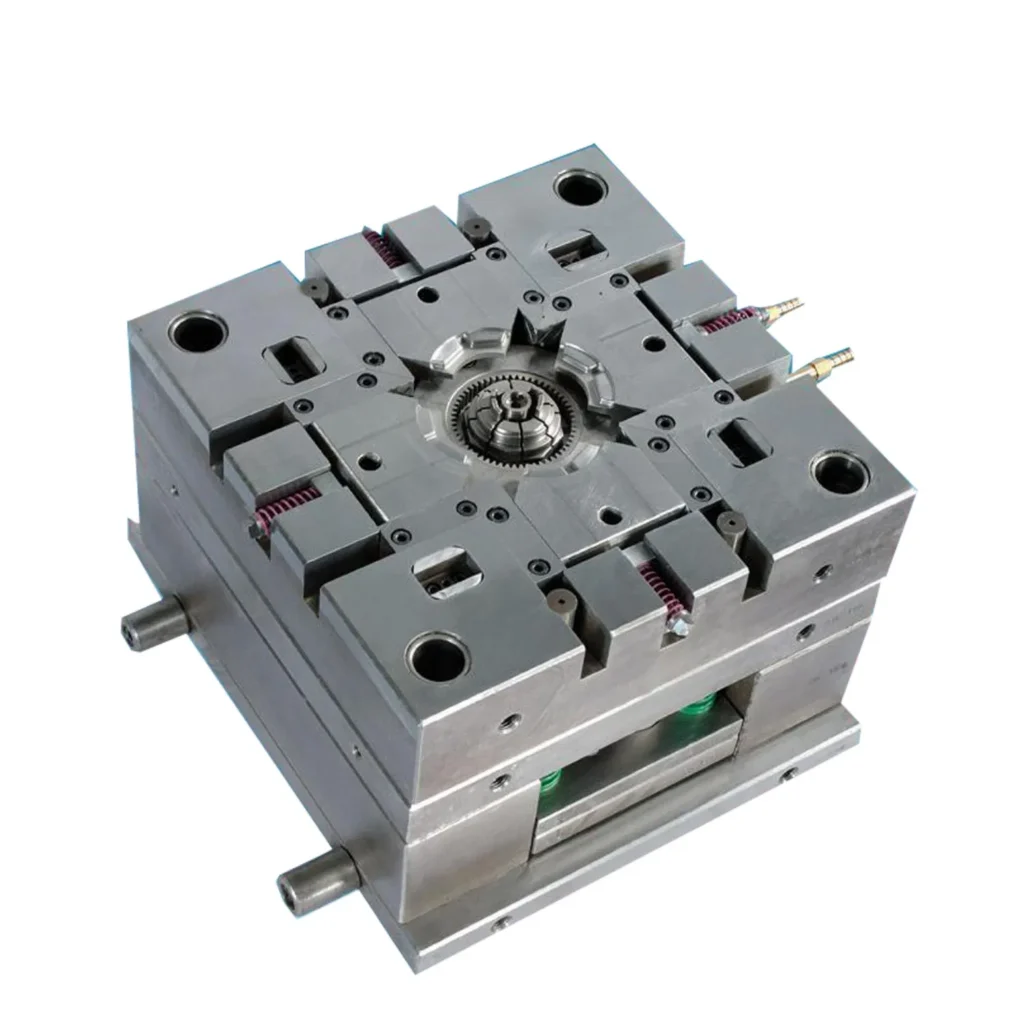
Successful fan blade injection molding depends on the integration of design, material behavior, tooling strategy, and process control. By combining zone-specific cooling, conformal cooling inserts, parallel circuit planning, simulation validation, and disciplined temperature management, manufacturers can significantly reduce warpage and internal stress. For engineering and sourcing teams, early technical review with an experienced mold and tooling partner, such as Rilong, can help confirm feasibility and prepare drawings for efficient, high-quality production.