


Plastic CNC machining and injection molding solve the same problem from opposite directions: one removes material from a block, the other fills a cavity with melt. Choosing between them is rarely a question of which process is better. It is a question of which process fits the part, the volume, and the calendar. Engineers who settle that question before the geometry locks save money on tooling, avoid redesign loops, and stop arguing with a machinist about a feature that simply cannot be cut.
Table of Contents
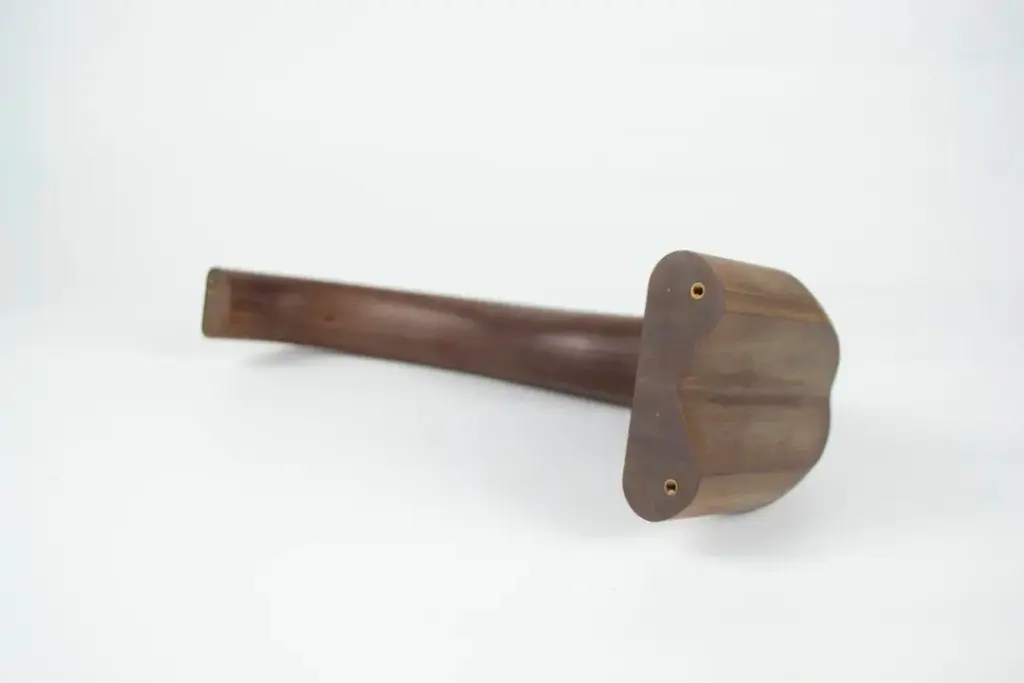
The practical starting point is quantity. Below a few hundred pieces, plastic CNC machining is usually the cheaper route because it carries no tooling. Above a few thousand, injection molding almost always wins because the tooling cost is amortised across parts that take seconds rather than hours to produce. Between those two numbers sits a wide band where the answer depends on geometry, tolerance, and how much risk the program can absorb.
Where Plastic CNC Machining Wins
Plastic CNC machining is subtractive. A block or rod is clamped, and material is removed in staged passes until the geometry matches the model. That approach has three structural advantages. It requires no mold, so the first part and the hundredth part cost roughly the same. It can produce features that would need side actions or lifters in a mold. And it can hold tolerances that molding struggles to repeat across a full cavity set.
Prototypes and bridge production are the classic use case. A design team that needs twenty housings next week does not need a steel tool; it needs a machined set that proves fit and function. The same logic applies to low-volume industrial equipment, medical devices with annual volumes in the hundreds, and any part where the design is still moving. Revising a CNC program takes hours. Revising a mold takes weeks and money.
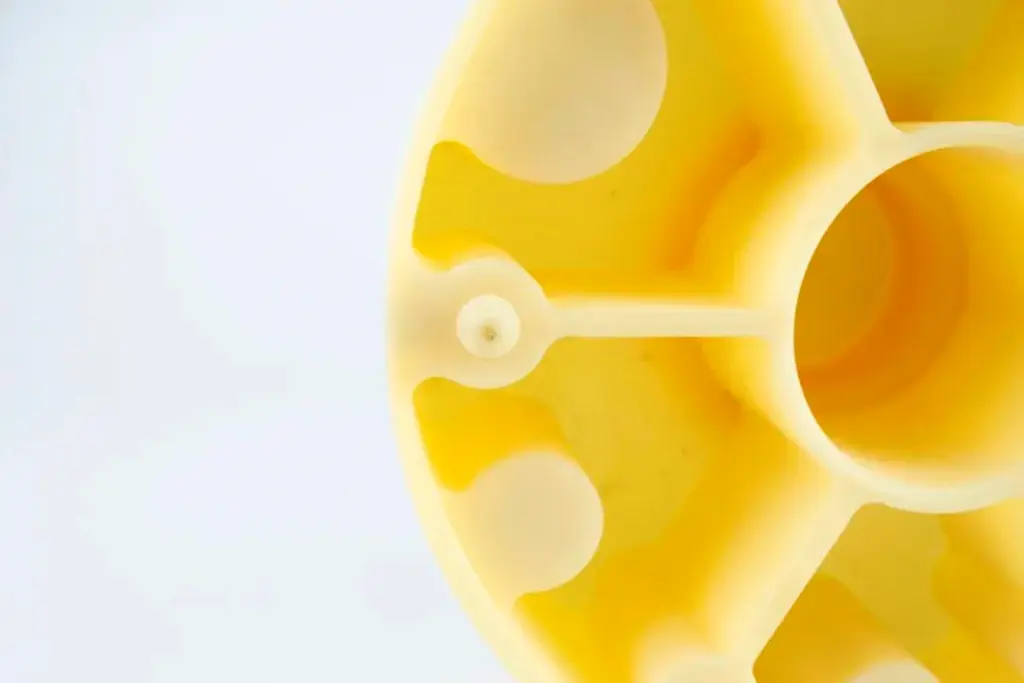
There is also a material argument. Plastic CNC machining works from stock shapes, so the material certificate follows the block. For a small run of PEEK or PEI components, machining a certified rod is often simpler than sourcing a molding grade, drying it correctly, and proving the process on a machine that has never run that resin.
Where Injection Molding Wins
Injection molding is a replication process. Once the tool is qualified, every cycle produces the same part in the same way, and the cost per part falls to material, machine time, and a small labour allocation. At volume, the difference is not marginal. A machined part that takes forty minutes of spindle time cannot compete with a molded part that takes twenty-five seconds of cycle time, even after the tool is paid for.
Molding also unlocks geometry that machining cannot reach economically: internal ribs, snap features, living hinges, textured surfaces, and multi-material overmolds. A machined housing can be functional, but a molded housing can be designed for assembly, with bosses and clips that exist because the tool makes them free. That is why the decision is often less about cost per part and more about what the part is allowed to be.
The Break-Even Arithmetic
The break-even calculation is simple enough to do in a meeting. Divide the total tooling investment by the difference in unit cost between the two processes. The result is the quantity at which molding becomes cheaper. If the program volume is comfortably above that number, mold it. If it is below, machine it. If it is close, the decision belongs to risk rather than arithmetic.
- Tooling: a single-cavity tool for a modest part typically runs from a few thousand to tens of thousands of dollars depending on size, steel, and hot runner content.
- Unit cost: machined parts carry spindle time; molded parts carry cycle time plus material plus a share of setup.
- Break-even: tooling divided by unit-cost difference. A 20,000 dollar tool against a 6 dollar saving per part breaks even at roughly 3,300 pieces.
- Hidden terms: engineering changes, trial runs, and inspection all sit on the molding side and are easy to underestimate.
Run the arithmetic twice: once with the quoted cycle time and once with a cycle time ten percent slower. If the answer changes, the decision is sensitive to a number nobody has verified, and that is worth resolving before the tool is cut.
Tolerance and Surface Finish
Plastic CNC machining routinely holds plus or minus 0.05 mm on critical features, and better on small parts with rigid fixturing. Injection molding can hold similar tolerances, but the tolerance applies across a cavity, and shrinkage variation between cavities and across a production run widens the effective window. For a part with a critical bore or a sealing face, machining is the lower-risk route until the mold is proven.
Surface finish follows the same pattern. Machined surfaces carry tool marks that can be polished or vapour-blasted to a specified finish. Molded surfaces carry the texture of the tool, which is an advantage at volume and a constraint during development, because changing a texture means changing the steel.
Material Behaviour, Machined Versus Molded
The same resin behaves differently depending on how it is formed. A machined POM part retains the orientation of the extruded stock, which is generally uniform and predictable. A molded POM part has flow orientation, weld lines, and a skin-core structure that changes its stiffness and its dimensional behaviour. Neither is wrong; they are different materials in practice.
This matters most for glass-filled grades. Machining a 30 percent glass-filled nylon exposes cut fibres at the surface, which reduces chemical resistance and creates a rougher finish. Molding the same grade keeps the skin intact and produces a part designed around the fibre orientation. If the application depends on surface integrity, that difference can decide the process on its own.
Lead Time and Program Risk
Plastic CNC machining compresses the front end of a program. A machined prototype can be in hand in days, which means design reviews happen against real parts rather than renderings. Injection molding adds tool design, steel procurement, machining, spotting, trial, and correction, and each of those steps can slip.
The risk profile is different too. A machining error costs a block of material and a reprogrammed path. A tooling error costs weeks and, in the worst case, a re-cut cavity. Programs that cannot afford that exposure often machine the first article, validate the design, and only then commit to steel. Our guide to the injection mold development process describes what that commitment involves.
Six Decision Rules
1. Decide on annual volume, not first order
A first order of 200 pieces is a prototype order even if the forecast says 200,000. Tooling decisions should follow the forecast only when the forecast has a customer behind it.
2. Check whether the geometry is moldable at all
Undercuts, deep thin ribs, and zero-draft walls push a design toward machining or toward a much more expensive tool. A DFM review before quoting answers this in a day.
3. Treat tolerance as a cost driver
Tight tolerances on a molded part usually mean a longer tool build, more trial iterations, and a higher inspection burden. If only one feature is critical, machine it as an insert instead.
4. Count the engineering changes you expect
Every change after tooling is cut costs more than the same change before. If the design is not stable, plastic CNC machining buys you the time to stabilise it.
5. Include finishing in both quotes
Painting, laser etching, and assembly are often quoted separately, and the comparison collapses when one route needs a fixture the other does not.
6. Ask what happens at the crossover
A supplier who can run both processes will tell you honestly where the line sits for your part. A supplier who only molds will find a reason to mold.
Hybrid Paths Worth Considering
The choice is not always binary. Machined inserts overmolded into a molded body let a program put precision where it matters and volume where it pays. Aluminum bridge tooling can produce thousands of parts for market testing before steel is committed. And a machined prototype set can be used as the reference for a molded first article, which shortens the qualification conversation considerably.
For teams comparing quotes across processes, our breakdown of what drives precision CNC machining cost and the fundamentals of mold design and tooling cost drivers cover the two sides of the same arithmetic.
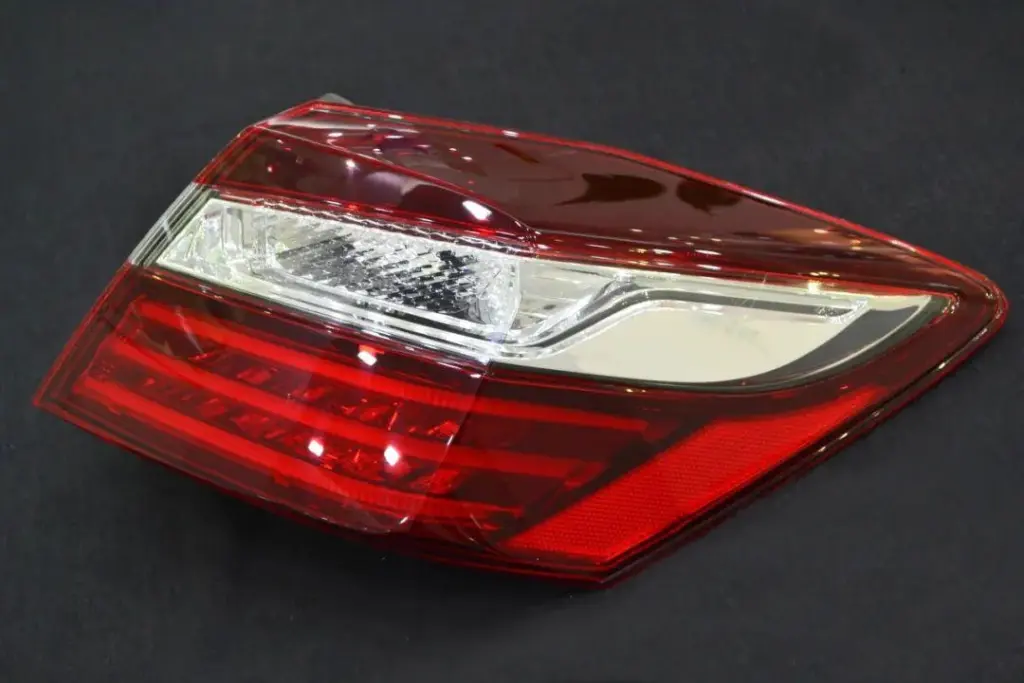
Cost Model: Two Worked Examples
Numbers make the trade-off concrete. Take a palm-sized enclosure in ABS with modest tolerance, one colour, and no optical requirement. Machined from stock, the part carries a programming allocation plus roughly forty minutes of spindle time each, with delivery in two weeks. Molded, the tool might cost twelve thousand dollars, the part might run at just over a dollar with a thirty-second cycle, and the first batch might land in eight weeks.
At 300 pieces, plastic CNC machining wins clearly: no tooling, faster delivery, and the design can still change. At 30,000 pieces, molding wins by an order of magnitude even after trial runs and inspection. The interesting quantity is around 2,000 pieces, where the tooling has not yet been absorbed but the unit saving is already meaningful. That is the point where the second question matters: is the design frozen? If not, machining buys the months needed to freeze it.
Now take a part with a sealing bore held to 0.03 mm and a textured exterior. Machining the bore and molding the body as two components is often cheaper than forcing a single molded part to hold that bore across a full cavity set. Splitting the part sounds like extra assembly, and sometimes it is, but the alternative is a tool that fails first article inspection twice.
How to Brief Both Processes Without Wasting a Week
Send the same drawing and the same annual volume to both a machining shop and a molder, and ask three questions: the unit price at 100, 1,000, and 10,000 pieces; the first-article lead time; and which feature is the biggest cost driver in the design. The answers usually agree on the cost driver, which tells you what to change, and diverge sharply on the other two, which tells you where the processes actually differ for your part.
Keep the comparison short. A page of numbers plus one paragraph of engineering commentary per route is enough to decide. The failure mode is requesting detailed quotations on both and then spending a month comparing documents that were never built on the same assumptions.
Seven Signals That Plastic CNC Machining Is Still the Right Call
When a program is under pressure to commit to tooling, these are the signals that should keep plastic CNC machining in the plan for at least one more iteration.
The design has changed in the last four weeks
If the model moved last month, it will move again. Plastic CNC machining absorbs that change at the cost of a reprogrammed toolpath rather than a re-cut cavity.
Only one feature is genuinely tight
When a single bore or datum carries the tolerance, plastic CNC machining that feature and molding the rest often beats a tool that must hold it everywhere.
The volume is a forecast, not an order
Forecasts built from market assumptions do not justify steel. Machining a pilot batch tests the market without converting a guess into a fixed asset.
The part is large and the tool would be too
Large housings, panels, and covers carry tooling costs that scale with size. For a few hundred units, plastic CNC machining can be the cheaper route by a wide margin.
The material is exotic or hard to mold
High-temperature resins, filled grades, and small lots of specialty compounds are often easier to machine from certified stock than to dry, purge, and validate on a molding machine.
Assembly timing depends on having parts now
Machined parts let the assembly fixture, the test rig, and the packaging be validated before the tool exists. That parallel work is worth more than the unit-cost saving.
The program needs a reference set
A machined reference part gives the molder something concrete to match. Plastic CNC machining produces the master that the first molded article is measured against.
None of these signals mean molding is wrong. They mean the timing is wrong, and the cost of finding that out after the tool is cut is always higher than the cost of one more machined iteration.
Frequently Asked Questions
Is plastic CNC machining accurate enough for production parts?
Yes, for low and medium volumes where the geometry suits machining. Many industrial, medical, and aerospace plastic parts are machined for their entire life because the annual volume never justifies a tool, or because the tolerance and traceability requirements favour a machined part with a material certificate.
How many parts justify an injection mold?
There is no universal number, but the break-even usually falls between 1,000 and 10,000 pieces for small to medium parts. Large parts with expensive tools push the number higher, while simple parts with cheap tools can break even in the low hundreds.
Can a machined prototype be used to validate a mold design?
Partly. It validates fit, function, and assembly, which is most of the risk. It does not validate shrinkage, weld line position, or cycle time, so a molded first article is still required before mass production.
The Bottom Line
Choose plastic CNC machining when the design is still moving, the volume is low, or the tolerance is tight. Choose injection molding when the design is stable, the volume is real, and the part benefits from geometry only a tool can produce. The expensive mistakes happen when a program treats a prototype order as production, or commits to steel before the design has stopped changing.
For a wider view of how the two processes sit inside a manufacturing program, the numerical control and injection moulding references give the technical background, while our manufacturing partner overview explains how both routes are qualified in practice.