


Choosing a plastic material involves more than comparing data sheets. Engineers and sourcing teams also need to evaluate part design, processing behavior, quality requirements, and production reliability. TCHD works with a broad range of common materials and maintains a dedicated material warehouse to reduce shortage risk and support uninterrupted customer production. The sections below summarize the key properties and injection molding considerations for ABS, PA6, PC, PC/ABS, and PP.
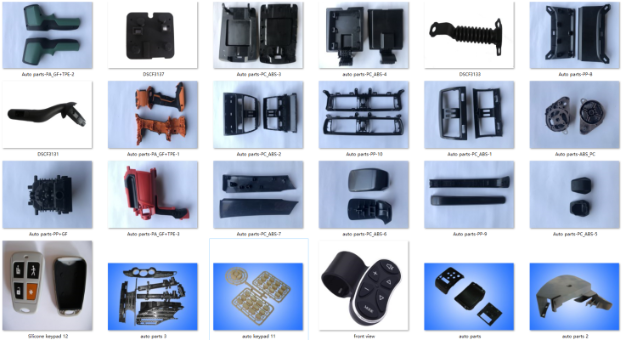
ABS is produced from acrylonitrile, butadiene, and styrene. Its performance is shaped mainly by the ratio of these three monomers and by the molecular structure within its two phases. This gives designers considerable freedom and has led to hundreds of commercial ABS grades with varied impact resistance, surface finish, and heat distortion behavior. ABS offers good processability, attractive appearance, low creep, strong dimensional stability, and high impact strength. Typical uses include automotive parts such as instrument panels and wheel covers, refrigerators, high-strength tools such as mixers, food processors, and lawn mowers, telephone housings, and plastic keyboards. For injection molding, ABS should be dried at 80–90°C for at least two hours, with moisture kept below 0.1%. Melt temperature is generally 210–280°C, with 245°C recommended. Mold temperature should be 25–70°C; lower mold temperatures can reduce part finish. Injection pressure typically ranges from 500 to 1,000 bar, and medium-to-high injection speed is suitable.
PA6 has chemical and physical characteristics similar to PA66, but its melting point is lower and its processing window is wider. It offers better impact resistance and solubility than PA66, though it also absorbs moisture more readily. Because moisture can affect many quality characteristics of finished parts, PA6’s hygroscopic nature must be considered during product design. Modifiers are often added to improve mechanical performance, with glass fiber being the most common. PA6 shrinks by roughly 1–1.5%; glass fiber can reduce shrinkage to about 0.3%, although shrinkage perpendicular to flow may be slightly higher. Actual shrinkage is also influenced by crystallinity, moisture absorption, part design, wall thickness, and process settings. PA6’s good mechanical strength makes it suitable for structural components, while its wear resistance supports bearing applications. Before processing, keep moisture-proof packaging closed. If moisture exceeds 0.2%, dry at above 80°C for 16 hours; if the material has been exposed to air for more than eight hours, vacuum drying at 105°C for over eight hours is recommended. Melt temperature is 230–280°C, or 250–280°C for reinforced grades. Mold temperature should be 80–90°C. Injection pressure generally falls between 750 and 1,250 bar, depending on material and part design. High injection speed is typical, with slightly lower speed for reinforced materials.
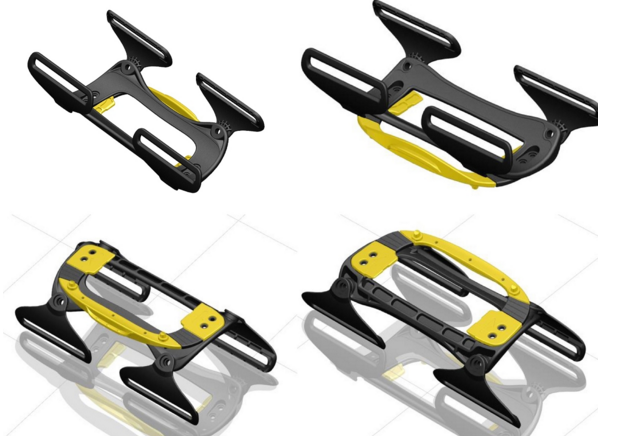
PC is an amorphous material with particularly strong impact resistance, thermal stability, gloss, antibacterial properties, flame retardancy, and resistance to contamination. Its notched Izod impact strength is high, and its shrinkage is very low, usually 0.1–0.2%. PC has good mechanical properties but poor flow, which makes injection molding more challenging. Grade selection should be based on the final product’s requirements: low-flow PC is appropriate when high impact resistance is needed, while high-flow PC can help optimize the injection process. PC is used in electrical equipment such as computer components and connectors, appliances such as food processors and refrigerator components, and transportation applications such as lighting housings and instrument panels. Drying is critical because PC absorbs moisture; recommended conditions are 100–120°C for three to four hours, with moisture before processing below 0.02%. Melt temperature is 260–340°C, mold temperature is 70–120°C, and high injection pressure should be used whenever possible. Low-speed injection suits smaller gate types, while other gate types can use high-speed injection.
PC/ABS combines the advantages of PC and ABS. ABS contributes easier processing, while PC contributes excellent mechanical properties and thermal stability. The ratio of the two components affects the thermal stability of the blend, and PC/ABS also offers excellent flow. Typical applications include computer and business machine housings, electrical equipment, and automotive parts such as instrument panels, interior finishes, and wheel covers. Drying before processing is necessary: moisture should be below 0.04%, with recommended drying at 90–110°C for two to four hours. Melt temperature is 230–300°C, mold temperature is 50–100°C, and injection pressure depends on the plastic part. Injection speed should be as high as possible.
PP is a semi-crystalline material that is harder than PE and has a higher melting point. Homopolymer PP is brittle at temperatures above 0°C, so many commercial grades are random copolymers containing 1–4% ethylene or block copolymers with a higher ethylene content. Copolymer PP has a lower heat distortion temperature of about 100°C, lower transparency, gloss, and rigidity, but stronger impact resistance. PP strength increases as ethylene content rises. Its Vicat softening temperature is 150°C. High crystallinity gives PP good surface stiffness and scratch resistance, and it does not generally suffer from environmental stress cracking. PP is commonly modified with glass fiber, metal additives, or thermoplastic rubber. MFR ranges from 1 to 40; low-MFR grades offer better impact resistance but lower tensile strength. At the same MFR, copolymer grades are stronger than homopolymer grades. PP shrinkage is relatively high, generally 1.8–2.5%, though its directional uniformity is better than that of PE-HD and several other materials. Adding 30% glass can reduce shrinkage to about 0.7%. Homopolymer and copolymer PP resist moisture, acids, alkalis, and dissolution, but they are not resistant to aromatic hydrocarbon solvents such as benzene or chlorinated hydrocarbon solvents such as carbon tetrachloride. Unlike PE, PP retains oxidation resistance at elevated temperatures.
If you are unsure which plastic material best suits your product, TCHD’s team can help. With years of experience serving diverse industries and processing a wide range of materials, we provide expert material selection and manufacturing recommendations tailored to your specific needs.