


For engineering and sourcing teams, a product’s finish is decided early and affects tooling, material choice, assembly, validation, and cost. Surface treatment sits at the center of CMF—Color, Material, and Finish—an industrial design approach that treats color, material, and process as one integrated system. A finish may be specified for corrosion resistance, wear resistance, visual quality, or another functional requirement.
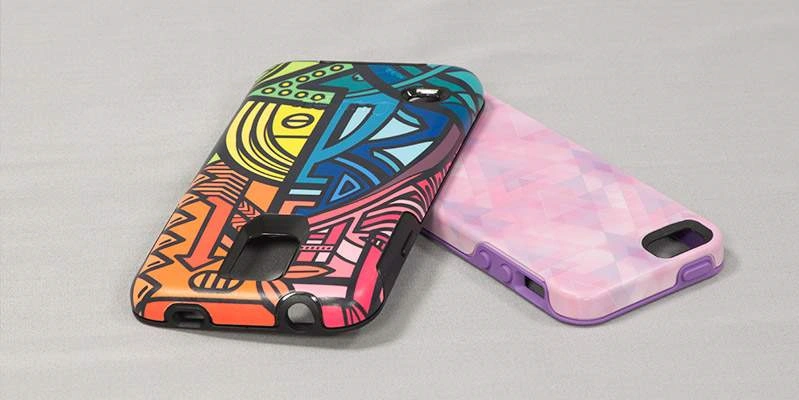
IMD (In-Mold Decoration), often described as a non-painting route, begins with a pre-printed film placed into a metal mold. Resin is injected and bonds with the film, producing a single molded part. Its structure typically combines a hard transparent top film, a printed graphic layer, and an injection backing. This protects graphics from wear and scratches while keeping colors vivid and fade-resistant. IMD reduces production steps and part count, resists corrosion and wear, avoids peeling, supports custom patterns, and delivers strong decorative effects. Typical markets include automotive, appliances, consumer electronics, and medical electronics; overall, it is efficient and cost-effective.
OMD (Out-Mold Decoration) extends IMD by combining printing, texture, and metallization. It can reproduce brushed metal, wood grain, leather, stone, and other 3D decorative effects, making it suitable for curved parts with larger height differences. Because OMD is not tied to one substrate, it works with metals and plastics. It supports 3D shaping and can incorporate internal structures for compact products in a single process. Trade-offs include higher equipment cost and limits on very complex 3D geometry.
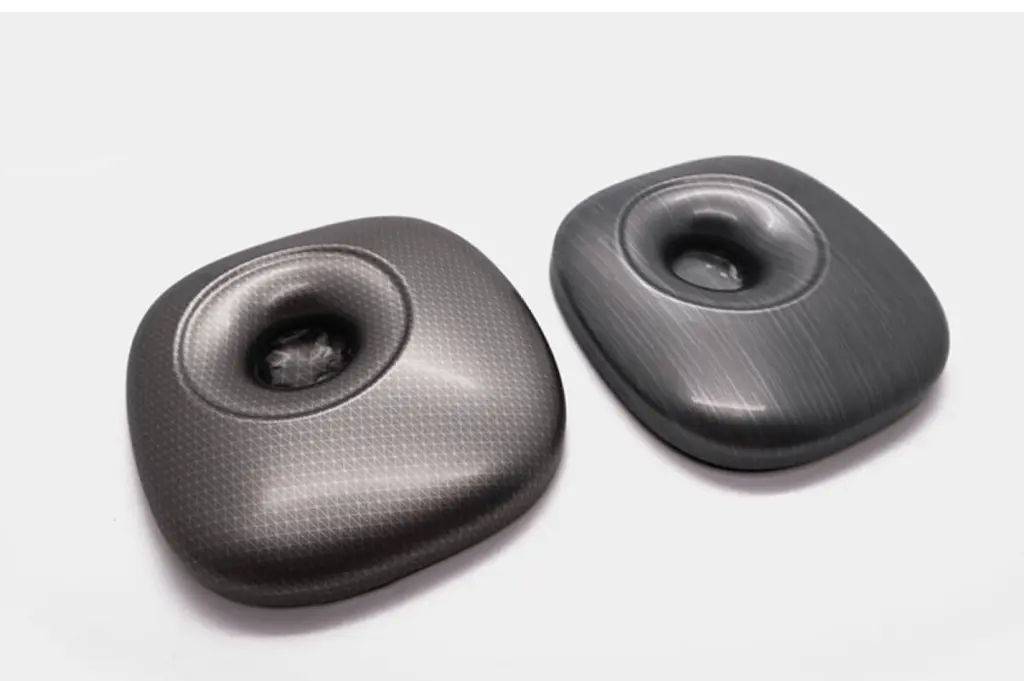
Spray coating atomizes paint through a spray gun or comparable equipment and applies it to the workpiece. Pressure or centrifugal force breaks the paint into fine droplets for an even surface coating.
PVD (Physical Vapor Deposition) is a vacuum coating method. Using low-voltage, high-current arc discharge, it ionizes vaporized material and reactive gas; an electric field accelerates the ions onto the workpiece to build the coating.
Electroplating creates a metallic look on plastic parts with high yield and low cost. Unlike PVD, which is physical, electroplating is chemical; available routes include vacuum plating and water electroplating.
NCVM (Non-Conductive Vacuum Metallization), also called discontinuous or non-conductive plating, deposits thin metal and insulating compound films. The result is a metallic appearance that does not block wireless communication. NCVM parts are non-conductive, can pass high-voltage testing, and offer metallic aesthetics with controllable translucency.
Printing transfers patterns to plastic surfaces through pad printing, screen printing, transfer printing, or heat transfer. Laser engraving—or laser marking—uses optical principles to create permanent marks on the surface or inside transparent materials. It is cost-effective, flexible, precise, and permanent.
Etching removes material through chemical reaction or physical abrasion to form textured or embossed metal surfaces. In photo-chemical etching, the target areas are exposed and developed, then contacted with chemical solutions so material dissolves into recessed or hollow shapes.
PPVD deposition uses vacuum evaporation, then removes unwanted areas through film exposure and chemical solutions to form patterns; it is commonly used for battery covers. Electrophoresis moves charged particles toward an oppositely charged electrode under an electric field, a principle often applied in coating.
Sandblasting uses compressed air to drive abrasives—such as copper slag, quartz sand, emery, iron sand, or sea sand—at the workpiece. The impact and cutting action modify surface condition and shape, improving cleanliness, roughness, and mechanical properties, while boosting fatigue resistance, coating adhesion, durability, leveling, and decorative quality.
Rolling, also called calendering, is a finishing step often associated with leather-like materials. Heat and pressure exploit fiber plasticity to flatten the surface or create parallel fine lines for added luster. In a typical calendering line, material is fed, heated, melted, formed into sheet or film, cooled, and rolled. PVC is a common material for this process.

Selecting a finish requires balancing substrate compatibility, part geometry, durability targets, RF and electrical needs, tooling investment, volume, and quality criteria. For projects that combine decorative films, coatings, or molded housings, early process review helps avoid late-stage rework. Explore TCHD’s plastic injection molding capabilities, or send your drawing and production requirements for a technical review.