


Modern manufacturing relies on molds to turn raw materials into repeatable products. These tools shape parts through injection molding, blow molding, extrusion, die casting, forging, smelting, stamping, and related methods. In practice, a mold is a custom-built tool made from multiple components that gives material a desired form. Because it changes the physical state of material during shaping, it is often called the “Mother of Industry.” Molds are used across daily life and industrial production; computers, phones, keyboards, cups, and even engine covers depend on them. A single automobile may require more than 20,000 different molds. Wherever mass production takes place, molds are essential.
Molds are available in many types and can be grouped by the material being processed and the process being used. Effective mold design starts with precise dimensions, smooth surfaces, a sensible structure, high production efficiency, automation readiness, ease of manufacturing, long service life, and controlled cost. The design must satisfy process requirements while remaining economically efficient. When engineers define mold structure and parameters, they consider rigidity, guidance, ejection mechanisms, positioning methods, and clearance sizes. Components that wear or require replacement should be easy to swap out. Plastic and die-casting molds also need a well-designed gating system, attention to the flow behavior of molten plastic or metal, and correct gate position and direction. Multi-cavity molds can improve output and reduce runner material waste, allowing identical or different products to be produced in one cycle.
For high-volume production, high-efficiency, high-precision, long-life molds are the better choice. Progressive stamping molds benefit from multi-station layouts or hard-alloy inserts. In small-batch production or new-product trials, simpler molds that can be built quickly and at lower cost often make more sense. Examples include modular punches, sheet punches, polyurethane rubber molds, low-melting-point alloy molds, zinc alloy molds, and superplastic alloy molds. Computer-aided design is now widely used to optimize mold design and has become a key development in the field.
Structurally, molds fall into two broad groups: planar blanking molds and cavity molds. Planar blanking molds depend on precise matching between punch and die dimensions and may sometimes require zero clearance. Cold extrusion, die-casting, powder metallurgy, plastic, rubber, and other forging molds are cavity molds used to shape three-dimensional parts. Cavity molds have dimensional requirements in length, width, and height, and their complex shapes make them difficult to manufacture. Mold production is usually single-item or small-batch work with strict accuracy demands, so precision machining equipment and measuring instruments are commonly used.
Planar blanking molds can be roughed by electrical discharge machining, then finished by contour grinding and jig grinding for higher precision. Contour grinding may be performed on optical projection curve grinders, profile-equipped flat grinders, or precision surface grinders with specialized grinding tools. Jig grinders can position molds precisely and maintain hole diameter and spacing accuracy. CNC coordinate grinders can grind complex curves for punches and dies. Cavity molds often use profiling mills, EDM, and electrolytic machining. Combining profiling milling with CNC and adding three-way head movement to EDM can improve cavity processing quality, while inflated electrolytic processing can raise electrolytic machining efficiency.
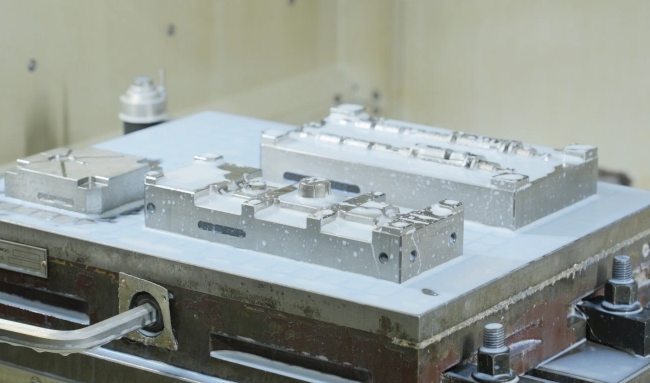
Mold manufacturing generally involves forging, machining, and heat treatment. To ensure mold quality and reduce production cost, the selected material should have good forgeability, machinability, hardenability, hardenability depth, and grindability. It should also show low sensitivity to oxidation, decarburization, quenching deformation, and cracking. Good grindability means low wear on grinding wheels, high grinding capacity without burning, low sensitivity to wheel quality and cooling conditions, and minimal risk of grinding burns or cracks. Good forgeability means low resistance to deformation during hot forging, good plasticity, a wide forging temperature range, low tendency for forging and cold cracking, and minimal carbide precipitation. Annealing processability requires a wide spheroidizing annealing temperature range, low annealed hardness with little fluctuation, and a high spheroidization rate. Machinability should allow high cutting volumes, low tool wear, and low surface roughness after machining. Oxidation and decarburization resistance should be strong at high temperatures, with a slow decarburization rate, low sensitivity to the heating medium, and little pitting. Hardenability should deliver uniform, high surface hardness after quenching. Hardenability depth should produce a deep hardened layer after quenching, even with mild quenching media. The tendency for quenching deformation and cracking should be low: minimal volume change, slight warping, low abnormal distortion, low sensitivity to quenching cracks, and relatively low sensitivity to quenching temperature and workpiece shape.
Plastics are often selected for molded products because of their low density, which helps reduce the weight of machinery and equipment and save energy, especially in vehicles, ships, airplanes, and spacecraft. Although plastics may not match metals in absolute strength, their low density gives them high specific strength and stiffness. Reinforced plastics made with high-strength fibrous, flaky, or powdered metal or non-metal fillers can offer specific strength and stiffness even greater than metals. Most plastics also resist acids, alkalis, salts, water, and gases well, and generally do not react chemically with these substances under normal conditions. They provide good electrical, thermal, and sound insulation; low friction; wear resistance; and self-lubricating properties. Combined with high specific strength and low transmission noise, plastics work effectively in liquid media, semi-dry, or even dry friction conditions, making them suitable for bearings, gears, cams, and pulleys at moderate speeds and light loads. Plastics can also offer strong adhesion, good molding, and easy coloring.
Mold performance depends heavily on disciplined maintenance. After extended use, the cutting edge must be sharpened, and after grinding it should be demagnetized to prevent material blockage caused by residual magnetism. Mold users should keep detailed records of usage, maintenance such as lubrication, cleaning, and rust prevention, and damage. These records help identify worn or damaged parts, troubleshoot the molding process, reduce trial time, and improve efficiency. During normal operation, test various mold functions and measure the final product’s dimensions to assess mold condition. This can help locate damage to cavities, cores, cooling systems, and parting surfaces and guide maintenance and repair.
Springs are prone to breakage and deformation. Replace them with springs of the same specification and model; color, outer diameter, and length should all match before replacement. Imported springs are generally of better quality. Punch heads often suffer breakage, bending, and chipping, and punch bushings typically chip as well. Replace these with parts of the same specifications, paying attention to working dimensions, mounting dimensions, and overall length. Check fastening components for loosening or damage and replace them with identical parts when necessary. Inspect pressing parts such as pressure plates and urethane, as well as ejecting components such as stripper plates and pneumatic ejectors, for wear or damage. Repair damaged parts, check pneumatic ejection systems for leaks, and replace damaged air hoses as needed.
Ejector and guide components deserve close attention because they support smooth mold opening, closing, and product ejection. Damage to these components can stop production. Keep ejector pins and guide posts well lubricated with suitable lubricants and check for deformation or surface wear. Replace worn parts immediately. After each production cycle, coat the mold’s working surfaces, moving parts, and guide components with specialized rust-prevention oil. Pay particular attention to gears, rack-bearing areas, and spring force in spring-loaded molds. Cooling channels can accumulate scale, rust, sludge, and algae over time, reducing channel size and heat exchange efficiency. Regular cleaning is important for maintaining productivity and controlling costs. Hot runner molds also require proper maintenance of heating and control systems to prevent production issues and ensure stable operation.
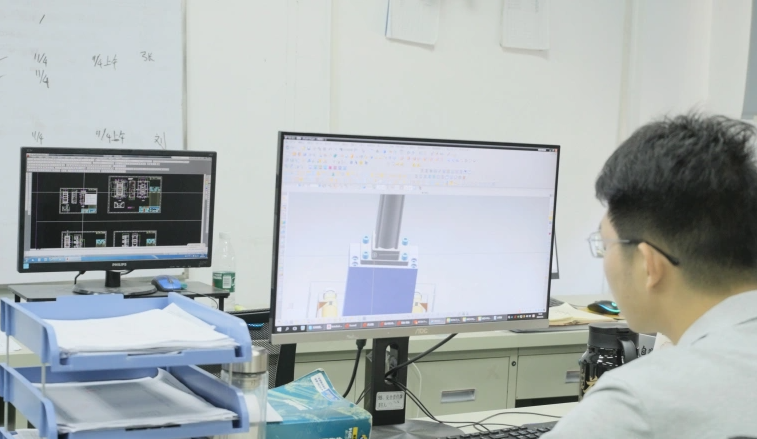
Several recurring issues affect mold life and performance. Poor material selection for key working parts can lead to inadequate performance and low wear resistance. Mold steel that has not been properly refined may contain smelting defects, and insufficient forging process adjustments during blanking may leave heat-treatment risks in punch and die molds. Structural design problems also matter. For example, slender punches may lack reinforcement and suffer material buildup due to poor ejection flow, while excessive stripping force can increase the alternating load on punches and intensify wear. An incomplete mold-making process can leave a poor internal structure, especially when punch and die forging quality is deficient. Heat-treatment technique or process problems may cause incomplete hardening, soft spots, inconsistent hardness, microcracks, or even fractures. Inadequate grinding or polishing can result in high surface roughness. Missing or ineffective lubrication also accelerates wear.
To learn more about mold design and manufacturing, connect with TCHD Mould Design and Manufacturing.