


Overmolding lets a product combine structural strength with a soft, sealing, or grippy surface. The hardest question is rarely whether to overmold, but which material should form the second layer. Liquid silicone rubber and engineering plastics both work, and the right answer follows the application rather than a ranking of materials.
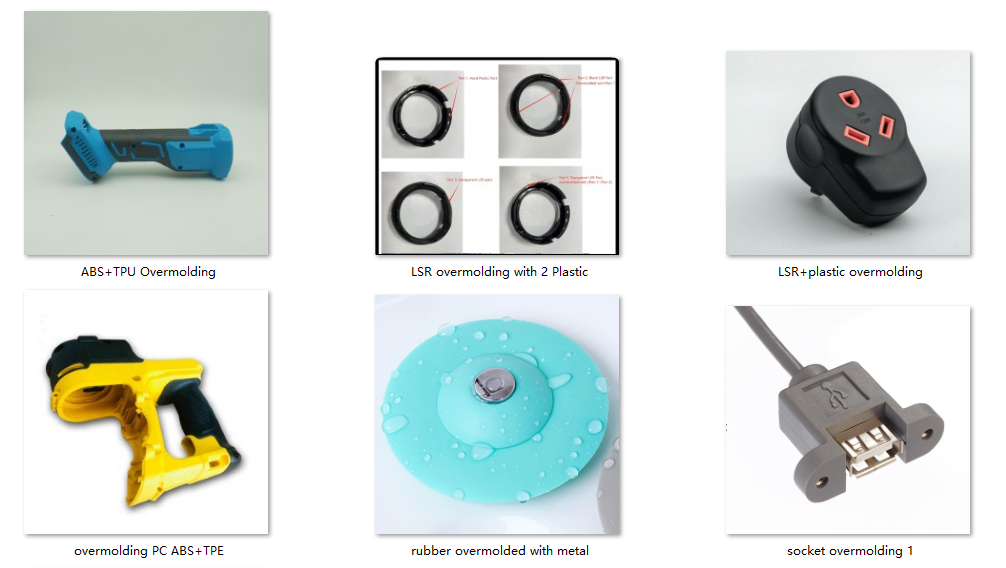
Where LSR and Plastic Overmolding Diverge
The deepest difference is how each material is processed. LSR is a two-part, platinum-cured thermoset that cures inside a heated mold; it cannot be remelted. Thermoplastic overmolding melts a second resin that bonds to the substrate as it cools. That difference drives design freedom, bonding strategy, tolerances, tooling, and the whole production approach.
Define What the Overmolded Layer Must Do
Before comparing quotes, list the function: sealing against water or dust, soft-touch grip, vibration isolation, electrical insulation, or protection of a display. A layer that must compress and recover favors LSR. A layer that must carry load or provide a hard wearing surface favors a thermoplastic. A practical evaluation covers five connected areas: design, material, process, quality, and production.
Design Rules for LSR Overmolding
Silicone flows readily and cures at moderate temperature, so it can wrap thin walls and complex contours. Because it bonds chemically to many substrates, mechanical interlocks can be simpler. Shrinkage is low and thermal stability is high, which suits sealing lips and soft buttons. The constraint is that LSR parts are flexible, so they need support in the tool and careful demolding.
Design Rules for Thermoplastic Overmolding
Thermoplastic overmolding depends on material compatibility. TPE grades bond well to PP, PC/ABS, and PA when the substrate is designed with mechanical interlocks plus chemical affinity. Unequal shrinkage between the two resins causes warpage and sink, so wall sections and gate positions matter. Where an incompatible pair must be used, undercuts and through-holes carry the retention load.
Tooling and Cycle Differences
LSR needs a cold-runner system, precise temperature control, and often a two-shot or insert-loaded setup, which raises tooling cost but yields fast cycles and low scrap once running. Thermoplastic 2K overmolding needs a rotating or indexing tool and two injection units, with longer cycle times for the thicker sections involved. Standard insert overmolding uses the simplest tool but adds part handling.
Cost and Volume Considerations
At low volume, standard thermoplastic overmolding with preformed inserts usually keeps tooling lower. As volume grows, LSR injection molding becomes competitive because cycle times are short and scrap is minimal. Material price per kilogram is only one input; labor, scrap, and cycle time usually dominate the total.
Frequently Asked Questions
Can LSR bond to polycarbonate?
Often yes, with primer selection or a compatible self-bonding grade. The bond should be validated with pull and peel tests.
Which option is better for medical devices?
LSR is common because it tolerates sterilization and offers skin-friendly formulations, though thermoplastic medical grades also have a place.
Does overmolding always eliminate assembly?
Usually it removes fasteners or adhesives, but parts may still need trimming, inspection, or sub-assembly.
Conclusion
LSR vs plastic overmolding is decided by function, bonding, and volume, not by a general ranking. For related reading, see overmolding reference, our 2K overmolding comparison, and medical silicone molding. Contact TCHD to evaluate your layer material.