


Two suppliers can hold the same ISO 9001 certificate and behave nothing alike. One catches a dimension drift on the first part and calls you; the other ships three thousand pieces and tells you afterwards. The difference is not the certificate. It is quality management maturity, the depth at which a plant actually controls its process rather than documenting that it should.
Table of Contents
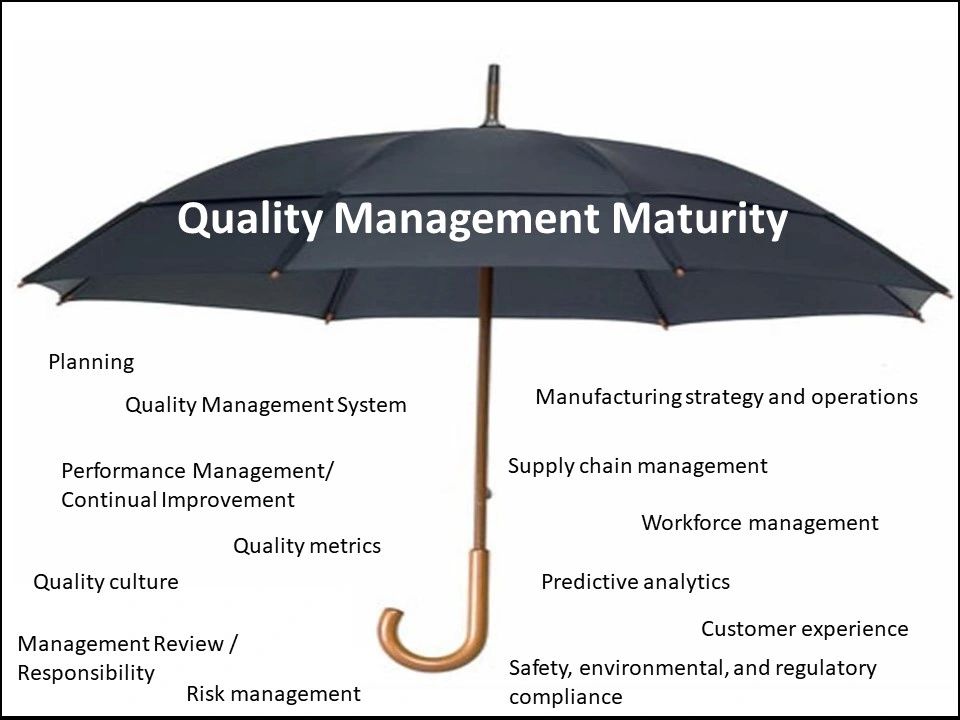
For sourcing teams, quality management maturity is the single most useful predictor of what a supply relationship will feel like in year two. A supplier with a mature system absorbs change, contains problems, and explains what happened. A supplier with a certificate and nothing behind it escalates every issue to the owner, who is usually travelling.
This guide sets out thirteen elements that separate the two, grouped so that an engineering team can assess them in a single plant visit. It is not an ISO checklist. It is a reading of how decisions are made when nobody from the customer is watching.
What Quality Management Maturity Actually Means
Maturity is the degree to which quality is built into the process rather than inspected into the product. An immature plant finds defects at final inspection and sorts them. A mature plant knows which process parameters predict the defect, watches those parameters, and prevents the defect from being made.
That shift changes the economics. Inspection costs money per part and scales with volume. Process control costs money once, in capability studies, calibration, and disciplined change management, and then it holds. This is why quality management maturity correlates so strongly with the total cost of a program, not just with its defect rate.
It also changes the conversation. In a mature relationship, the supplier brings the problem before the customer finds it, with data and a containment plan. In an immature one, the customer becomes the inspection department, and every shipment carries a hidden labour cost.
The Five Levels, in Practice
Level one: reactive. Quality means sorting bad parts out at the end. Records exist because a customer asked. Root cause is a person’s name.
Level two: documented. Procedures exist and are broadly followed. Inspection is planned. Corrective actions are written, though often closed without verification.
Level three: measured. Process capability is known for critical characteristics. Data is collected automatically or at least consistently. Calibration is under control.
Level four: managed. Change is controlled before it happens. Suppliers are qualified and monitored. Trends are reviewed in management meetings and acted on with resources.
Level five: optimised. The system improves itself. Cost of quality is measured, projects are selected on that basis, and lessons propagate to other programs without a customer asking.
Most competent contract manufacturers sit at level three. The gap between three and four is where most sourcing risk lives, because level three catches problems and level four prevents them.
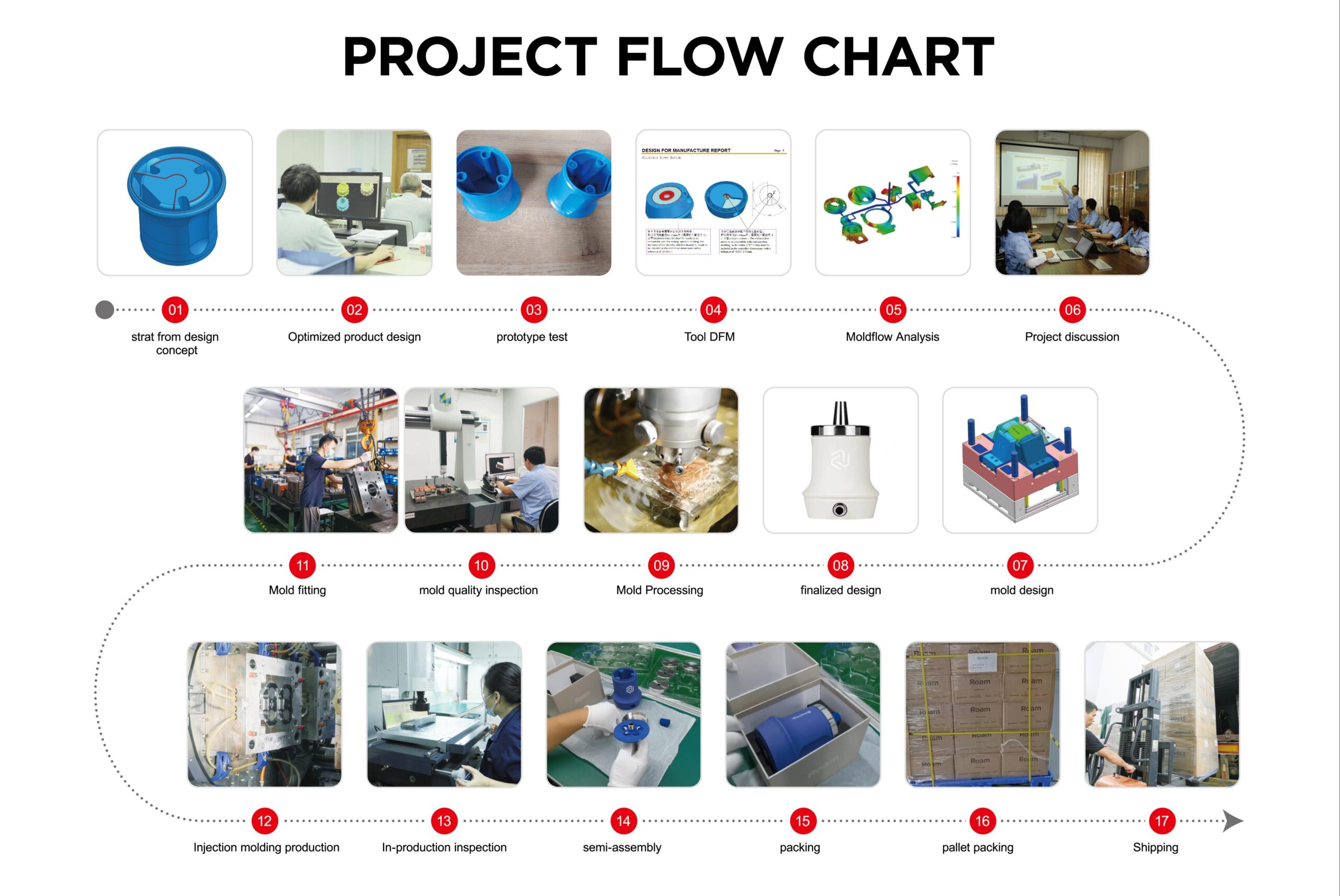
The 13 Elements to Evaluate
1. Leadership commitment and the quality policy
Ask who owns quality and what happens when it conflicts with delivery. In a mature plant, the quality manager can stop a shipment without the owner’s permission, and the policy on the wall matches the behaviour on the floor.
2. The documented quality management system
The system should be short enough to be used. If the manual is a thousand pages that nobody opens, the plant is documenting for the auditor rather than controlling the process.
3. Design and development control
Look for DFM feedback before tooling, documented design reviews, and a record of what changed and why. A supplier that only executes drawings will build exactly what you asked for, including the mistake.
4. Supplier qualification and incoming inspection
Maturity here shows in the approved supplier list and the receiving records. Ask what happens when a resin lot arrives with a different melt flow index than the last one.
5. Process capability and statistical control
Request Cpk for two or three critical dimensions. A mature supplier has the numbers and knows which characteristics are not capable. An immature one has never calculated them.
6. Calibration and measurement system analysis
Gauges need calibration records, and the measurement system needs a gauge R&R study. Without it, a tolerance argument is unresolvable because nobody knows whether the instrument or the part is varying.
7. Traceability and lot control
Can the plant trace a finished carton back to the resin lot, the machine, the shift, and the process parameters? That capability decides how fast a containment can be scoped.
8. Nonconformance and corrective action
Ask for two recent 8D reports. Look for verification of effectiveness, not just a root cause statement. The most common failure in quality management maturity is closing actions without checking that they worked.
9. Change control
Material substitutions, machine moves, and tool repairs should trigger notification. Silent changes are the most expensive defect category in contract manufacturing because they invalidate every previous approval.
10. Training and competence
Training records matter less than how a new operator is signed off. Ask who is allowed to adjust process parameters, and what evidence exists that they can.
11. Customer complaint handling
Response time, containment speed, and the quality of the written answer all reflect maturity. A supplier that answers with a paragraph and a photo is easier to work with than one that answers with a form.
12. Internal audit and management review
Internal audits should find things. If every audit closes with zero findings, the auditor is not looking, and the management review is theatre.
13. Continuous improvement and cost of quality
The final test: can the supplier name an improvement project it started without a customer request, and quantify what it saved? That is the behaviour that separates level four from level three.
How to Audit Without a Three-Day Tour
A useful assessment fits in half a day if it is structured around evidence rather than presentations. Start on the floor, not in the meeting room. Pick one part running today, ask to see its control plan, then follow that part through inspection, packing, and the records for the last lot.
That single walk tests most of the thirteen elements at once. You see whether the control plan matches the machine, whether the operator knows the critical characteristic, whether the gauges are in calibration, and whether the inspection record was filled in this morning or last Friday.
Then ask three questions in the office. Which dimension is hardest to hold on this part, and what is the current capability? What was the last customer complaint, and what changed afterwards? What process change happened in the last six months, and who approved it? The answers, and the speed of the answers, tell you more than any certificate.
Finish with the paperwork you will actually rely on: a material certificate, a first-article report, and a recent corrective action. If those three documents are complete and consistent, the quality management maturity of the plant is probably adequate for production work.
Red Flags That Predict Trouble
Inspection is the only control. If every quality conversation is about final inspection staffing, the plant is sorting rather than controlling, and defect escape is a matter of time.
No capability data. A supplier that cannot quote Cpk for a critical dimension has no basis for a tolerance discussion, and will accept any tolerance you draw.
Corrective actions without verification. Actions that close in a week and recur in a month indicate a system that documents rather than fixes.
Change announced after the fact. A material or process change discovered by the customer is a governance failure, not a communication slip.
Quality reports that are always green. Perfect metrics usually mean the measurement is designed to look good. Mature plants show variation and explain it.
Any one of these is survivable. Two or three together describe a supplier that will consume your engineering time for the life of the program, and the cheapest response is usually to qualify a second source before the volume ramps.
Scoring and What to Do With the Result
Score each of the thirteen elements from zero to three: zero for absent, one for claimed, two for evidenced, three for evidenced and improving. A total above thirty usually indicates a supplier that can carry a production program without supervision. Between twenty and thirty, plan for more incoming inspection and a tighter change-control clause.
The score is less important than the pattern. A plant that scores well on documentation and poorly on capability will pass an audit and struggle with tolerance. A plant that scores well on capability and poorly on change control will produce good parts until something changes, and then produce a crisis.
Use the result in the commercial conversation too. A supplier at level two that wants to reach level four needs investment, and it is reasonable to ask how that investment is funded when the volume grows. For a wider view of how these controls sit alongside tooling and production, our guide to manufacturing quality control for precision injection molding covers the shop-floor side of the same system.
How Maturity Shows Up in a New Program
The first ninety days of a program expose quality management maturity faster than any audit. A mature supplier asks for the critical characteristics before quoting, proposes a control plan, and schedules a capability run on the first article. An immature one waits for the purchase order and then asks which dimensions matter.
Trial runs are the second signal. In a mature plant, the trial has a written agenda, a parameter window recorded for every shot, and a measurement report issued within a few days. In an immature plant, the trial is a machine running while people watch, and the report arrives after the customer asks for it a second time.
Ramp-up reveals the third. Watch whether the supplier’s quality management maturity survives volume. Some plants control a trial perfectly and lose discipline at ten thousand pieces, when inspection is reduced and operators are rotated. The mature response is to keep the control plan and add monitoring, not to relax it because the parts looked fine last week.
Finally, look at how the supplier handles the first problem. Speed of containment matters, but so does the depth of the answer. A supplier that measures, isolates, and then changes a process setting is operating at level four. A supplier that re-inspects and promises to be careful is still at level two, whatever the certificate says.
Five Questions That Reveal the Level
If time is short, five questions still give a usable reading of quality management maturity. Which characteristic is hardest to hold on this part? What is its capability? What changed in the process last quarter? Who approved it? And what was the last escape, and what did it change?
Ask them in that order and listen for specifics. Numbers, dates, and names indicate a plant where quality management maturity is real. Adjectives and intentions indicate a plant where it is aspirational.
Write the answers down as you hear them. A quality management maturity judgement that is recorded in the audit note is repeatable next year, and it becomes the baseline against which every quality management maturity improvement is measured.
Quality management maturity is worth more than a stack of certificates, because it is the thing the certificates are supposed to describe.
What to Put in the Sourcing Agreement
Quality management maturity can be written into a contract without turning it into a legal project. Four clauses cover most of the exposure: notification of any process, material, or site change; access to capability data on request; a defined containment window for quality escapes; and the right to audit the sub-tier suppliers that matter.
Those clauses work because they formalise behaviour that a mature supplier already practises. When a supplier resists them, the resistance itself is information about the maturity level, and it is cheaper to learn that before the tool is cut than after the first shipment is rejected.
It also helps to agree on the records that will be exchanged as routine, not on request. A certificate with each lot, an inspection report per shipment, and a monthly summary of nonconformances create a light but continuous view of quality management maturity, and they cost the supplier very little to produce.
Frequently Asked Questions
Does ISO 9001 certification prove quality management maturity?
No. Certification proves that a system exists and is audited. Maturity is about whether the system changes behaviour, which shows up in capability data, change control, and how problems are closed.
How often should a supplier be re-assessed?
Annually for stable production, and after any significant change: new site, new machine, new material, or a serious quality escape. A re-assessment after a failure is more informative than a scheduled one.
Can a small supplier be mature?
Yes. Size affects resources, not discipline. A twenty-person shop with a calibrated gauge system, documented parameters, and honest corrective actions often outperforms a large plant at level two.
The Bottom Line
Quality management maturity is a better selection criterion than price, certificate, or factory size, because it predicts how the next two years will go. Assess it with evidence on the floor, score it honestly, and write the gaps into the contract rather than the meeting notes.
For background on the standards behind the assessment, the ISO 9000 family and statistical process control references are a reasonable start. Our overview of how a manufacturing partner manages quality shows what the mature end of the scale looks like in practice.