


Medical silicone molding brings together five connected decisions: component and mold design, material choice, molding process, quality control, and production readiness. For engineers and sourcing teams, these choices directly affect patient safety, device reliability, manufacturing yield, and time to market.
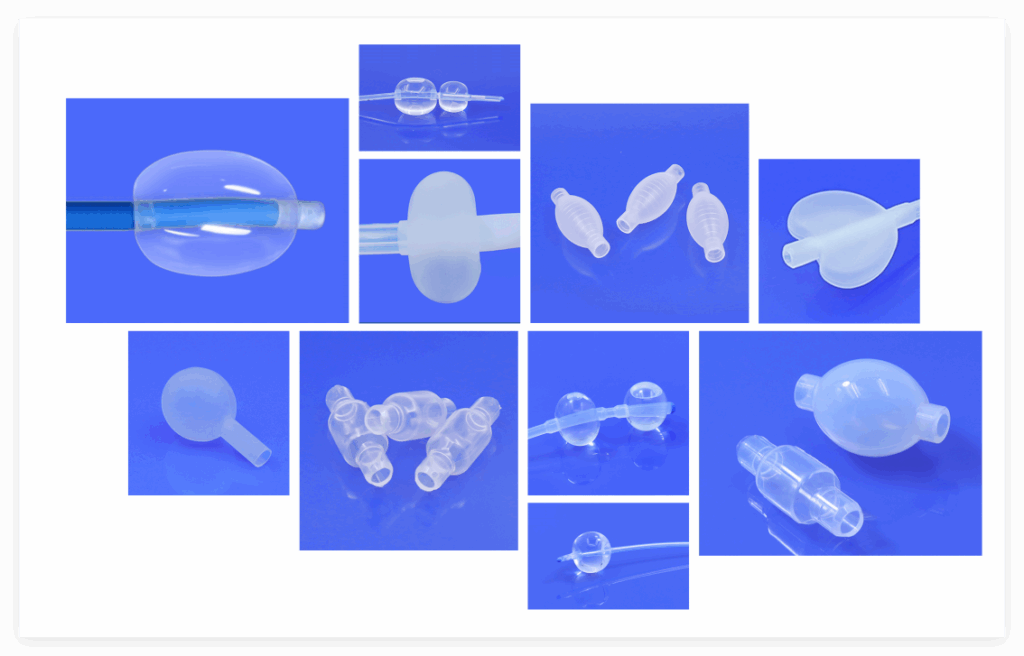
Why Material Choice Comes First
Material selection is central to medical device safety and performance. Medical-grade silicone raw materials are rigorously selected and supported by comprehensive biocompatibility testing. This helps minimize irritation and allergic reaction risks and provides a dependable foundation for implants, wearable devices, and products with long-term body contact. A part that performs well in a general-purpose grade may fail the same application once biocompatibility, extractables, or sterilization requirements are applied.
Properties That Matter in Medical Devices
Silicone’s softness and elasticity allow medical components to fit complex anatomical shapes while maintaining resilience. Devices can conform to body curves more comfortably without losing functional stability. Chemical resistance is equally important in hospitals and laboratories, where repeated exposure to disinfectants and other chemicals is common. Medical silicone maintains stability through many of these exposures, helping preserve performance after repeated sterilization and use.
Long-term durability is another critical requirement. Medical silicone is designed for strong abrasion and oxidation resistance, resisting aging, hardening, and cracking during extended use. This supports consistent device performance across the product lifecycle and helps reduce failure rates.
Choosing Between LSR Injection and Compression Molding
Liquid silicone rubber injection molding suits high-volume, precision parts with tight tolerances and thin walls, because metering, curing, and demolding are automated. Compression molding remains practical for larger, lower-volume parts and for designs where tooling cost dominates. The decision affects cycle time, flash, dimensional consistency, and how easily the process can be validated. Both routes require clean-room discipline and material handling controls when the device is intended for clinical use.
Mold and Part Design Considerations
Silicone shrinks and flexes, so tool design differs from rigid plastics. Draft angles, parting-line placement, and flash control deserve early attention, particularly on sealing surfaces. Undercuts are sometimes tolerated because silicone can stretch, which can simplify tooling but complicate ejection. Wall thickness should stay as uniform as the design allows, and any insert or overmolded substrate needs a defined bonding strategy.
Quality Control and Validation
Inspection covers dimensional checks, visual standards for flash and contamination, and functional tests such as leak or compression set. Where the device is regulated, process validation, lot traceability, and change control form part of the quality system. First-article inspection and pilot runs confirm that the process is stable before full production, and they give review teams the evidence they need.
Frequently Asked Questions
Is medical silicone the same as food-grade silicone?
No. Medical grades are supported by biocompatibility testing and tighter documentation, which food-grade materials do not automatically provide.
Can silicone be sterilized repeatedly?
Yes, with the right grade and process. Autoclave, gamma, and EtO cycles should be validated for the specific part.
Does medical silicone molding require a clean room?
Many device components are molded in controlled environments. The required class depends on the device and its regulatory pathway.
Conclusion
Medical silicone molding rewards teams that treat material, tooling, process, and validation as one program. For background, see silicone rubber, review our custom silicone rubber molding guide, or contact TCHD to discuss your device.