


Reverse engineering requests often begin simply: a client sends a sample and asks, “Can you make this?” Advanced 3D scanning can capture geometry with high accuracy, but a successful project should not stop at duplication. The stronger goal is to understand the original, correct its weaknesses, and create a version that is more competitive in the market.
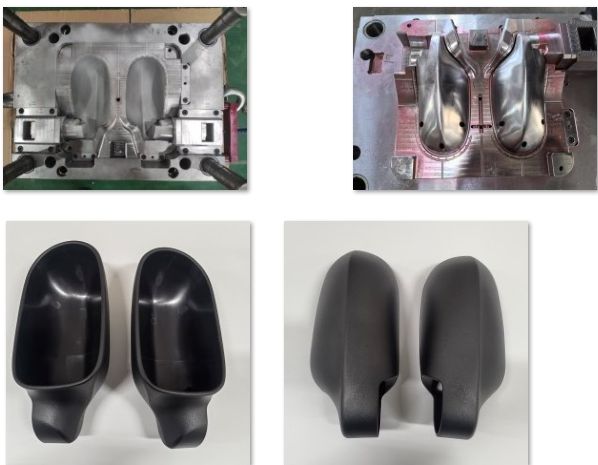
Why Reverse Engineering Is More Than Scanning
The common misconception is that a factory’s role is only to scan and produce. In practice, the most valuable contribution is strategic partnership—especially teaching manufacturability. Design, material, process, quality, and production considerations should be evaluated from the beginning, so the final part is not merely a copy but a product built for efficient molding.
Pillar One: Interpreting Scan Data
A 3D scanner produces a point cloud, a digital shell of the sample. Engineers must determine not only what shape the data shows but why that shape exists. They convert raw scan information into a production-ready 3D model, adding draft angles, uniform wall thickness, and appropriate tolerances that the original sample may not have. This makes the part suitable for injection molding from day one.
Pillar Two: A Disciplined Workflow
A clear, mutually respected workflow is the strongest predictor of on-time delivery and budget control. Client participation and timely approvals at each gate are essential, not merely formal. As a partner, the supplier stays transparent and rigorous about the process to protect the client’s investment.
Pillar Three: Translating Design Into Manufacturing
A design is only truly strong if it can be produced efficiently and reliably. The critical questions clients may not have considered usually sit in tooling: can this undercut be released, will this wall fill, does this tolerance survive shrinkage? Answering them during modeling avoids rework later, when the tool already exists.
When Reverse Engineering Makes Sense
- The original drawing or CAD file no longer exists
- The original supplier is unavailable and the part is still in service
- The product needs improvement without a full redesign budget
- Legacy tooling must be reproduced for a new production site
Frequently Asked Questions
How accurate is 3D scanning?
Industrial scanners capture fine detail, but the output still needs engineering judgment to become a moldable model.
Can you improve a part during reverse engineering?
Yes. Wall thickness, draft, ribs, and tolerances can be adjusted while the model is built, before tooling cost is committed.
Do I need the original material?
Not necessarily. Material can be re-selected for performance, cost, or availability, provided the change is validated.
Conclusion
Reverse engineering works best as a partnership between the sample owner and the manufacturer. For background, see reverse engineering, review our guide to 3D scanning for reverse engineering, and contact TCHD with your sample.