


Custom silicone rubber molding covers a wide range: a soft gasket that seals a housing, a keypad with tactile ribs, a translucent tube that must stay clear after sterilization. Each starts the same way, with a design and a compound choice that decide how the part behaves in the tool and in service.
Starting From the Application
The brief should state temperature range, chemical exposure, hardness, color, and any compliance requirement such as FDA, LFGB, or USP Class VI. Without those, a supplier picks a general-purpose compound and the part fails on the one property that mattered. Compression set, tear strength, and elongation at break often matter more than tensile strength in sealing work.
Compound Selection and Hardness
Shore A hardness from 20 to 80 covers most parts. Softer compounds seal at low force but tear easily during demolding; harder compounds resist extrusion but need more clamp load. Filler type affects clarity, and platinum-cured grades are chosen where extractables or odor are concerns. Pigments and curing agents also influence cure speed, so color changes should be re-validated.
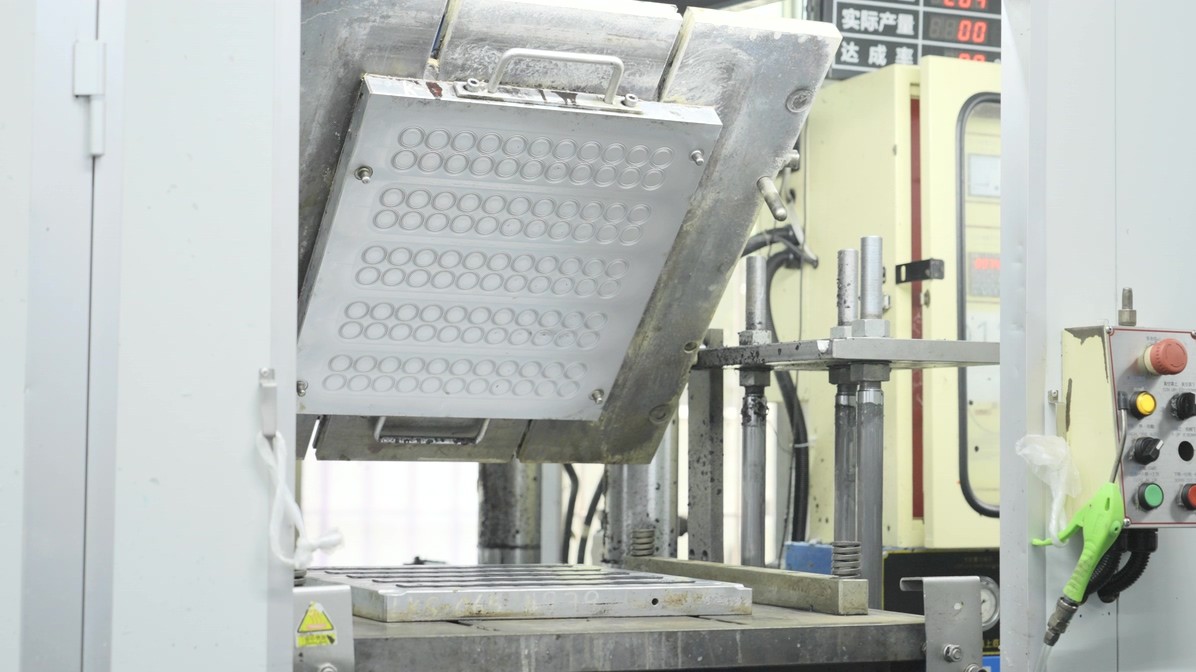
Silicone Rubber Molding Methods and Their Fit
Compression molding suits large parts and low volume, transfer molding improves dimensional control for small parts with inserts, and liquid silicone rubber injection molding gives the tightest tolerances and fastest cycles at volume. The method should follow geometry and quantity, not shop habit.
Tool Design for Silicone
- Plan for high shrinkage, typically 2 to 4 percent depending on compound
- Provide generous draft; silicone grips polished steel
- Design the parting line away from sealing surfaces
- Allow for flash thickness at the parting line in the tolerance stack
- Vent the cavity, since trapped air creates voids in thick sections
Cure Control and Quality
Cure time, temperature, and pressure decide whether the part is fully vulcanized. Under-cured silicone feels tacky and takes a permanent set; over-cured silicone becomes brittle and may discolour. Inspection covers hardness, dimensions, compression set, tear strength, and appearance, with a cross-section to catch internal voids on thick parts.
Prototyping Before Mass Production
A short-run tool or a CNC-cut silicone prototype validates fit and feel before a production tool is cut. Prototyping also exposes design issues, such as a rib that cannot be demolded or a wall that is too thin to fill, while changes still cost drawing time rather than steel.
When a Part Underperforms
Low elasticity, yellowing, cracking, or poor tear resistance usually points to compound, cure, or design rather than to the molding machine. A structured review of the failure and the sample history finds the cause faster than switching suppliers.
Production Planning
Silicone tools wear differently from steel injection molds; flash buildup and parting-line wear appear sooner, so maintenance intervals should be set by cycle count. Batch traceability from compound lot to shipment supports recall and complaint investigation.
Frequently Asked Questions
How long does a silicone mold last?
Compression tools commonly run tens of thousands of cycles; LSR steel tools last far longer with proper maintenance.
Can silicone be bonded to plastic or metal?
Yes, with primers, mechanical interlock, or overmolding, depending on the substrate and the required joint strength.
Why does my silicone part tear at demolding?
Usually insufficient draft, an undercut, or a compound that is too soft for the geometry.
Conclusion
Custom silicone rubber molding succeeds when the application requirements drive compound, method, and tool design from the start. For related reading, see silicone rubber reference, our silicone keypad guide, and medical silicone molding guide. Contact TCHD to develop your part.