


Glass-filled nylon molding looks like ordinary PA66 processing until the fibers reach the gate, the cavity surface, and the ejector pins. A 30 percent glass load raises stiffness and heat resistance, lowers shrinkage, and at the same time accelerates wear, reduces flow, and makes warpage harder to control. The tool and the process have to be designed for the filler, not just the resin.
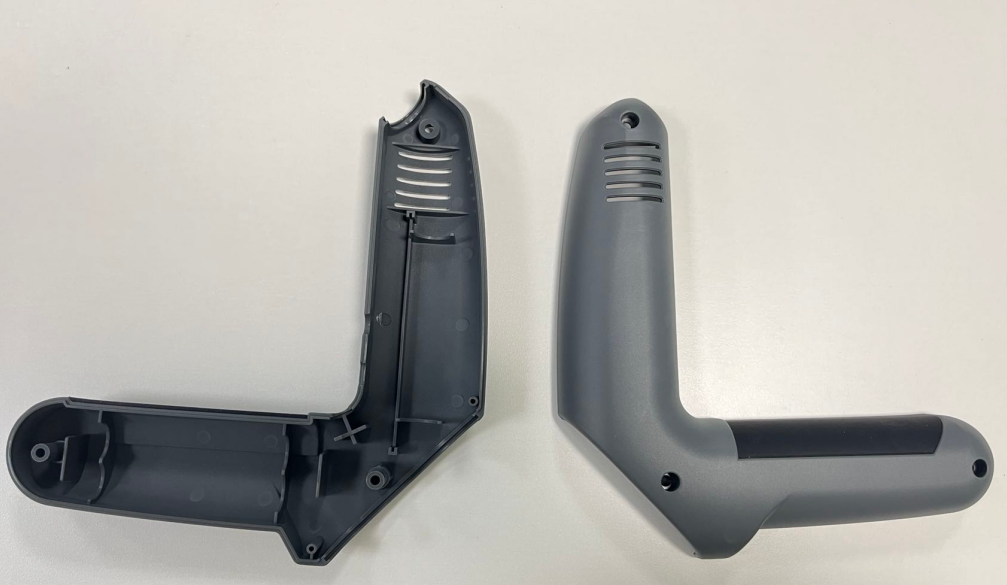
What PA66 With 30% Glass Offers
The grade delivers high tensile and flexural strength, good stiffness, short-term heat resistance up to about 250 degrees Celsius, and continuous service near 150. Shrinkage drops and becomes more isotropic than unfilled nylon, which helps hold flatness on structural parts. The same fibers, however, make the melt more viscous and the surface rougher wherever they reach the skin.
Steel Selection for an Abrasive, Corrosive Melt
Glass fibers erode gate areas and flow paths, and PA66 is mildly acidic, so corrosion and wear arrive together. Hardened grades such as 2316, 2083, 420, and SKD61 treated to HRC 52 or above are common. Nitriding or chrome plating on gates and hot-runner tips extends life where production volumes are high.
Gating and Runner Design
Sharp corners concentrate fiber impingement and wear quickly. Gate sizes should be generous to reduce shear, since high shear breaks fibers and lowers the strength the filler was chosen to provide. A hot runner needs a smooth, streamlined melt path and tip materials that tolerate abrasion.
Glass-Filled Nylon Molding: Process Settings
PA66 GF30 needs thorough drying, typically to below 0.2 percent moisture, or the melt hydrolyses and strength falls. Cylinder temperatures run higher than unfilled PA66, with a moderate screw speed to limit fiber breakage. Injection speed should be fast enough to fill before freeze-off but not so fast that shear degrades the melt.
Warpage Control
Fiber orientation causes differential shrinkage: flow direction shrinks less than cross-flow. Uniform wall thickness, symmetric gating, and cooling balanced on both faces reduce the effect. Where a flat part still warps, a fixture-cooling step or a design change in rib layout usually helps more than parameter tweaks.
Tool Details That Matter
- Polish flow surfaces to reduce drag and fiber hang-up
- Use hardened ejector pins and generous ejection area
- Vent thoroughly; glass-filled melts trap air more readily
- Design slides with wear plates that can be replaced
- Allow for gate wear in maintenance intervals
Quality Checks
Dimensional inspection should be done after moisture conditioning, because PA66 grows as it absorbs water and a dry part measures undersize. Mechanical tests on molded specimens confirm that fiber length survived processing. Surface inspection looks for fiber read-through, flow marks, and short shots near the end of fill.
Frequently Asked Questions
Why do glass-filled nylon parts break at the gate?
High shear at a small gate breaks fibers and creates a weak weld or orientation line. A larger, smoother gate usually fixes it.
Does glass-filled nylon need annealing?
Sometimes, for stress relief in thick sections. Moisture conditioning is more often the step that stabilizes dimensions.
How much does the filler shorten mold life?
Significantly, compared with unfilled resin. Hardened steel and coated gates are what make high-volume runs practical.
Conclusion
Glass-filled nylon molding rewards tools built for abrasion and a process built for drying and fiber-friendly flow. For related reading, see nylon reference, our injection molding defects guide, and plastic material properties guide. Contact TCHD to review your part.