

Precision mold design is the difference between a tool that meets a drawing and a tool that performs on the production floor. For engineers and sourcing teams, a precision mold should be assessed across design, material selection, process planning, quality control, and production readiness. At TCHD Precision Mold Company, these considerations are central to how every injection molding project is approached.
Why Injection Molding Projects Need Precision Mold Design
A mold is not simply a shaped block of steel. It is a system of gating, cooling, ejection, and venting decisions that determine cycle time, part consistency, and tool life. When those decisions are made only to satisfy a drawing, production problems appear later: warpage, short shots, excessive flash, or premature wear. Precision mold design anticipates those issues before steel is cut.
A Growing Trend: Mold Makers Choosing TCHD
A notable pattern has emerged over the past six months: more of TCHD’s clients are now its own peers—established mold manufacturers and injection molding specialists. These companies engage TCHD to design and build molds, then transfer those tools to their own facilities for production. That trust is a strong signal, because experienced molders rarely outsource tooling without a clear reason.
What Sets Precision Mold Design Apart
Why do experienced industry players choose TCHD? The answer is its 30 years of expertise and its focus on mold designs that go beyond meeting specifications. TCHD’s designs are intended to resolve practical production issues, helping manufacturers achieve smoother workflows, less waste, and more consistent output. Key elements include:
- Gate and runner layouts that balance flow and reduce weld lines
- Cooling circuits designed for uniform temperature and shorter cycles
- Ejection systems matched to part geometry and undercuts
- Steel selection and heat treatment matched to production volume
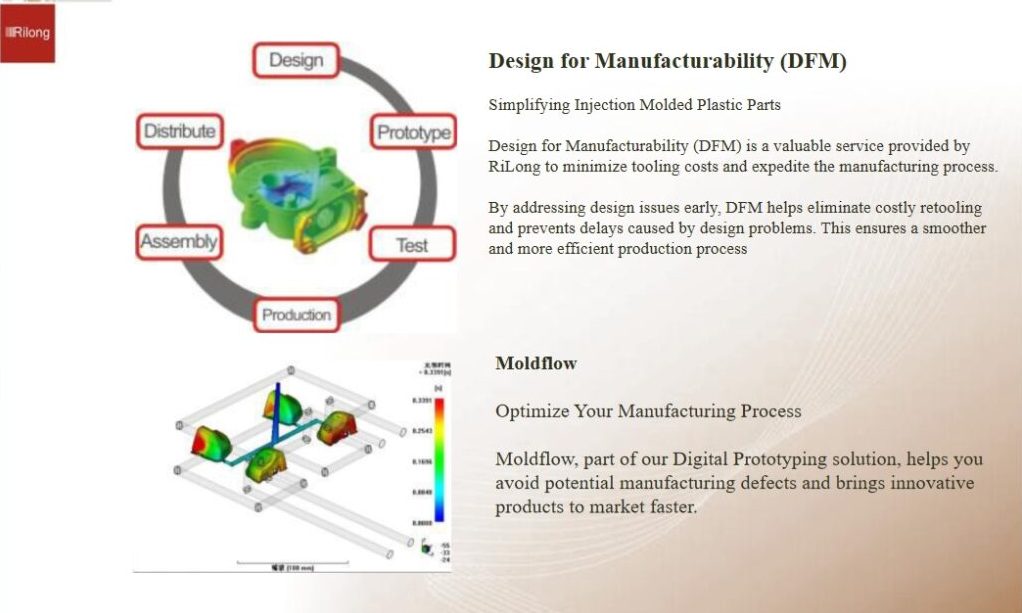
- DFM review that catches problems while changes are still inexpensive
Design for Real Production, Not Just Specifications
For TCHD’s peers, working together means access to designs that support efficiency, reliability, and performance. A well-designed mold is not merely a tool; it is a strategic advantage that can strengthen the entire production process. That is why a ToolDFM review and cost-aware mold design are treated as part of the same conversation, not separate steps. The same thinking applies to mold structure selection, where the wrong type can erase the benefit of good detail work.
Common Precision Mold Design Mistakes to Avoid
Even experienced teams repeat a few avoidable errors. One is designing gates for convenience rather than flow, which creates weld lines and pressure spikes. Another is under-sizing cooling circuits, which lengthens cycle time and causes warpage. A third is ignoring ejection at the concept stage, so undercuts force late, expensive changes. Steel selection is sometimes based on habit instead of production volume, leading to premature wear or unnecessary cost. Finally, skipping a DFM review leaves these problems to be discovered during trial molding, when fixes are slow and costly. Reviewing each of these points during precision mold design keeps a program on schedule and protects the production budget.
Frequently Asked Questions
What does precision mold design include?
It covers part DFM, gate and runner design, cooling, ejection, steel selection, tolerances, and validation planning.
Can TCHD build molds for other mold makers?
Yes. A significant share of TCHD’s work is designing and building tools for established mold manufacturers and injection molding companies.
How is precision measured?
Typical benchmarks include dimensional tolerances, CMM verification, steel hardness, and repeatability across production runs.
Partnering with TCHD
Whether you are a mold manufacturer, an injection molding company, or a business searching for precision molds, TCHD aims to elevate your operations. The team combines injection molding knowledge with practical toolmaking experience. To learn more, contact TCHD to discuss your next project and see how 30 years of experience can support your success, or send drawings and production requirements for a technical review.