


Electroplating is more than a cosmetic step. It combines design choices, substrate selection, process control, quality checks, and production planning to create surfaces that are durable, attractive, and trusted by customers. A thin metal layer on plastic or metal parts improves corrosion and wear resistance while delivering a finish that reads as premium.
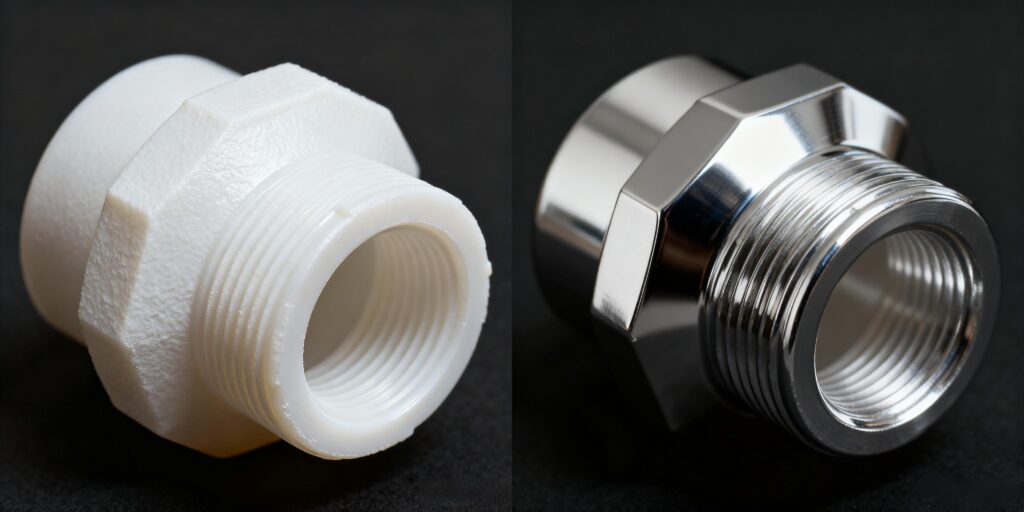
How the Process Works
Parts pass through cleaning, etching, activation, and then one or more plating baths. For plastics, an electroless nickel strike first makes the surface conductive, after which copper, nickel, and chromium layers build thickness and appearance. For metals, plating follows machining and polishing, with rack design and current density determining uniformity.
Substrate Selection for Plated Plastics
ABS is the standard choice because its butadiene phase etches to create mechanical anchors for adhesion. PC/ABS blends add heat resistance, and PP can be plated with special pretreatment. Glass-filled resins often plate poorly because glass interrupts the etched surface. Design should avoid blind holes and sharp edges that concentrate current and cause burn marks.
Adhesion and Appearance Control
Adhesion is verified by thermal cycling and peel or pull tests, not by visual inspection alone. Appearance depends on bath chemistry, current density, and rack position; a part near the cathode edge may plate brighter than one in the center. Thickness is measured on coupons or with X-ray fluorescence, and corrosion resistance with salt spray per the agreed standard.
Design Rules That Prevent Rejects
- Keep wall thickness uniform so warpage does not distort the plated surface
- Round edges and avoid deep recesses that trap chemistry
- Provide rack contact points on non-cosmetic surfaces
- Specify the finish standard, thickness, and salt-spray hours
- Agree acceptance lighting and a boundary sample before production
Quality and Production Planning
Plating lines run on bath life, so scheduling should account for maintenance and analysis cycles. Keep traceability from resin lot to plating batch, because a defect found late is hard to attribute. Where plating is combined with molding, buffer stock protects the assembly line from plating downtime.
Frequently Asked Questions
Can plated plastic parts be recycled?
The metal layer complicates recycling, so plated parts usually follow a different route than clear resin scrap.
Why does plating sometimes blister after assembly?
Usually trapped moisture or poor adhesion. Baking before plating and controlling the etch step help.
Does plating change part dimensions?
Yes, by the total coating thickness. Allow for it on critical features and threads.
Conclusion
Plastic and metal electroplating succeed when substrate, design, and process standards are aligned. For related reading, see electroplating reference, our hard coat anodizing guide, and surface treatment overview. Contact TCHD to define your finish.