


No engineering thermoplastic is produced in larger volumes than PP plastic, and few are so often underestimated. It is cheap, light, chemically stubborn, and capable of surviving a million flex cycles in a living hinge. It is also soft, prone to creep, and difficult to paint. Knowing which of those facts matters for a given part is the whole of PP plastic design.
Table of Contents
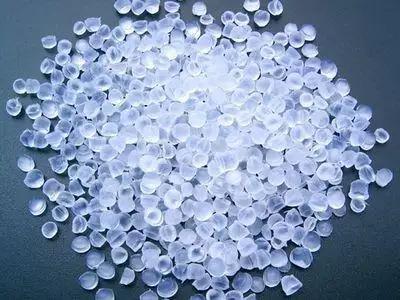
The short version: PP plastic is a semi-crystalline polyolefin with a density around 0.90 to 0.91 grams per cubic centimetre, a melting point near 165 degrees Celsius, and outstanding resistance to acids, bases, and most solvents. It has low surface energy, modest stiffness, and poor low-temperature impact unless it is impact-modified.
What PP Plastic Is
Polypropylene is a polymer of propylene, produced with a Ziegler-Natta or metallocene catalyst. The catalyst and the comonomer determine almost everything a designer cares about. Homopolymer chains are regular and stiff; random copolymer chains include ethylene units that reduce crystallinity and improve clarity and impact; block copolymer chains combine a homopolymer matrix with an ethylene-propylene rubber phase that delivers low-temperature toughness.
That structural difference explains why two materials both called PP plastic can behave like different families. A homopolymer tray is stiff and heat resistant but brittle at zero degrees. A block copolymer bumper is tough at minus thirty and considerably softer. The grade designation on the drawing is therefore a technical instruction, not a purchasing preference.
PP plastic is also the lightest of the common engineering thermoplastics. At 0.90 grams per cubic centimetre it is roughly ten percent lighter than polyethylene and around thirty percent lighter than ABS. For a large housing or an automotive interior part, that difference shows up in the total part cost and in the vehicle mass calculation.
Homopolymer, Copolymer, and Filled Grades
Homopolymer offers the highest stiffness, the best heat resistance, and the lowest cost. It suits containers, caps, appliance parts, and anything that needs to hold shape at temperature. Its weakness is brittleness below freezing.
Random copolymer trades some stiffness for clarity and improved impact. It is the grade behind clear food containers and thin-wall packaging, where the optical requirement and the drop test both matter.
Block copolymer is the workhorse for durable parts. The rubber phase absorbs impact across a wide temperature range, which is why automotive interiors, tool boxes, and battery cases use it.
Filled and reinforced grades add talc, calcium carbonate, or glass fibre. Talc raises stiffness and reduces cycle time; glass fibre raises stiffness and heat resistance much further but makes the surface fibrous and the weld lines weak. Our guide to glass-filled nylon covers the same trade-offs in a different polymer family.
Properties That Decide the Application
Chemical resistance. PP plastic is essentially unaffected by aqueous acids, bases, salts, and alcohols. It swells in some hydrocarbons and is attacked by strong oxidising agents. This is why it dominates chemical tanks, laboratory ware, and medical packaging.
Fatigue life. The living hinge is PP plastic’s signature trick. A properly designed hinge, with the molecular orientation running across the fold and a thin web, can survive more than a million cycles. No other common thermoplastic does this as reliably.
Heat resistance. Homopolymer holds shape to about 100 degrees Celsius continuously and higher for short excursions. Talc-filled grades push that further. Above 120 degrees, PP plastic is usually the wrong choice.
Creep. The weakness nobody quotes. PP plastic creeps under sustained load, especially warm. A bracket that holds a load for years needs a generous safety factor or a different material.
Impact at low temperature. Homopolymer becomes brittle near freezing. Block copolymer and impact-modified grades hold up far better, and the difference is measurable in a drop test at minus twenty.
Barrier. PP plastic is a moderate oxygen barrier and a good moisture barrier. For food packaging that needs both, a multilayer structure is usually required.
Surface Energy and the Decoration Problem
PP plastic has a surface energy around 30 dynes per centimetre, which is too low for paint, adhesive, or ink to wet reliably. Every decoration process therefore needs a pretreatment: flame treatment, corona discharge, or plasma. Skipping it produces a finish that looks correct in the factory and peels in the field.
The same property affects assembly. Adhesive bonding is difficult without pretreatment, ultrasonic welding works well because it does not depend on wetting, and laser marking usually needs an additive masterbatch to produce contrast.
Designers who plan decoration late often specify a primer that costs more than the part. Planning it early, or choosing a material that accepts the required finish, is cheaper. The surface treatment guide sets out the options side by side.
Processing Window and Shrinkage
PP plastic melts between 160 and 170 degrees Celsius and is usually processed at 200 to 240. It has a low melt viscosity, which fills thin walls easily and also flashes easily, so clamp force and injection profile need attention. The resin is semi-crystalline, so shrinkage is high: typically 1.2 to 2.0 percent for homopolymer and up to 2.5 percent for some impact grades.
Shrinkage anisotropy is significant. Flow direction shrinks less than cross-flow, and the difference widens in long, narrow parts. That is why a long PP plastic cover can bow after ejection even when the cavity is dimensionally perfect.
Mould temperature controls surface and shrinkage together. A hot mould (40 to 60 degrees Celsius) improves surface finish and reduces post-mould shrinkage. A cold mould shortens the cycle and produces a part that continues to shrink for days.
Drying is usually unnecessary because PP plastic absorbs almost no water. Degassing, however, matters: the resin can carry volatiles that leave streaks, and a vented barrel or a proper purge routine prevents them.
Eight Design Rules
1. Design the living hinge as a separate, thin web
Use a web of 0.25 to 0.4 mm, orient the melt across the hinge line, and keep the gate far enough away for full orientation. A hinge cut into a normal wall will crack within a few hundred cycles.
2. Allow for creep in any long-term loaded feature
Bosses, clips, and snap fits in PP plastic relax over time. Design the interference to be effective after relaxation, not only at assembly.
3. Keep walls uniform and avoid thick sections
Thick sections in a semi-crystalline material shrink more and create voids and sink marks. Ribbing is the standard remedy, with ribs at 50 to 60 percent of wall thickness.
4. Round the corners that carry load
PP plastic is notch sensitive under impact. A sharp internal corner is a crack starter, and a radius costs nothing in the tool.
5. Plan the weld line positions
Weld lines are weak in all semi-crystalline polymers and weaker still in filled grades. If a weld line must exist, keep it out of sealing surfaces and load paths.
6. Give every surface a draft angle
One degree is a minimum for smooth walls; two degrees is safer for textured surfaces. PP plastic is slippery, but it is also soft, and a part dragged out of a textured cavity will show pull marks.
7. Specify the pretreatment for decoration
If the part is painted, printed, or bonded, write the surface treatment into the drawing. The finish is part of the specification, not a workshop decision.
8. Choose the grade for the coldest day, not the warmest
Impact requirements should be evaluated at the lowest service temperature. A homopolymer that passes a room-temperature drop test can fail the same test in a cold chain.
PP Plastic Against PE, ABS, and PA
Against polyethylene, PP plastic is stiffer, harder, and more heat resistant, with better fatigue performance. PE wins on low-temperature impact and on chemical resistance to some hydrocarbons. For a container that holds shape, PP is usually the answer.
Against ABS, PP plastic is cheaper, lighter, and far more chemically resistant, but weaker in stiffness, worse in surface finish, and much harder to paint. Cosmetic housings still favour ABS, while functional parts increasingly favour PP.
Against PA, PP plastic has much lower moisture absorption and better chemical resistance, but lower strength and heat resistance. Where a nylon part grows with humidity, a PP part stays put, which is a real advantage in precision assemblies.
Our comparison of ABS, PA6, PC, and PP covers the mechanical numbers, and the PBT plastic properties guide covers the electrical side that PP plastic cannot serve.
Where PP Plastic Wins
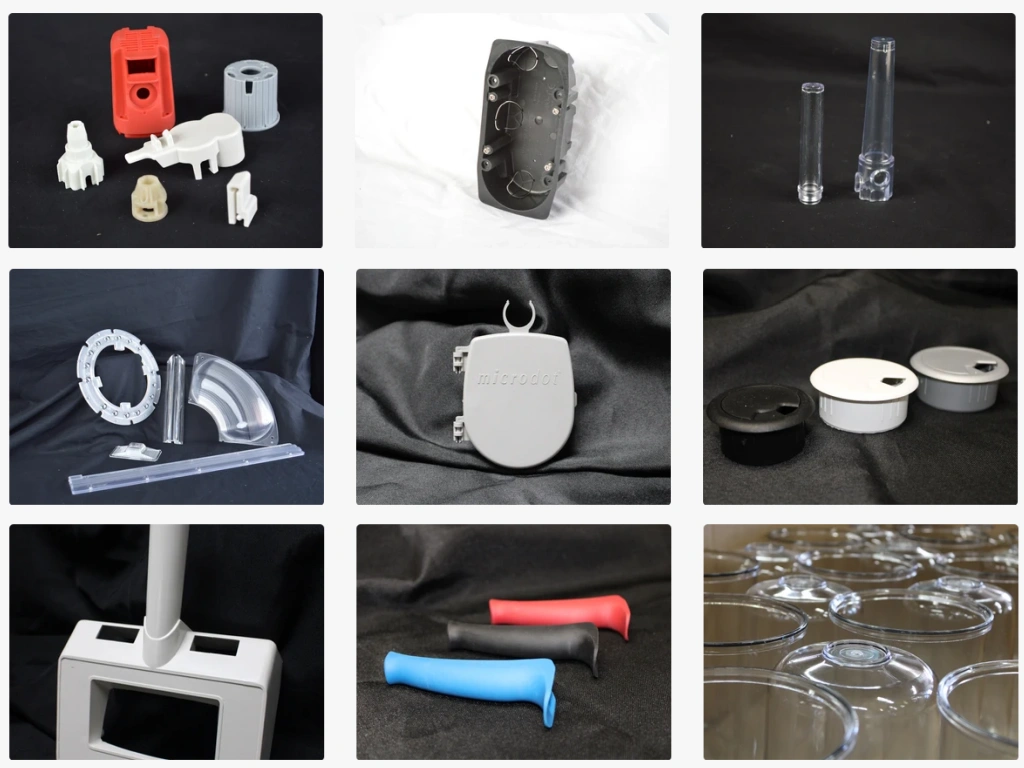
Automotive interiors are the largest single application: door panels, pillars, battery trays, and under-hood covers in talc-filled grades. The material’s low density and fatigue resistance matter more there than its modest stiffness.
Packaging is the second: caps, closures, thin-wall containers, and the hinge on a flip-top lid. The living hinge is the reason many of those designs exist at all.
Medical and laboratory products use PP plastic because it survives autoclave cycles, resists disinfectants, and can be moulded in clean conditions. Consumer appliances use it for washing-machine drums, dishwasher components, and storage bins.
Industrial applications include chemical tanks, ducting, and filtration housings, where the chemical resistance is the deciding factor and the appearance is irrelevant.
Recycling, Regrind, and the Sustainability Question
PP plastic is one of the easier thermoplastics to recycle mechanically. It melts at a modest temperature, it tolerates repeated processing better than many polyamides, and the recycling stream is well established in packaging and automotive. That is one reason it keeps displacing materials with a worse end-of-life story.
Regrind still changes the material. Each pass shortens the polymer chain, reduces impact strength, and shifts the melt flow index. A moulding plant that adds 20 percent regrind to a PP plastic job is usually safe; one that adds 50 percent without measuring is running a different material with the same name.
For parts that must meet a declared recycled content, the regrind has to be traceable, and the mechanical properties have to be verified on the blended material rather than assumed from the virgin data sheet. That verification is a small cost against a failed declaration.
Design also decides recyclability. A PP plastic housing with a moulded-in insert, a glued label, and a painted surface is difficult to recycle economically. A housing in a single material, with snap fits and a laser-marked label, is straightforward. The design decision is made years before the recycling decision, which is why it belongs in the DFM review.
A last practical note on sourcing: ask for the grade data sheet that matches the lot, not the family brochure. Two suppliers quoting the same PP plastic part can be quoting a homopolymer and a talc-filled block copolymer, and the price difference will look like a negotiation when it is actually a specification gap.
Frequently Asked Questions
Can PP plastic be painted without pretreatment?
Not reliably. The surface energy is too low for adhesion, and a paint that passes a tape test in the factory will often fail after a thermal cycle. Flame or plasma treatment is the standard fix.
Why does my PP part warp after ejection?
Usually anisotropic shrinkage combined with uneven cooling. Check wall uniformity, cooling layout, and packing profile before changing the resin or adding a fixture.
Is PP plastic food safe?
Yes, in grades formulated for food contact and supported by the appropriate declaration. The grade matters, not the polymer family alone.
The Bottom Line
PP plastic rewards designers who respect its crystallinity and its surface. Use it for chemical resistance, fatigue life, low density, and cost, and protect it where it is weak: creep, low-temperature impact, and decoration. The material is cheap; the mistakes around it are not.
For background, the polypropylene reference covers the chemistry and the grade families. Our plastic processing methods guide shows where PP plastic sits alongside extrusion, blow moulding, and thermoforming.