


Premium hookah manufacturing sits between consumer product design and precision tooling. A hookah is a set of parts that must look flawless, feel solid in the hand, seal against water and smoke, and survive repeated cleaning. Each of those expectations translates into a tooling and process decision made months before the first shipment.
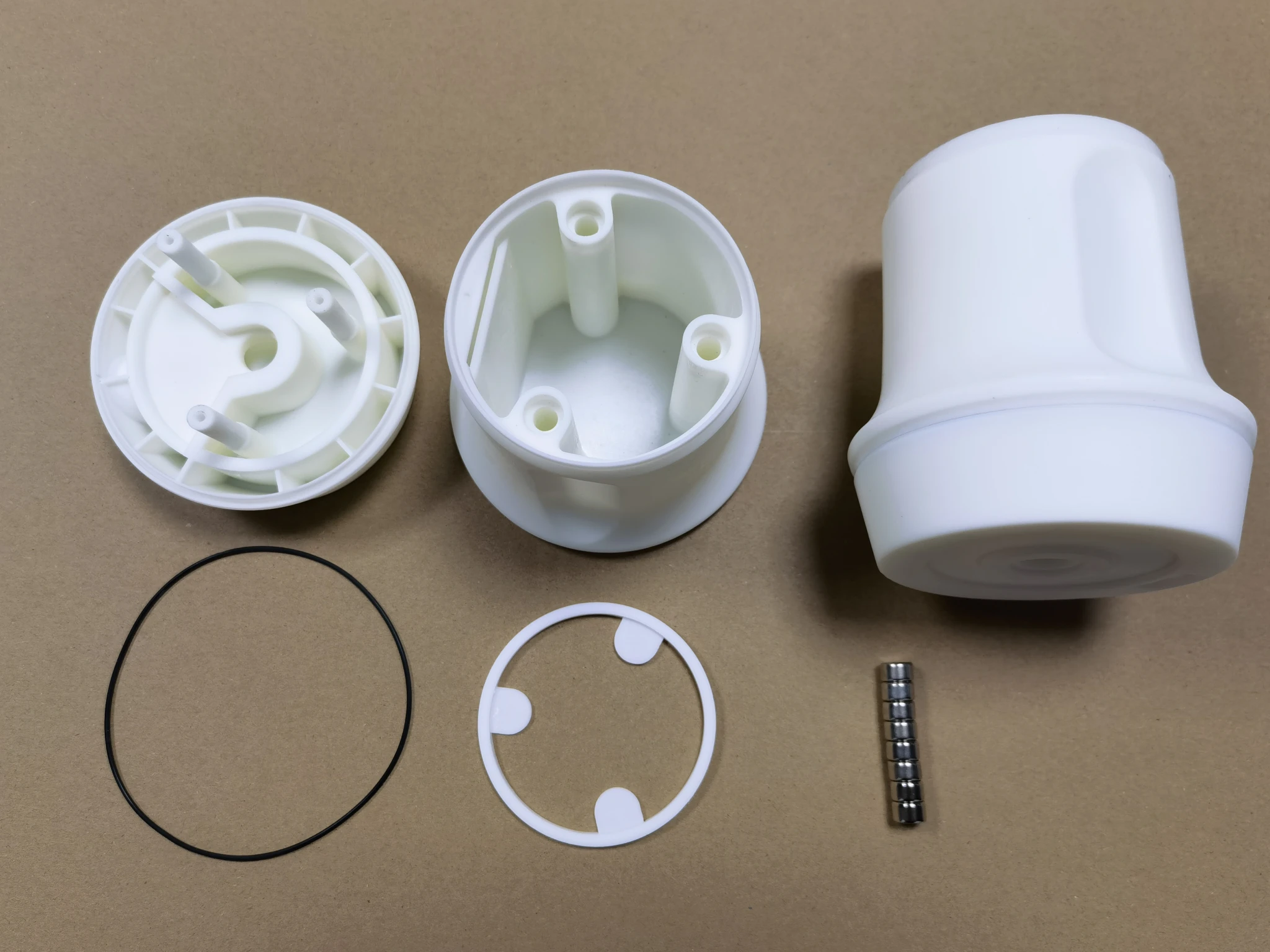
Starting With DFM, Not With a Mold
Consumer concepts often arrive with thick walls, heavy metal inserts, and cosmetic surfaces that cannot be molded as drawn. A structured DFM review questions wall thickness, draft, gate marks in visible areas, insert weight, and assembly sequence. In one representative program, more than twelve design changes cut part weight by roughly a third while keeping the structural feel the brand wanted.
Material Selection for Body, Stem, and Base
Bases and stems usually favor ABS or PC-ABS for impact strength and finishing response; transparent sections need PC or a clarified grade. Where the part contacts hot water or flavored liquids, chemical resistance and food-contact compliance narrow the list. Metal components, from threaded inserts to decorative rings, should be specified early because they set the overmolding plan.
Tooling for Cosmetic Parts
Visible surfaces demand polished cavities, generous draft, and gates placed where a mark will be hidden by a ring or a seam. Multi-cavity tools reduce cost per part but multiply the work of balancing flow so every cavity fills at the same rate. Texture and gloss are decided in the tool, not in the paint shop.
Insert Overmolding and Two-Shot Assembly
Threaded metal inserts are overmolded so the joint cannot loosen with use. Soft-touch grips are produced by two-shot molding, where a TPE or TPU skin is bonded to a rigid core in the same tool. The alternative, bonding a separate grip, adds labor and a peel-failure risk that shows up in field returns rather than in the first article.
Why Soft Over Hard Beats Separate Grips
A molded bond forms while the skin is molten, so it wets the substrate and mechanically locks into undercuts. The part arrives as one piece, with no adhesive line to fail and no assembly tolerance to manage.
Surface Finishing: Primer and Silicone Oil Coating
A silicone oil spray over a primer gives a dry, silky touch that resists fingerprints and hides minor flow marks. Film thickness must be controlled: too thin and the feel is uneven, too thick and the surface turns greasy and attracts dust. Masking defines which areas stay matte, and silk-screen printing adds branding after coating so the ink bonds to a clean surface.
Prototyping Before Commit
CNC prototypes or short-run silicone tools let the brand hold the part, check the draw, and test the finish before steel is cut. Several iterations in a few weeks cost far less than a tool revision after the mold is hardened and textured.
Frequently Asked Questions
How long does a hookah manufacturing program take?
A full cycle from concept to mass production commonly runs about six months, including prototypes, tooling, and finishing trials.
Can the soft-touch finish be repaired?
Local touch-up is possible but rarely invisible. Coating defects are better prevented by controlling primer coverage and spray parameters.
Which parts should be metal?
Threads, valves, and wear surfaces benefit from metal; overmolding them into plastic keeps weight and cost down.
Conclusion
Hookah manufacturing succeeds when DFM, insert overmolding, two-shot soft touch, and coating are planned as one sequence. For related reading, see hookah reference, our 2K overmolding guide, and plating for premium finishes. Contact TCHD to develop your product.