

Parts with internal features or undercuts force a tooling decision early: eject the part straight off a core, or mold it in pieces and assemble afterward. The two routes differ in tooling cost, cycle time, part strength, and the amount of secondary labor the program can absorb.
How Straight Ejection Works
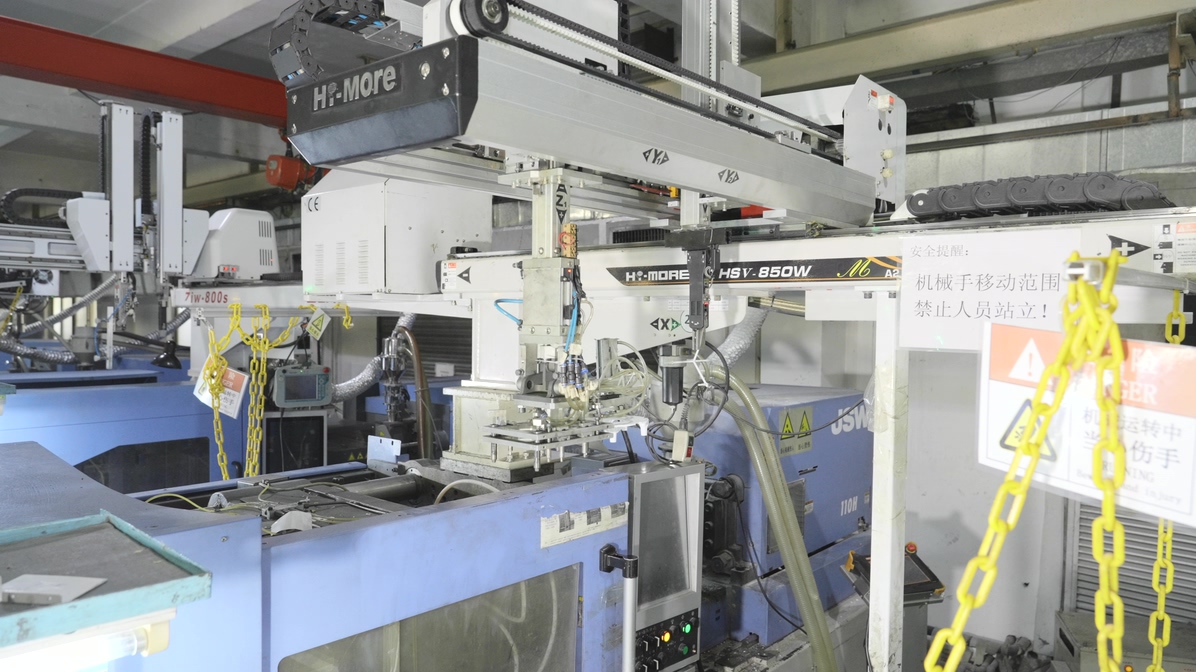
The part is pushed off the core by ejector pins or a stripper plate, with the core shaped so no feature blocks release. Draft, polished surfaces, and balanced ejection prevent drag marks. It is the simplest and fastest route when geometry allows it, because there is no secondary operation and no assembly labor.
How Insert-Assembled Molds Work
When a feature cannot release, the part is split into two or more moldings that are later joined by ultrasonic welding, snap fit, screws, or adhesive. Each piece has simpler geometry, so the tools are cheaper and easier to maintain. The trade-off is an assembly step, a joint that must be designed, and additional tolerance stack.
Tooling Cost Comparison
A single tool with a collapsing core or slider costs more than two simple tools in many cases, especially at low volume. But two tools also mean two trials, two maintenance schedules, and two sets of process documentation. At high volume, the elimination of assembly labor usually outweighs the higher tool cost.
Part Strength and Joint Design
A molded-in feature is continuous material, so it carries load without a joint. An assembled part has an interface that becomes the weak point: a weld line, an adhesive bond, or a snap that can fatigue. Where the feature is structural, straight ejection with a collapsing core is usually the stronger choice.
Cycle Time and Labor
Straight ejection keeps everything in one cycle, so labor per part is minimal. Assembly adds handling, fixturing, and inspection. In regions with high labor cost, that difference often decides the route.
When Each Route Fits
- Straight ejection: high volume, structural features, tight cosmetic requirements
- Insert assembly: low volume, complex internal geometry, designs likely to change
- Hybrid: mold the main body with a slider and assemble only a small sub-part
Frequently Asked Questions
Can a slider replace a collapsing core?
Sometimes, but a slider leaves a parting line that may be unacceptable on a sealing or cosmetic surface.
Which route gives better dimensional consistency?
Straight ejection, because the feature is formed in the same tool as the body.
Does assembly always weaken the part?
Not always, but the joint must be designed and validated rather than assumed.
Conclusion
Straight ejection vs insert-assembled molds is a volume and strength trade-off. For related reading, see injection moulding reference, our collapsing core guide, and value-added assembly. Contact TCHD to evaluate your part.