


Heat staking turns a thermoplastic boss or hole into a permanent mechanical joint. Localized heat softens the polymer, pressure forms it around a metal insert or over a mating part, and cooling locks the assembly. No screws, no adhesive, and no separate fastener inventory. The same principle, applied to a plain plastic stud, is heat riveting.
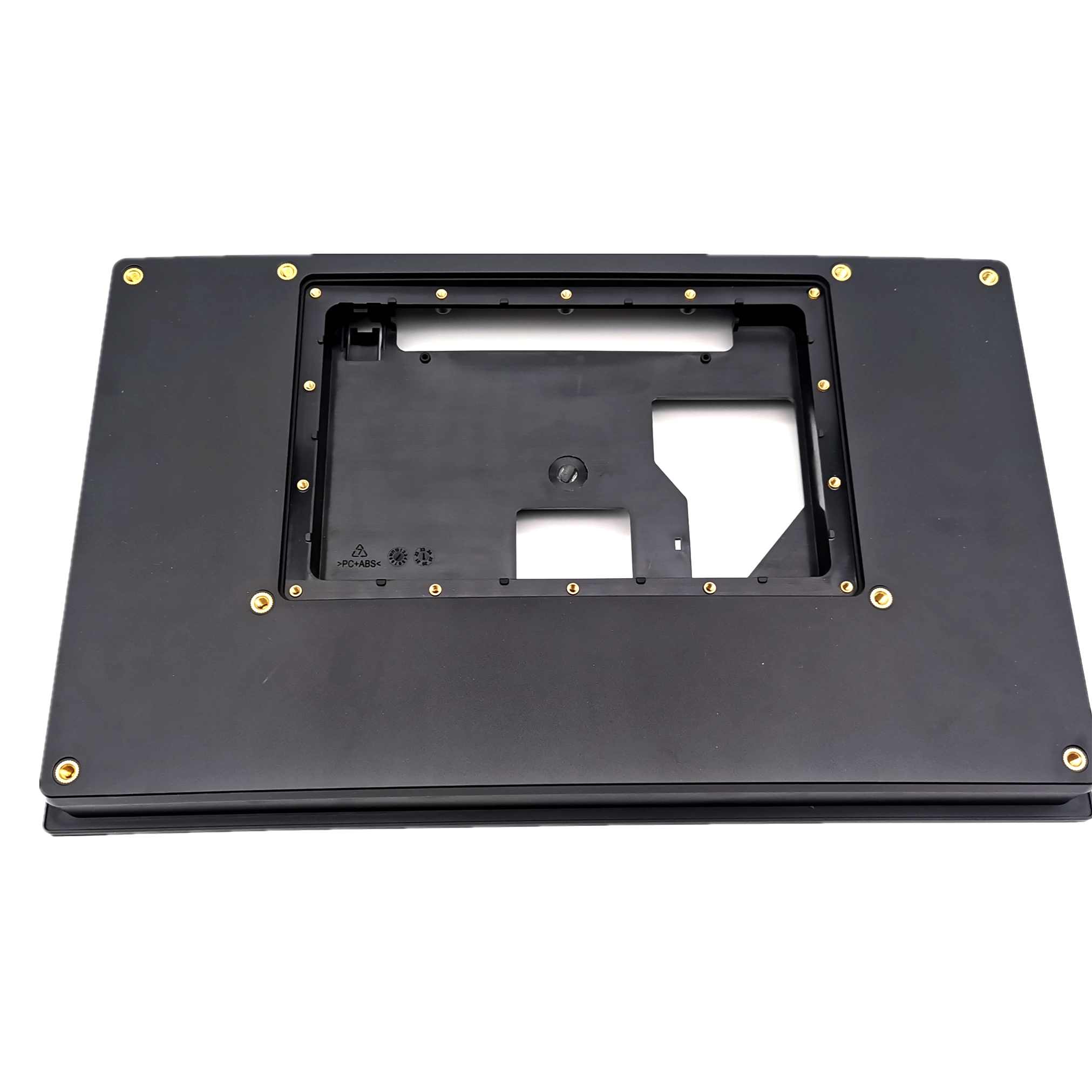
Heat Staking Versus Heat Riveting
Heat staking embeds a metal insert, usually brass, into a molded hole so the part gains a durable thread or a reinforced mounting point. Heat riveting reforms a plastic stud into a head that clamps a metal plate or a second component. Staking adds hardware and a reusable thread; riveting avoids hardware entirely and produces a joint that is not meant to come apart.
When Each Method Fits
Choose staking when the assembly needs service access, repeated torque, or a defined pull-out strength. Choose riveting when the joint is permanent, the stack is thin, and cost per unit matters. Both suit high-volume lines because cycle times run in seconds and the equipment can be automated with a rotary table.
Design Rules for Bosses and Holes
- Keep boss wall thickness at roughly half the nominal wall to avoid sink
- Provide a lead-in chamfer so the insert starts straight
- Size the hole for the insert’s knurl or groove, not for a press fit
- Leave clearance under the head for displaced material
- Add gussets when the boss is tall and loaded in bending
Material Behavior Under Heat
Amorphous resins such as ABS and PC soften gradually and tolerate a wide process window. Semi-crystalline resins such as PA66 and POM pass through a sharp melting range, so the window narrows and control must be tighter. Glass-filled grades conduct heat differently and resist flow, which raises the force needed to form the stake. Hygroscopic resins should be dried, or the joint will show voids and poor strength.
Process Parameters That Decide Joint Strength
Heat source, tool geometry, contact time, force, and cooling are the five variables. Too little heat gives a cold joint that cracks under load; too much heat degrades the polymer and produces a brittle collar. Thermal staking with a heated tool is simple and repeatable; ultrasonic staking is faster but concentrates energy and can damage sensitive components nearby.
Controlling Collapse and Flash
The stake should collapse into a defined head, not spread across the surface. A shaped horn or tip sets the head profile, and a hard stop controls final height. Without a stop, operators chase cosmetic defects by adjusting heat, which destabilizes strength.
Quality Checks
Push-out and pull-out tests on sampled parts quantify joint strength. Cross-sections reveal voids, incomplete melt, or a cracked boss wall. Visual criteria should define head shape, flash limits, and discoloration. Because the joint is permanent, destructive sampling belongs in the control plan rather than in final inspection only.
Frequently Asked Questions
Can heat staking replace threaded fasteners?
Often yes, when service access is not required and the design allows a boss with enough surrounding material.
Why do stakes crack after assembly?
Usually insufficient melt, a boss wall that is too thin, or moisture in the resin at the moment of forming.
Is ultrasonic staking better than thermal staking?
It is faster and more localized, but thermal staking is gentler on surrounding components and easier to validate.
Conclusion
Heat staking and heat riveting deliver reliable plastic-to-metal joints when boss geometry, material behavior, and process window are designed together. For related reading, see heat staking reference, our metal insert overmolding lessons, and ultrasonic welding guide. Contact TCHD to review your assembly.