

For plastic product teams, injection mold precision directly affects part performance, production efficiency, and total program cost. A growing number of companies now source Chinese injection molds even when their plastic molding operations remain in another country. The appeal is clear, but the decision still requires careful evaluation of design, materials, processing, quality control, intellectual property, and export readiness.
Why Chinese Injection Molds Are Competitive
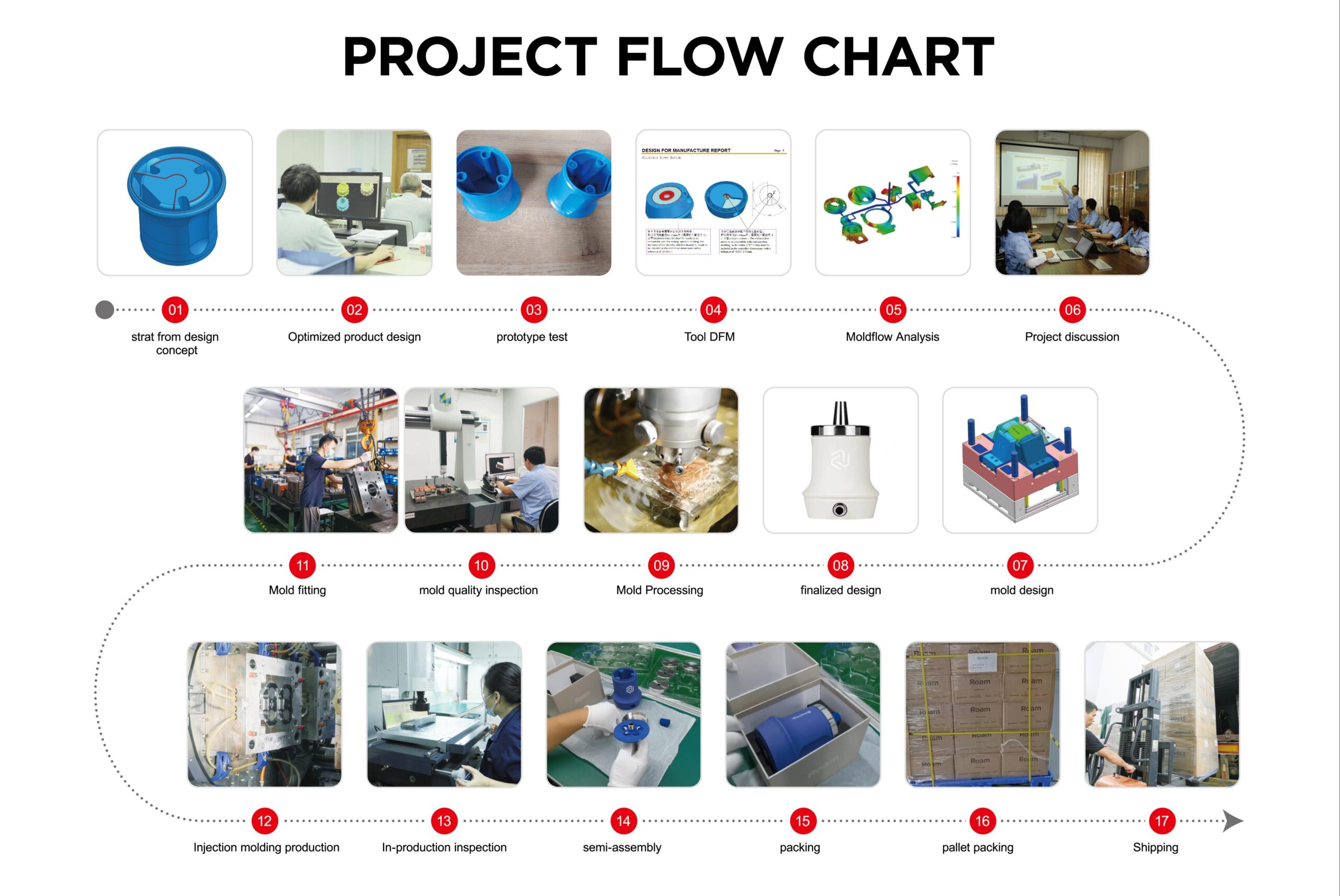
Chinese mold manufacturing is often 30–50% less expensive than tooling from the US, Europe, or Japan. That gap is not based on lower standards alone. It comes from lower labor, material, and operational costs, a localized supply chain for steel, mold components, and hot runner systems, and efficient mass production supported by automation. TCHD controls the full mold-making chain—design, CNC machining, EDM, assembly, and final testing—so cost optimization does not come at the expense of quality.
Quality Standards and Certifications
China’s mold industry has also matured in terms of standards and compliance. Many suppliers now build molds compatible with HASCO, DME, and MISUMI requirements. TCHD brings more than 30 years of experience in precision injection molds, overmolding, two-shot molds, and insert molding. Its certifications include ISO 9001, IATF 16949, and ISO 13485, supporting automotive, medical, and industrial projects with strict requirements. Mold flow analysis and DFM optimization are used early to reduce defects and improve production efficiency.
Lead Time and Trial Molding
Lead time is another major reason buyers look to China. Mold production in Europe and North America commonly takes 8–12 weeks, while Chinese manufacturers can often deliver in 4–6 weeks. TCHD typically delivers standard molds in 30–40 days and can carry out T1 and T2 trial molding plus small batch production before shipment. This helps verify mold stability and allows fast adjustments before export, when changes are far more costly.
IP Protection and Export Readiness
IP protection is a common concern, but China has strengthened its IP laws in recent years, reducing risk for responsible buyers. TCHD supports this with strict NDAs and controlled access to client designs. For companies whose production facility is outside China, importing Chinese injection molds can still be a highly cost-effective strategy, provided the transition is planned around export-specific requirements.
The first export consideration is supplier experience. Export molds usually need higher durability than domestic molds because they must support long-term production in overseas facilities. TCHD builds HASCO/DME-compatible molds for integration with global injection molding machines, and supplies technical documentation such as mold BOM, measurement reports, heat treatment reports, and cooling system diagrams. Secure export packaging and international logistics management are also part of the process.
Machine Compatibility and Documentation
Machine compatibility must be confirmed before production begins. Injection machine tonnage, nozzle types, and cooling systems can vary by country and by factory. TCHD helps through pre-production consultation to match the mold with the buyer’s equipment, and provides molding trial videos plus parameter setup recommendations so the mold can be implemented smoothly at the overseas plant.
Preventing quality issues before shipment is essential because mold modifications abroad can be expensive and slow. TCHD’s quality assurance includes comprehensive mold verification reports with CMM measurements, steel hardness tests, and heat treatment data, plus First Article Inspection reports and remote video acceptance testing.
Is the Investment Worth It?
Export molds may cost slightly more than standard domestic molds, but the long-term economics often justify the investment. They typically offer 1.5–2x the durability of standard molds, reducing replacement costs. High-precision manufacturing lowers the risk of rework, and optimized designs can reduce cycle times and increase production speed.
Before committing, compare the total cost structure—see what really drives injection mold cost—and review the sourcing risk factors of an overseas program. Teams that want a single partner for tooling and production can also review China manufacturing partnership options.
Frequently Asked Questions
Are Chinese injection molds lower quality?
Not when the supplier is qualified. Certification, process control, and pre-shipment inspection matter more than geography.
How long does shipping take?
Lead time depends on mold size and destination, but TCHD plans logistics together with the trial schedule to avoid delays.
What documents come with an export mold?
Typical documents include the mold BOM, CMM measurement reports, steel certificates, heat treatment records, and cooling diagrams.
Conclusion
Chinese injection molds can provide cost savings of 30–50% compared with Western suppliers, meet international HASCO/DME standards, and shorten lead times from the typical 8–12 weeks to 4–6 weeks. With strict IP protection and proven export expertise, they can integrate smoothly with overseas production. To learn more about injection molding fundamentals, review the process, then contact TCHD to discuss your mold requirements.