


For engineers and sourcing teams, a reliable waterproof seal depends on decisions that span product design, material selection, tooling, process control, quality validation, and production. The seal itself is only one part of the system: housing geometry, compression behavior, assembly method, and environmental exposure must all work together. TCHD’s experience in waterproof sealing is reflected in the case examples below, each showing how a different challenge was solved with a practical manufacturing approach.
Why Waterproof Sealing Depends on the Whole System
A gasket cannot compensate for a warped housing, and a perfect housing cannot seal without the right compression. Effective waterproof sealing balances four variables: the sealing material, the mating surfaces, the assembly force, and the environment. When one changes, the others usually need to change too.
Case 1: FIPFG Gasket for a Polycarbonate Enclosure (IP67)
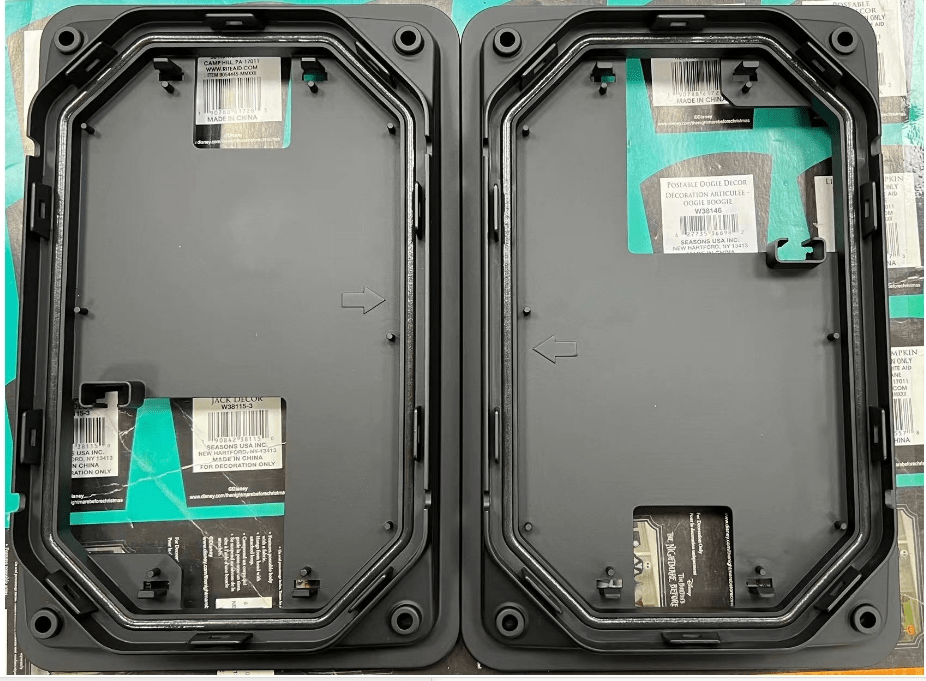
In one polycarbonate enclosure project, a K31 FIPFG (Form-In-Place Foam Gasket) sealant was dispensed onto the polycarbonate case part and then compressed by an aluminum die-cast rear part. Once the material components react, the foam gasket becomes tack-free and can be assembled with mating components. The seal is achieved by compressing the cured foam gasket by approximately 30–60%, delivering an IP67 waterproof rating.
Case 2: Marine-Grade Display Covers
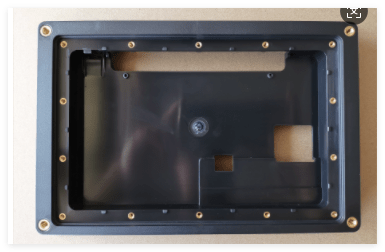
For marine-grade display covers, the product must withstand strong sunlight, corrosive saltwater, and demanding operating conditions. Material selection therefore focused on UV resistance, saltwater resistance, high flowability, and resistance to shock and vibration. These properties also influenced mold design because they affect final performance and shrinkage. A reliable seal also requires flat, well-controlled sealing surfaces, particularly when glass screens or LCDs are involved. Screw inserts need careful overmolding to prevent cracks, stains, or other defects and to ensure clean integration with the housing.
Case 3: Replacing Ultrasonic Welding with a Screw-Lock and Silicone Gasket
Another project began with ultrasonic welding to join a plastic base part and a stainless steel component. Because of the base weight, the product was damaged during transportation. The structure was redesigned with the customer, replacing ultrasonic welding with a screw-locking mechanism and adding a silicone gasket to improve waterproofing.
Case 4: Overmolded TPU Caps
A separate TPU cap application used purple TPU rubber caps overmolded with a white top cover. Nuts were molded directly into the cap, and ultrasonic welding was used for the light guide column. Plastic key caps were glued onto the purple rubber pad, and UV treatment was applied to the printed characters to improve durability, allowing the product to withstand up to 1 million uses.
Design Checklist for Waterproof Sealing
- Define the target IP rating before choosing a seal method
- Control flatness and surface finish on sealing faces
- Specify compression range for the gasket material
- Match screw torque and assembly sequence to the seal design
- Validate with environmental testing, not only visual inspection
Seal performance is closely tied to ultrasonic welding, overmolding, and silicone insert molding, so these processes should be reviewed together. For a technical definition of ingress protection ratings, see the IP code standard.
Frequently Asked Questions
What compression is right for a foam gasket?
FIPFG gaskets are commonly compressed by about 30–60%. The exact range depends on the material and housing stiffness.
Is ultrasonic welding waterproof?
It can be, but joint design and process control are critical. For heavy parts, a screw-lock plus gasket is often more reliable.
How is a waterproof seal tested?
Depending on the rating, testing may include IP67 immersion, IP68 pressure, thermal cycling, and salt spray.
Conclusion
Waterproof sealing is a system problem, not a gasket problem. Teams that design the housing, material, and assembly together reach stable IP ratings faster. Teams can explore TCHD’s plastic injection molding capabilities or send drawings and production requirements for a technical review.