


IMD and IML molding both place a printed film into the cavity so the graphic becomes part of the molded surface. The label or decorated film is bonded by the resin itself, which means the print sits behind plastic instead of on top of it. The result resists abrasion and solvents that would destroy a painted or pad-printed surface.
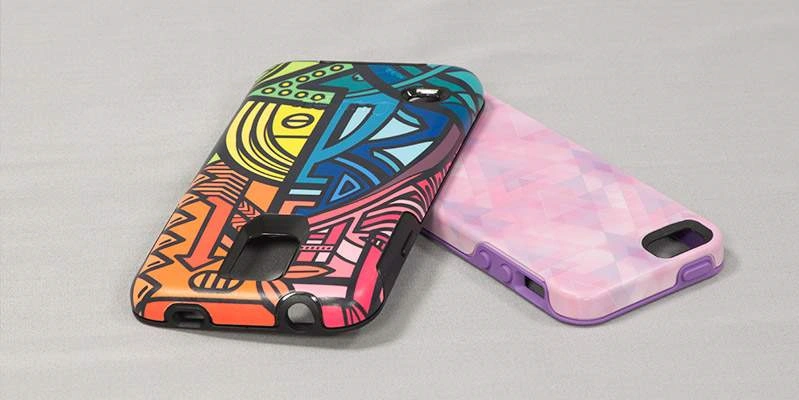
How IML Works
In-mold labeling starts with a pre-printed film, die-cut to the required outline. A robot or operator places it in the cavity against a vacuum or static charge, the mold closes, and molten resin meets the film directly. As the part cools, the plastic bonds to the label, leaving a graphic embedded in the surface with a controlled gloss or matte finish.
How IMD Works
In-mold decoration uses a film that carries the graphic plus a protective layer, formed to the part’s curvature before molding. The film can cover the whole surface rather than a defined label area, which suits curved lenses, display windows, and large cosmetic panels. Because the film is formed first, deep draws require careful temperature control to avoid distorting the print.
IMD and IML Molding: How the Two Processes Differ
The choice usually follows coverage and geometry. IML suits flat or gently curved surfaces with a defined graphic area and offers low tooling cost per design change, since only the label artwork changes. IMD suits full-surface decoration, three-dimensional shapes, and hard-coated finishes, at the cost of film forming and higher scrap rates during startup.
When Neither Fits
Very deep draws, sharp corners, and small radii strain the film and cause wrinkles or print distortion. In those cases, a printed insert assembled afterward or a painted surface may be the more reliable route.
Film and Ink Selection
The film must be compatible with the resin: a PC film with a PC substrate bonds well, while mismatched materials delaminate or curl. Ink systems must survive melt temperature without bleeding, and the protective hard coat determines scratch and chemical resistance. Film thickness affects stiffness, drape, and how visible the edge becomes on the finished part.
Mold Design for Film Placement
- Provide a locating feature or vacuum ports so the film cannot shift during injection
- Gate away from the film edge to prevent washout and film lift
- Control cavity surface finish, since it transfers directly through the film
- Allow venting behind the film so trapped air does not create blisters
- Design the label edge into a recess or a parting line to hide it
Automation and Cycle Time
High-volume IML runs use a robot with static charging to place and hold the label, adding a few seconds per cycle. Manual placement suits short runs but introduces variation in position that shows up as inconsistent borders.
Quality Control
Inspection covers print position relative to the part edge, label bonding, wrinkles, color match, gloss level, and surface defects. A tape or peel test on sampled parts confirms adhesion, and a cross-section shows whether the film is properly wetted by resin. Color should be checked under a defined light source, because metallic and pearlescent inks shift with angle.
Frequently Asked Questions
Does IML add cost to a molded part?
It adds film and placement cost but removes a printing step. At volume the total is often lower than pad printing plus a clear coat.
Can IMD wrap around corners?
Yes, within limits. Sharp radii thin the film and distort the print, so radii should be generous and tested during film forming.
How durable is the graphic?
Because the print sits behind plastic or a hard coat, it resists abrasion far better than surface printing, though edge wear remains a risk.
Conclusion
IMD and IML molding succeed when film, ink, resin, and mold design are developed together and verified on the first shots. For related reading, see in-mold labeling reference, our PC translucent molding guide, and premium finish options. Contact TCHD to develop your decorated part.