


Internal threads, snap rings, and re-entrant features are difficult to mold because the part cannot simply be pushed off a solid core. Collapsible core molds solve this by contracting before ejection, so the undercut clears without drag. The approach opens designs that would otherwise need assembly or a secondary machining step.
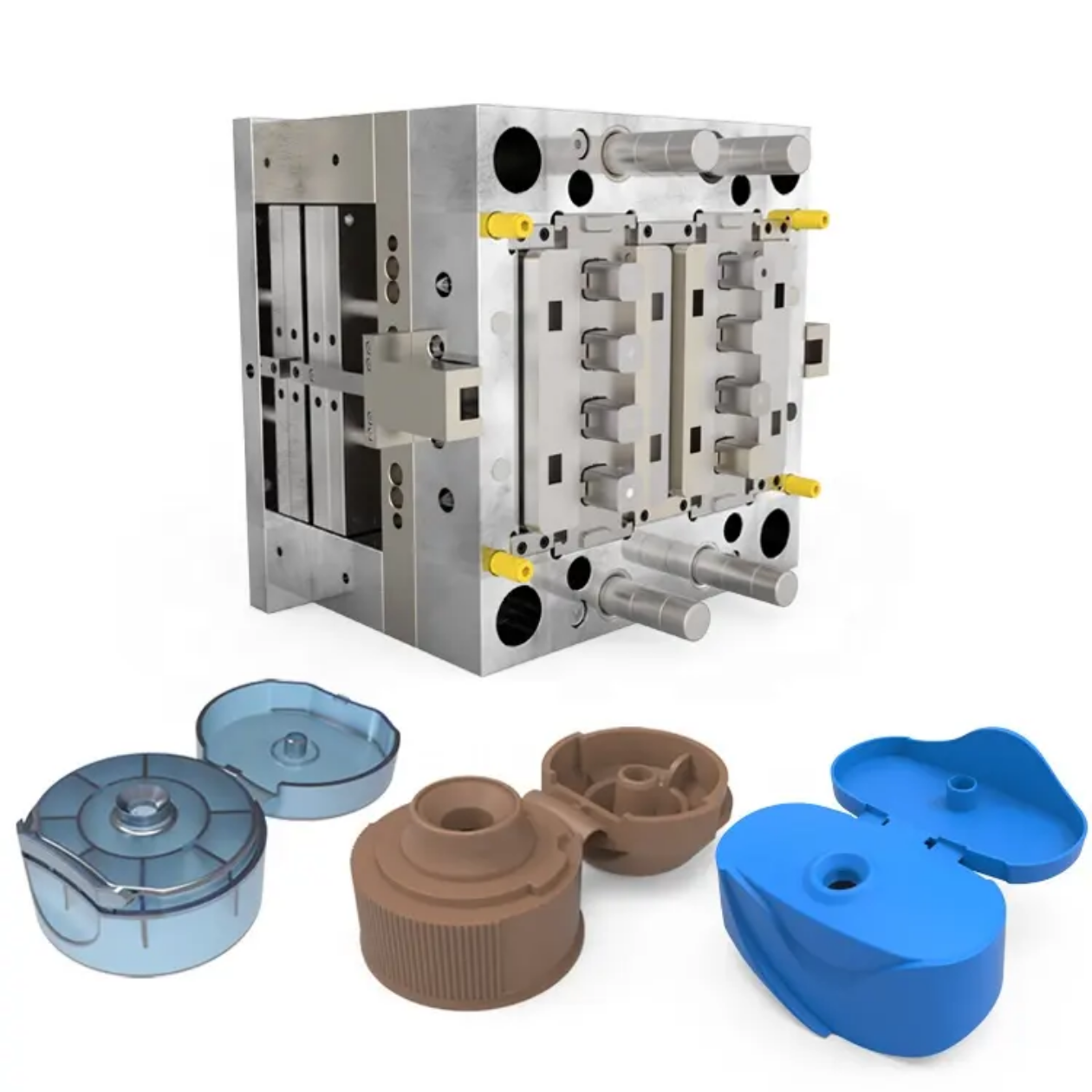
How the Core Collapses
The core is built from segments arranged around a center pin. During injection the segments are expanded against the pin, forming the undercut. Before ejection the pin retracts and the segments move inward, reducing the core diameter enough for the part to release. The sequence is mechanical and repeats every cycle.
Core Types Compared
- Collapsible segmented core: best for internal threads and continuous undercuts
- Unscrewing core: rotates the thread out, slower but suits deep threads
- Slider or lifter: leaves a parting line, simpler for shallow undercuts
- Split cavity: opens sideways, suited to external undercuts
Segment Design Details
Segment count follows the undercut geometry; six segments in two sizes is a common arrangement that balances travel and strength. Interface angles must allow smooth collapse without binding, and guiding surfaces should be hardened. The center pin needs enough rigidity to resist injection pressure without deflection, since any bending shows as flash or uneven wall thickness.
Cooling the Segments
Cooling inside a segmented core is the hardest design problem. Baffles or bubblers in each segment remove heat near the undercut, where thick sections otherwise remain molten. Uneven cooling makes the part shrink onto the core, raising ejection force and accelerating wear. Thermal analysis before machining is cheaper than reworking a finished core.
Applications That Benefit
Flip-top caps, closures with internal threads, pipe fittings, and medical components with re-entrant geometry are common. The benefit is a continuous molded part with no weld line and no assembly step, which improves both strength and appearance.
Maintenance Practice
Inspect segment faces for galling, check pin straightness, and verify the collapse stroke at planned intervals. Lubrication must not migrate into the cavity, since grease causes cosmetic defects. Keeping a spare segment set reduces downtime when a single segment wears.
Frequently Asked Questions
How many cycles does a collapsible core last?
With hardened segments and proper lubrication, hundreds of thousands of cycles are realistic.
Can a collapsible core mold external threads?
It can, but external threads are often handled by unscrewing or split cavities, which are simpler.
Does the process limit material choice?
Most thermoplastics work. Abrasive fillers accelerate wear, so steel and coating selection matter more.
Conclusion
Collapsible core molds turn internal undercuts into a repeatable molded feature. For related reading, see injection moulding reference, our collapsing core design guide, and straight ejection vs insert assembly. Contact TCHD to review your part.