


PA plastic is the family name behind nylon, and it covers a wider range of behaviour than most designers expect. PA6, PA66, and PA12 share a chemistry and almost nothing else in processing terms. A part that moulds cleanly in one grade can warp, brittle-fracture, or grow out of tolerance in another.
Table of Contents
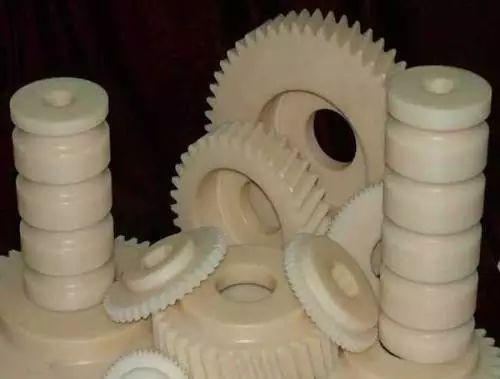
The practical summary: PA plastic offers high strength, excellent toughness, good chemical resistance to fuels and oils, and a service temperature that reaches 120 degrees Celsius and beyond in glass-filled grades. It also absorbs water, which changes dimensions and properties, and it must be dried before processing.
The PA Plastic Family
Polyamides are defined by the amide bond in the backbone, which creates strong hydrogen bonding between chains. That bonding is the source of the strength, the melting point, and the moisture sensitivity, because the same bond that holds chains together also attracts water.
PA6 is made from caprolactam and has a melting point near 220 degrees Celsius. PA66 is made from hexamethylenediamine and adipic acid and melts near 260 degrees. PA12 has a longer aliphatic chain, melts around 180 degrees, and absorbs much less water.
Those three numbers explain most of the application split. PA66 is the engineering default for structural parts that see heat. PA6 is tougher and easier to process, with slightly lower heat resistance. PA12 is chosen for dimensional stability, low-temperature toughness, and resistance to fuels and zinc chloride.
Moisture Absorption and Dimensional Change
Unfilled PA6 absorbs up to about 2.5 percent moisture at saturation in normal conditions, PA66 around 2.0 percent, and PA12 around 0.7 percent. The volume change that follows is roughly one third of the moisture percentage, so a 100 mm PA66 part can grow by half a millimetre after conditioning.
That growth is not a defect. It is a property, and it has to be designed around. Parts moulded to a dry dimension will not match parts measured after a week in a humid warehouse, and a tolerance that ignores conditioning will generate a false rejection.
The standard practice is to define the measurement condition. Either inspect dry and apply a known correction, or condition the parts before inspection. For precision work, the second is safer, and it belongs in the drawing note rather than in a conversation.
Moisture also affects mechanical behaviour. Dry PA plastic is stronger and more brittle; conditioned PA plastic is tougher and slightly less stiff. A drop test performed on dry parts can fail a design that would pass in service, which is why conditioning before impact testing matters.
Mechanical and Thermal Properties
Unfilled PA66 typically shows a tensile strength around 80 MPa dry and 50 to 60 MPa conditioned, with an elongation at break that rises sharply after moisture uptake. The modulus falls by roughly forty percent between the dry and conditioned states, which is a large swing for a structural material.
Glass-filled grades change the picture. Thirty percent glass in PA66 reaches a tensile strength above 150 MPa and a modulus around 9 to 10 GPa, with a heat deflection temperature above 240 degrees Celsius. The trade is ductility, surface finish, and anisotropy.
Thermal expansion is high, around 8 to 10 times that of steel for unfilled grades and lower for filled ones. A long PA plastic part in an assembly with metal will move differently, and the design needs a slotted hole or a compliant feature rather than a tight fit.
Chemical resistance is a genuine strength. PA plastic resists fuels, lubricating oils, greases, and many solvents. It does not resist strong acids, phenols, or hot glycols, and it is attacked by zinc chloride, which appears in some thread-locking compounds and in certain metal treatments.

Unfilled, Glass-Filled, and Impact-Modified
Unfilled PA plastic gives the best toughness, the best surface, and the widest processing window. It suits clips, housings, cable ties, and parts that flex. Shrinkage is high, typically 1.0 to 2.0 percent, and it is anisotropic.
Glass-filled grades at 15 to 50 percent glass raise strength, stiffness, and heat resistance while reducing shrinkage to around 0.2 to 0.5 percent in the flow direction. Weld lines become weak, the surface becomes fibrous, and tool wear increases.
Impact-modified grades add elastomer domains that improve notched impact, particularly at low temperature. They are the right choice for power-tool housings and automotive parts that see abuse.
Specialty grades include heat-stabilised, hydrolysis-resistant, flame-retardant, and transparent formulations. Each one changes the processing window, and the data sheet for the specific grade is the only reliable reference. Our glass-filled nylon guide covers the reinforced case in more depth.
Drying and Processing
Drying is not optional. PA plastic arrives with enough moisture to hydrolyse during melting, and the result is a part with reduced molecular weight, visible silver streaks, and poor impact strength. A desiccant dryer at 80 to 100 degrees Celsius for four to six hours is a normal starting point, with PA66 often needing longer.
Verify moisture with a meter, not with a timer. The acceptable level is usually below 0.1 to 0.2 percent depending on the grade, and a resin that has been sitting in an open hopper overnight will not reach it without drying.
Melt temperature should sit in the middle of the supplier’s range: around 230 to 260 degrees for PA6, 260 to 290 for PA66, and 200 to 230 for PA12. Above the range, degradation is fast and the first symptom is usually a brittle part, not a visible defect.
Mould temperature controls crystallinity and shrinkage. PA plastic generally wants 60 to 90 degrees Celsius for PA6 and PA66, and lower for PA12. A cold mould produces a part that continues to grow for days, which is the most common source of late dimensional surprises.
Residence time matters as much as temperature. A large barrel running a small shot holds the melt for minutes, and PA plastic degrades on the clock. Check the shot-to-barrel ratio before blaming the material.
Design Rules for PA Plastic Parts
1. Design for conditioned dimensions
Calculate the growth from the moisture the part will see in service, and place the tolerance around the conditioned dimension. A drawing with a single dry dimension invites a dispute.
2. Use generous radii
PA plastic is notch sensitive in the dry state. Sharp corners concentrate stress and become crack starters, especially in glass-filled grades.
3. Keep walls uniform
Nominal walls of 1.5 to 3 mm suit most parts. Thick sections cool slowly, shrink more, and can develop voids in the core.
4. Rib at half the wall thickness
Thicker ribs print sink marks and create a thermal mass that pulls the wall. A small draft on the rib sides helps ejection.
5. Plan for weld lines
Weld lines in PA plastic are weaker than the bulk material, and much weaker in filled grades. Keep them out of sealing surfaces and load paths.
6. Avoid zinc chloride contact
Thread-locking compounds, some plating residues, and certain cleaning agents attack PA plastic and cause stress cracking months later. Specify compatible assembly chemistry.
7. Allow for thermal expansion in assemblies
A long PA plastic part bolted to metal will move with temperature. Slotted holes and compliant clips are cheaper than a redesign after field failures.
PA6 Against PA66 and PA12
Choose PA66 when heat resistance and stiffness matter most: under-hood brackets, engine covers, and structural housings. Choose PA6 when toughness, surface finish, and processing ease matter more, and when the service temperature stays below about 100 degrees.
Choose PA12 when dimensional stability and low-temperature toughness dominate: fuel lines, pneumatic tubing, precision components, and parts exposed to zinc chloride. PA12 costs more per kilogram and delivers less strength, which is why it is specified for a reason rather than by default.
Against PBT, PA plastic wins on toughness and cost and loses on dimensional stability. Our PBT plastic properties guide sets out the electrical and moisture comparison, and the broader material comparison places both against ABS and PC.
Applications by Grade
Cable ties are unfilled PA66 or PA6, because the part must flex once and hold for years. The living-tie design relies on the toughness of the conditioned material, and a dry part will snap at the buckle during installation.
Power-tool housings use impact-modified PA6 or PA66, often with a small glass fraction. The grade balances stiffness for the motor mount against impact resistance for the drop that happens on site. Glass-filled PA plastic would be too brittle for the housing and is usually reserved for the internal frame.
Under-hood automotive parts use heat-stabilised PA66, frequently at 30 to 35 percent glass. Air intake manifolds, radiator end tanks, and engine covers are typical. The specification usually includes a long-term heat ageing test, because the difference between a stabilised and an unstabilised grade only appears after a thousand hours.
Pneumatic and fuel-system components use PA12 or PA11, where dimensional stability and resistance to zinc chloride matter more than strength. Precision gears and bearings use PA66 with molybdenum disulphide or PTFE additives to reduce friction.
Electrical connectors sometimes use PA plastic with flame retardants, but the tracking resistance of the specific grade must be checked, which is one reason PBT is often preferred where the electrical requirement is demanding.
A Short Sourcing Checklist
When a PA plastic part is quoted, four items belong on the request: the grade designation including glass content and stabilisation, the drying condition and the moisture limit, the mould temperature and the expected shrinkage allowance, and the inspection condition for dimensions. A quote that omits any of those is a quote for a different part.
Ask as well how the supplier stores resin. A bag of PA plastic left open in a humid warehouse is a processing problem waiting to be discovered at the machine, and the cost of that discovery is usually a scrapped first lot. Seal, label, and date every resin bag when it arrives at goods-in.
Failure Modes and How to Avoid Them
Hydrolytic degradation. Wet resin produces silver streaks, low impact strength, and unpredictable dimensions. Dry to specification and verify with a meter.
Post-mould growth. A part that measures at the top of tolerance when dry will exceed it after conditioning. Design and inspect against the conditioned dimension.
Stress cracking. Residual stress plus an aggressive chemical produces cracks at corners and inserts. Anneal thick parts, radius corners, and check the assembly chemistry.
Warpage in glass-filled parts. Anisotropic shrinkage plus uneven cooling. Fix gate position and cooling before adjusting packing.
Brittle weld lines. Common in glass-filled PA plastic and often invisible until a drop test. Place gates so welds fall in non-critical areas and verify with a physical test.
Frequently Asked Questions
Does PA plastic need to be conditioned before assembly?
For precision assemblies, yes. Conditioning to the expected service moisture avoids a dimension change after the product is built, and it makes the inspection result meaningful.
Can PA6 and PA66 be used interchangeably?
Only for tolerant applications. Their melting points, moisture absorption, and shrinkage differ enough to require different tooling allowances and process settings.
Why do my nylon parts turn brittle after a few months?
Usually oxidation or hydrolysis. Heat stabilisation, correct drying, and avoiding prolonged high-temperature exposure address most cases. If the part is in hot air or hot oil, the grade must be specified for it.
The Bottom Line
PA plastic rewards designers who plan for moisture from the first sketch. Pick the grade for the service temperature and the chemical environment, dry it properly, control the mould temperature, and define the inspection condition. The material will then deliver the toughness and strength that made it the default engineering nylon.
For background, the nylon reference covers the chemistry of the family, and our defect troubleshooting guide maps the symptoms that appear when drying or temperature control slips.