


Most people picture injection moulding as one thing: a machine closes, plastic fills a cavity, a part drops out. In practice the family of injection molding methods is broad, and choosing the wrong one is an expensive way to discover that the part cannot be made as drawn. Each method solves a specific geometry or material problem, and each imposes its own tooling cost, cycle time, and quality risk.
Table of Contents
- Standard high-pressure moulding
- Multi-material and two-shot
- Insert and over-moulding
- Gas and water assisted
- Thin-wall and high-speed
- Liquid silicone and elastomer methods
- Micro and precision moulding
- Low-pressure, foam, and co-injection
- Choosing between injection molding methods
- Frequently asked questions
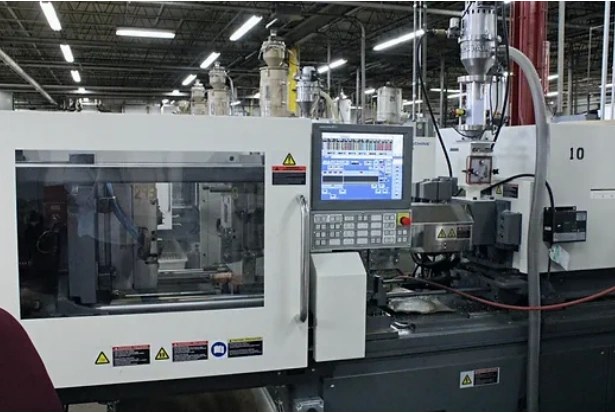
The comparison below covers the methods that appear most often in contract manufacturing quotes. For each, the question is the same: what does the method buy, what does it cost, and which failure mode does it introduce?
Standard High-Pressure Moulding
Standard moulding is the baseline against which every other method is judged. Resin is melted, injected at high pressure into a closed cavity, packed to compensate for shrinkage, cooled, and ejected. It handles the widest range of materials and produces the best surface finish per unit cost.
Its limits are geometric. Undercuts need side actions, thick sections need long cooling, and walls thinner than about 0.8 mm become difficult to fill without special equipment. Most injection molding methods exist to work around one of those three constraints.
Quality control in standard moulding is well understood: melt temperature, injection profile, packing pressure, cooling time, and mould temperature. A process window recorded and locked at trial is the foundation of every other method described here.
Multi-Material and Two-Shot Moulding
Two-shot moulding injects two materials into the same tool in sequence, with the first shot forming a substrate and the second bonding or encapsulating it. The part comes out complete, with no assembly step, and the bond is mechanical and chemical rather than adhesive.
The method is standard for soft-touch handles, illuminated buttons, and sealed connectors. It requires a tool that rotates or indexes, a machine with two injection units, and two materials that actually bond. Compatibility is the usual failure point: a hard substrate and a soft overmould that do not adhere will delaminate in the field.
Relative to other injection molding methods, two-shot has high tooling cost and long lead time, and it only pays when the assembly it replaces is expensive or unreliable. Below a few thousand units a year, over-moulding an insert is usually cheaper.
Insert and Over-Moulding
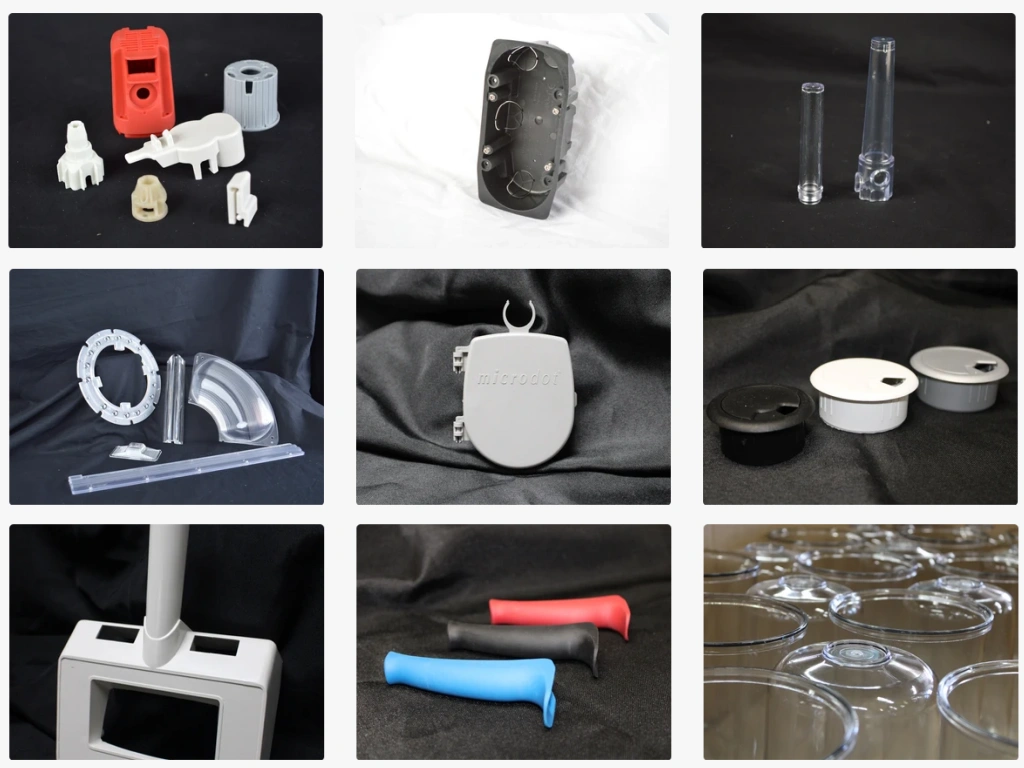
Insert moulding places a metal or plastic component into the cavity before the shot, so the resin encapsulates it. Threaded inserts, bushing sleeves, magnets, and electrical contacts are the classic applications. The result is a single part with no secondary assembly and no risk of a loose insert.
The process risk is distortion. Metal and plastic expand differently, and an insert that is too cold, too large, or badly supported will stress the surrounding wall. Preheating the insert and designing a generous boss wall are the usual countermeasures.
Over-moulding is the same idea applied to a preformed substrate, such as a moulded housing that receives a sealing lip. Among injection molding methods, it offers the widest material freedom because the substrate and the overmould can be chosen independently.
Gas and Water Assisted Moulding
Gas-assisted moulding injects nitrogen into the melt after the shot, creating a hollow channel that packs the part from the inside. It removes sink marks on thick sections, reduces clamp force, and cuts weight. Handle shapes, structural arms, and thick cosmetic parts are the typical beneficiaries.
Water-assisted moulding does the same with water, which cools far faster and leaves a smoother internal wall. The trade is process complexity: water injection, drainage, and drying add equipment and cycle steps that gas does not need.
Both methods introduce a new failure mode, which is channel breakthrough. If the gas or water finds a weak wall, the part is scrap and the tool may be damaged. Wall thickness control around the channel is the design discipline that makes these injection molding methods reliable.
Thin-Wall and High-Speed Moulding
Thin-wall moulding targets walls below 1 mm, typically for packaging. It needs high injection speed, high pressure, a rigid tool with excellent venting, and a machine with enough shot capacity to fill before the gate freezes.
The economics are driven by cycle time, measured in seconds rather than minutes. That makes cooling design and ejection the limiting factors, and it makes any defect extremely expensive because it repeats thousands of times per shift.
High-speed moulding is the same philosophy applied to slightly thicker parts where cycle time dominates. Among the available injection molding methods, these two demand the most disciplined process control, because the window between a good part and a short shot is narrow.
Liquid Silicone and Elastomer Methods
Liquid silicone rubber is injected as a two-component liquid, cured in a hot mould, and demoulded as an elastic part. The tooling is different from thermoplastic tooling: colder cavities, precise temperature zoning, and a cold runner system that keeps the material from curing in the nozzle.
LSR is chosen for temperature resistance, biocompatibility, and a soft feel that thermoplastics cannot match. It also demands cleanroom discipline, because silicone picks up contamination easily and a speck becomes a cosmetic defect on every part.
Thermoplastic elastomers are processed much like standard resin, which makes them an easier entry point. The choice between the two families is usually decided by service temperature and by whether the part must be sterilised.
Micro and Precision Moulding
Micro moulding produces parts measured in fractions of a gram, with features in the tens of microns. It requires a machine with precise shot control, a tool built to micron tolerance, and an inspection system capable of measuring what was made.
Precision moulding is the broader category: ordinary part sizes held to tolerances that leave little room for shrinkage variation. Both rely on the same foundation, which is a validated process window and a mould that holds temperature evenly.
These injection molding methods are less about the machine and more about the metrology. If the supplier cannot measure the feature, the process is not under control, whatever the capability report says.
Low-Pressure, Foam, and Co-Injection
Low-pressure moulding fills the cavity at reduced pressure, often with a structural foam or a gas counter-pressure. It reduces internal stress and clamp force, which matters for large parts on modest machines.
Structural foam moulding introduces gas into the melt to create a cellular core. The result is stiff, light, and dimensionally stable, with a swirl surface that usually needs painting or texturing.
Co-injection shoots two materials through the same gate, with a skin and a core. It is used for barrier packaging and for parts that need a recycled core inside a virgin skin. The process control challenge is keeping the core centred, which depends on balanced flow and precise sequencing.
Defects That Differ by Method
Short shots, flash, and sink marks appear in every process, but each of the injection molding methods adds its own signature failure. Knowing the signature shortens troubleshooting, because it points at the mechanism rather than at the last parameter someone changed.
Two-shot parts fail at the interface. Delamination, a visible witness line where the second cavity sealed, and over-packing of the first shot are the recurring complaints. The fix is usually material compatibility or a tool sealing adjustment, not a pressure increase.
Gas-assisted parts fail at the channel. Breakthrough, finger-shaped gas penetration, and a rough internal wall all trace back to wall thickness variation or an unbalanced fill. Water-assisted parts add a drying step that, if skipped, produces a part that looks fine and corrodes an insert later.
Thin-wall parts fail young. A short shot at the end of fill, a warped top, or a gate blush are all speed and venting problems, and they appear within the first hour of a trial. The longer-term failure is tool wear, because thin-wall tools run at high pressure for millions of cycles.
LSR parts fail on cosmetics and cure. A contaminated cavity leaves a speck, an under-cured part tears, and a cold slug leaves a flow mark that cannot be polished out. Among injection molding methods, LSR is the least tolerant of housekeeping.
Qualifying a New Method
A supplier that has run standard moulding for twenty years may still be a beginner at gas assistance. Qualification should therefore be method-specific: ask for parts produced by that method, ask for the process window, and ask what the supplier does when the window drifts.
A sound qualification runs in three stages. A tool trial proves the tool can make a part. A capability run proves the process can repeat it, with measurements taken over several hours rather than several shots. A production run proves the plant can hold it with normal staffing and normal supervision.
The third stage is where most method changes fail. A process that needs a specialist standing at the machine is not a production process, and the injection molding methods that look cheapest on paper often depend on exactly that kind of attention. Write the staffing assumption into the quotation and verify it on the floor.
Ask, too, which injection molding methods the plant runs on the same equipment. A shop that switches between standard and thin-wall work on the same machine carries a changeover risk that a dedicated line does not.
Choosing Between Injection Molding Methods
Start with geometry and material, then let volume decide the rest. A part with an undercut needs a side action or a different method. A part in silicone needs LSR equipment. A part with a soft grip needs two-shot or over-moulding, and the annual volume decides which.
Then compare total cost, not unit cost. Two-shot tooling costs more but removes an assembly station. Gas assistance costs more per cycle but eliminates a sink mark that would otherwise need a painting operation. Thin-wall moulding costs more in tooling but pays back in cycle time.
The quality factors are consistent across all injection molding methods: a validated process window, documented parameters, a capable mould, and an inspection plan matched to the critical characteristics. A supplier that controls those four things can run any of the methods. One that does not will struggle with the simplest.
Our guide to the plastic injection molding process covers the common foundation, and the two-shot moulding guide goes deeper on the multi-material case.
One habit makes the comparison easier. For each candidate, write down the single constraint it removes, the single defect it introduces, and the single piece of equipment it requires. Any injection molding methods that cannot answer all three in one line are not yet understood well enough to quote. Consistency matters more than novelty in this comparison.
Frequently Asked Questions
Which of the injection molding methods is cheapest?
Standard high-pressure moulding, for parts that suit it. Every additional capability, from a second shot to gas assistance, adds tooling and process cost that must be justified by a saved operation or a solved defect.
Can any part be moulded in two shots?
No. The two materials must bond, the geometry must allow the second cavity to seal against the first shot, and the tool must physically rotate or index. Many designs that look suitable fail on one of those three points.
Is LSR moulding slower than thermoplastic moulding?
Usually yes, because cure time replaces cooling time and the material handling is more complex. The comparison should include the assembly and sterilisation steps that LSR often eliminates.
The Bottom Line
Injection molding methods are tools for specific problems, not a hierarchy. Choose the method that removes the constraint your design cannot avoid, then verify that the supplier can control the process and measure the result. The cheapest quote for the wrong method is the most expensive option available.
For background, the injection moulding reference covers the standard process, and our guide to mould structure and types explains how the tool changes with the method.