


The lowest quote is the most expensive line in the file, and it usually takes eighteen months to prove it. Bids for the same mold or the same molded part routinely differ by a factor of two, and almost none of that gap comes from the buyer’s imagination. It comes from what each supplier silently decided to include, defer, or leave out. Engineers and sourcing managers who choose on the lowest quote alone are not comparing prices. They are comparing different scopes with the same label attached.
Table of Contents
- Why the lowest quote wins the meeting
- Hidden cost 1: steel that misses the life target
- Hidden cost 2: cycle time assumed, not measured
- Hidden cost 3: tooling without documentation
- Hidden cost 4: quality systems audited too late
- Hidden cost 5: communication cycles
- Hidden cost 6: trials that are not repeatable
- Hidden cost 7: landed cost and duty
- How to compare bids
- Frequently asked questions

A lowest quote is not a lie. It is a bid built on a narrower definition of the job. The work is to find out which definition you agreed to before the purchase order is signed, and the only reliable method is to compare bids line by line against one specification.
Why the Lowest Quote Wins the Meeting and Loses the Program
Price is the one number on a quote that every stakeholder can read without an engineering background. Purchasing sees it, finance sees it, and both are measured on it. Tooling cost and part price therefore dominate the decision meeting, while cycle time assumptions, steel grade, mold life, and inspection scope sit in attachments nobody opens. The result is predictable: the bid that committed to the least wins, and the gap is financed later out of the buyer’s engineering budget.
This is not a criticism of purchasing discipline. It is a description of an incentive structure. Program managers who understand it stop negotiating on the headline number and start forcing bids into a common format, which is the only way a comparison becomes meaningful. Our earlier breakdown of why cheap injection molds often cost more over time tells the same story from the tooling side.
There is a second reason the lowest quote survives scrutiny: it is never wrong on the day it is issued. Every omission is a future event, not a current defect. The mold exists, the part dimensions are met, the invoice is paid. Only when the program reaches volume, or when the tool needs to move, does the missing scope convert into money. By then the decision is history and the cost is attributed to engineering.
Hidden Cost 1: Steel That Meets the Drawing But Not the Life Target
A mold drawing usually names a steel grade and a hardness range. A cheap bid can meet the drawing literally and still deliver a mold that wears out halfway through the program. Common substitutions include lower-alloy steel for the core, shallower nitriding, and a cavity insert machined from a general-purpose block instead of a properly forged grade. All of these pass a dimensional inspection on delivery day and fail in year three at 300,000 shots.
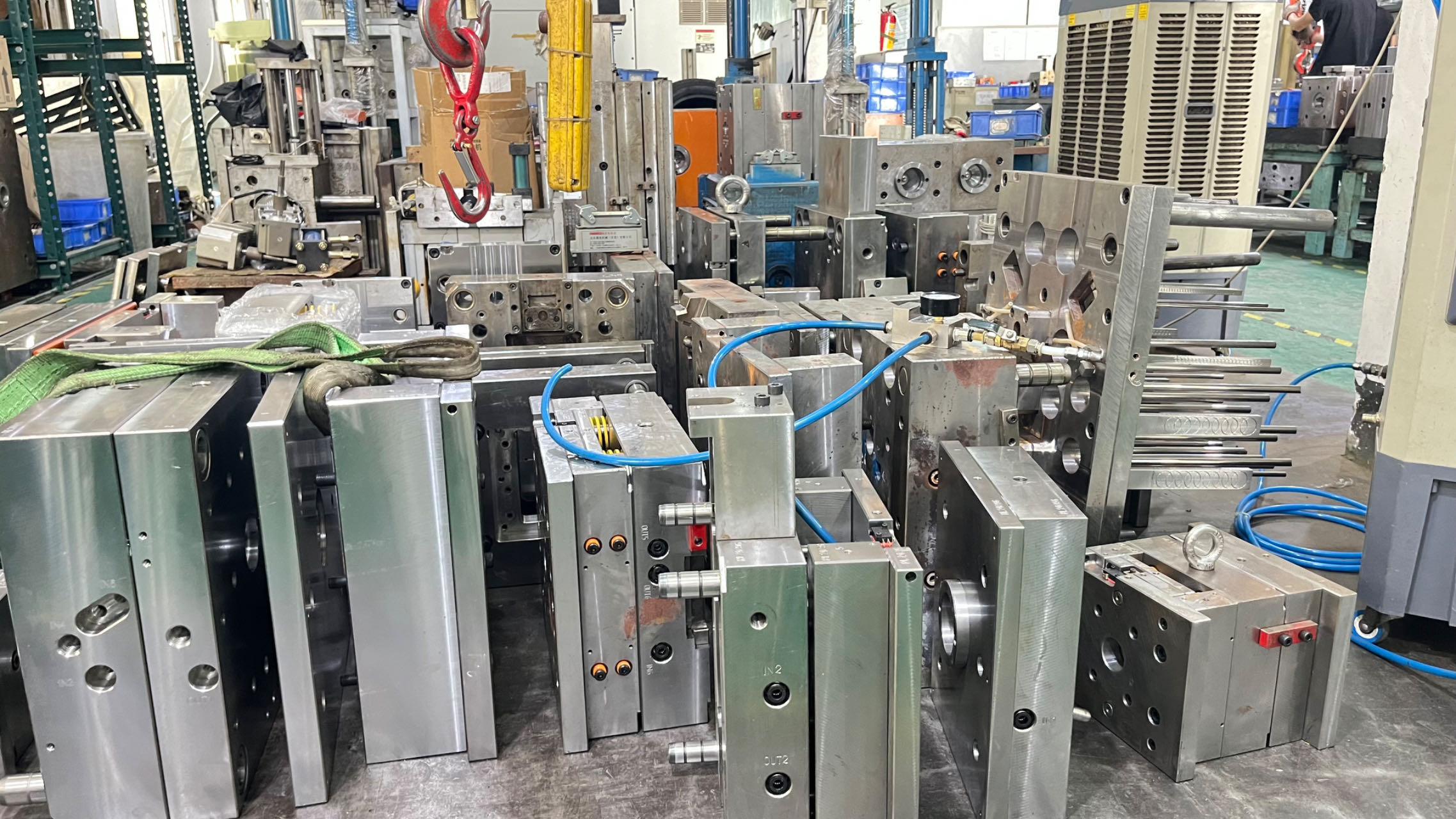
The corrective action is to specify life, not material alone: a shot count, the expected surface condition at end of life, and a wear allowance on critical shut-offs. When the lowest quote cannot answer a life question, that is an answer itself. Our guide to choosing injection mold steel explains which grades carry which life expectations, and why a P20 cavity is not a drop-in substitute for a hardened H13 core.
Hidden Cost 2: Cycle Time Assumed Rather Than Measured
Part price is often quoted as a single figure per thousand pieces, derived from an assumed cycle time. A supplier quoting a 22-second cycle on a 30-second part is not necessarily lying; they may genuinely believe it, or they may be quoting the best case that appears in the mold flow summary. The buyer discovers the truth after the tool is cut, when the price is renegotiated upward on the grounds that the mold “runs slower than expected”.
Ask for the cycle time assumption in writing, together with wall thickness, cooling layout, and the machine tonnage it assumes. If cycle time is only a number in a spreadsheet, treat the part price as provisional. The economics of injection molding cycle time are unforgiving at volume: two seconds on a 30-second cycle is roughly six percent of capacity, which at a million parts a year is a machine you did not budget for.
Hidden Cost 3: Tooling Transferred Without the Documentation to Support It
Cross-border programs increasingly assume a mold can move to a second factory later. That assumption is only safe if the first supplier delivers a complete data package: 3D models as built, steel certificates, heat treatment records, water-line and hot-runner schematics, setup sheets, and process parameters from the validation run. The lowest quote rarely includes this paperwork because it has no direct effect on the part required today.
Missing documentation converts a movable asset into a sunk cost. It also makes transfer-ready injection molds an aspiration rather than a plan. Price the documentation into the bid on day one and it costs a few percent. Recover it after a supplier relationship breaks down and it costs a re-cut core plus a new validation cycle.
Hidden Cost 4: Quality Systems That Are Audited Only After the First Reject Lot
An ISO 9001 certificate proves a system exists on paper. It does not prove that incoming inspection is running on this program, that first article inspection uses the drawing’s tolerance scheme, or that the supplier will hold a lot instead of shipping it. Buyers who audit before the first lot arrives find these gaps cheaply; buyers who wait find them inside a customer complaint.
Ask for the actual inspection plan for your part, the gauge list, and the last three months of internal first-pass yield on comparable work. A supplier cannot produce these quickly unless they are genuinely tracked. Our checklist of ten injection mold quality factors is a practical starting point for that conversation.
Hidden Cost 5: Communication Cycles You Pay For in Engineering Hours
Every clarification round costs money, and it is invisible in the quote. A supplier who replies in one working day with a PDF redline lets your team decide in an hour. A supplier who replies in four days with a photo of a screen turns a two-week review into a five-week review. Multiply that by forty design changes and the schedule cost exceeds the tooling difference that started the argument.
Time zone offset is not the problem; local engineering capacity is. A factory that can staff a daytime engineer in your business hours is buying you calendar, and calendar is the scarcest resource on a launch. This is the practical argument in why an experienced overseas mold maker reduces sourcing risk.
Hidden Cost 6: Trial Runs That Are Not Included and Not Repeatable
A validation run produces the samples that anchor your whole quality plan. When the lowest quote excludes trial material, mold flow review, or the dimensional report, the buyer pays for them later at emergency rates. Worse, when the trial is not documented, the second run does not reproduce the first, and the disagreement about whose process changed becomes unanswerable.
Require a trial protocol: material lot, machine model, process parameters, mold temperature, and report format. Hidden trials are one of several items in our review of injection molding hidden costs. If a supplier cannot describe the protocol before award, they will improvise it after.
Hidden Cost 7: Landed Cost, Duty, and Cash Tied Up in Transit
The quote shows an ex-works price. The invoice shows freight, insurance, duties, brokerage, and the working capital locked in a six-week ocean transit. For a part priced at two dollars and shipped in containers, the freight line alone can exceed the entire price advantage that won the bid. Exchange rate movement across a twelve-month program adds another layer neither side controls.
Convert every bid to a landed cost per delivered unit at the same Incoterm before comparing them. Two suppliers quoting the same part at different Incoterms are not quoting the same product, and the lowest quote at FOB is not automatically cheaper than the higher one at DDP.
How to Compare Bids Without a Spreadsheet War
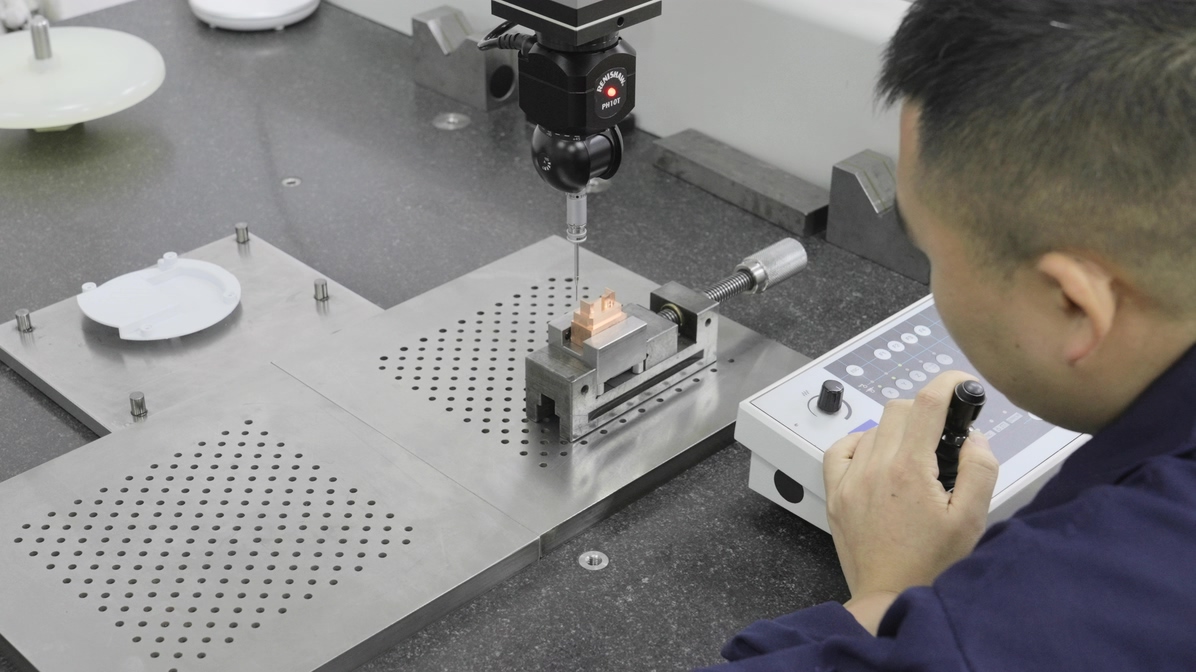
The reliable method is a bid-level spreadsheet with a fixed structure, sent with the RFQ so every supplier knows what will be compared. Each row is a scope item with a yes, no, or number. Suppliers who leave rows blank are telling you something; suppliers who fill them all consistently are the ones worth a factory visit.
- Tooling scope: cavity count, steel grades by plate, hardness, hot runner brand and zone count, mold base standard, life target in shots.
- Process scope: stated cycle time, machine tonnage, cooling layout, clamp type, automation assumptions.
- Quality scope: inspection plan, gauge list, first article format, lot hold policy, certificate of conformance.
- Documentation scope: as-built models, steel certificates, heat treatment records, setup sheets, process validation report.
- Commercial scope: Incoterm, payment terms, freight basis, duty responsibility, price validity, exchange rate clause.
- Support scope: engineering response time, who attends the trial, spare parts, warranty period and what it covers.
A bid that scores well across all six groups is rarely the cheapest and rarely the most expensive. It is the one whose cheapest competitor cannot explain a missing row.
A Practical Decision Rule for Sourcing Teams
When two bids differ by more than twenty percent, do not negotiate. Investigate. The gap is a scope gap until proven otherwise, and the fastest way to prove it is to send the same list of questions to both suppliers and compare the answers paragraph by paragraph. If both answer identically and the price still differs, you are looking at a genuine cost structure difference worth understanding, not a bargain.
The one exception is capacity. A factory with an idle machine may genuinely price a job below its normal rate to keep a cell loaded, and that is a real discount with a real expiry date. Ask how long the price holds and what happens when the machine fills.
What a Bid Review Meeting Should Actually Decide
A bid review that ends with a ranking of prices has decided nothing. The useful output of that meeting is a short list of open scope questions, each assigned to an owner and a date. Until those questions are closed, the lowest quote is not a candidate; it is an unverified claim about a job nobody has fully described.
Structure the meeting around four decisions. First, confirm the specification is identical across bidders, because a bid against a different revision is not comparable. Second, confirm the life target and the maintenance plan that supports it. Third, confirm who owns the trial, the report, and the samples. Fourth, confirm the exit: what the buyer receives if the program moves, and at what cost. A supplier who cannot answer the fourth question has not thought about the second half of the relationship.
Record the outcome in the same spreadsheet used for comparison, and keep it with the purchase order. Two years later, when a part price is challenged or a tool is moved, that record is the difference between a negotiation and an argument. Teams that do this consistently find that the lowest quote stops being a recurring internal debate, because the comparison itself becomes routine.
Why Cheaper Bids Cluster Around the Same Three Omissions
Across dozens of tooling and molding bids, the same three omissions account for most of the price gap. The first is steel and heat treatment, which is the largest single line in a mold build and the easiest to shade without changing the drawing. The second is trial and validation effort, which is labour-heavy and produces no shippable part. The third is documentation and engineering time, which is invisible until someone needs it.
None of these are dishonest by default. A supplier under pressure may simply assume the buyer does not want them, because in their experience many buyers do not. The correction is to state explicitly that you do want them, in the RFQ, with a price line for each. Once those three lines exist in every bid, the lowest quote becomes comparable, and the conversation moves from suspicion to arithmetic.
Frequently Asked Questions
Is the lowest quote always a bad sign?
No. A low quote can reflect efficient internal tooling, a favorable steel purchase, or spare capacity the supplier wants to fill. The issue is never the number itself; it is whether the scope behind the number matches the competing bids. A lowest quote with a complete scope sheet is a genuine advantage rather than a risk.
How much price difference between bids is normal?
For molds of similar design and life, ten to twenty percent is routine and usually reflects overhead and steel purchasing differences. Beyond thirty percent, the gap almost always corresponds to a scope difference: fewer cavities, softer steel, excluded trial runs, or a part price based on an unverified cycle time.
What single question reveals the most about a supplier?
Ask what happens if the mold does not reach the agreed cycle time or shot count during the trial. Suppliers who answer with a process, a remedy, and a cost owner are describing a system. Suppliers who answer with reassurance are describing a hope.
What to Do With a Lowest Quote You Want to Keep
Sometimes the lowest quote comes from a supplier you would like to keep. In that case the right move is not to reject it but to convert it into a comparable bid: send back the missing scope lines, ask for a revised price that includes them, and compare the revised number with the others. Most suppliers will do this willingly, because a documented scope protects them as much as it protects you.
If the revised price lands within ten percent of the field, the lowest quote was simply a bid for a smaller job, and the supplier has now shown they can price the real one. If the revised price jumps by thirty percent, you have learned something more valuable than a discount: the original number was never achievable, and the supplier either knew it or had not looked closely enough to know.
The Bottom Line
The lowest quote is a legitimate bid for a smaller job. Between two suppliers who both understand this, the winner is the one whose scope is wider than the price difference. Price the scope, then price the part, and the decision stops being an argument about the lowest quote and becomes a decision about which risk you are paying to avoid.
For teams standardising this process across a supply base, our overview of choosing a manufacturing partner for molds and molded parts covers the qualification side, while the broader total cost of ownership framework explains why acquisition price is only one term in the equation.